
HCTF and HCTF Education are proud to announce the 2026 Al Martin Conservation Scholarship recipients: Allison Pugh, Clare Kilgour, John Gray, Kevin Petersen, Megan Buers, Robyn Denn, Sabine Rankin, Sonya Pastran, Sydney Dixon
The Al Martin HCTF Conservation Scholarship is dedicated to supporting graduate students who are passionate about fish or wildlife conservation and management in British Columbia. Each recipient is awarded a $10,000 scholarship to further their research. This year, HCTF has expanded the number of Al Martin Scholarship recipients to nine students from various post-secondary institutions across BC.
These scholarships are in honour of Al Martin, a highly respected figure in conservation. Al began his career in 1977 as a biologist in Penticton, BC, and held several key positions over the years, including Fisheries Manager, Director of the Watershed Restoration Program, Director of the Fish and Wildlife Branch, Executive Director, and Assistant Deputy Minister of Agriculture and Fisheries. After retiring from BC public service, Al continued to lead in conservation as the Director of Strategic Initiatives for the BC Wildlife Federation and served on HCTF’s board. Although Al passed away in October 2019, his legacy of integrity, humour, and passion for preserving fish and wildlife habitats for future generations lives on.
HCTF is proud to invest in the future of conservation by supporting students like these.
2026 Recipients
Allison Pugh
Allison Pugh is a MSc student in the Natural Resources and Environmental Studies program at the University of Northern British Columbia. Her research focuses on how freshwater fish respond to environmental change, with a particular interest in habitat use and the conservation of cold-water fish species. The findings will help identify critical habitats and support conservation planning for rainbow trout in British Columbia.
Clare Kilgour
Clare Kilgour is a PhD student at the University of British Columbia. Her research examines how road salt pollution affects the early development of Pacific salmon in urban streams of British Columbia’s Lower Mainland. Focusing on coho salmon embryos, Clare is investigating the physiological mechanisms that drive mortality during short-term salt exposure. The findings will improve understanding of the risks posed by road salt contamination and help inform strategies to protect salmon populations in urban watersheds.
John Gray
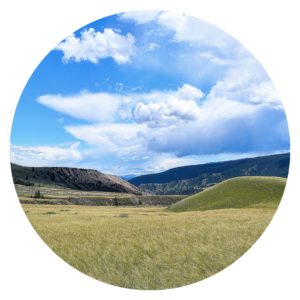
John Grey is a doctorate student conducting research at the University of British Columbia. They are examining how rising water temperatures affect threatened Nechako River Chinook salmon throughout their life cycle. By combining field studies, laboratory experiments, tracking technology, and climate modelling, the student will investigate how warming influences habitat use, survival, and spawning success. The results will help predict future climate impacts and support conservation and water management decisions for Chinook salmon.
Kevin Petersen
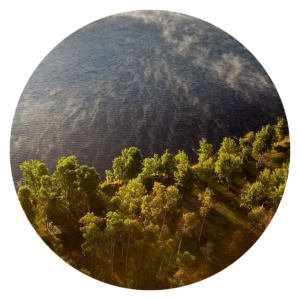
Kevin Petersen is a masters student at UNBC. Their research investigates whether glyphosate-based herbicides are linked to changes in the health of wild American martens and short-tailed weasels. Working with trappers, First Nations, and wildlife organizations, the student will measure herbicide exposure in animal tissues and examine potential effects on gut microbiomes, stress, and body condition. The findings will help address key knowledge gaps and inform forest management and herbicide-use policies.
Megan Buers
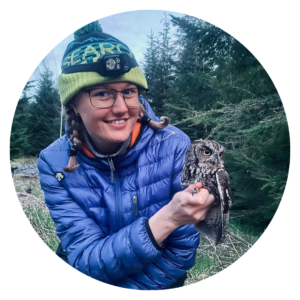
Megan Buers is a PhD student at the University of British Columbia Okanagan, studying how threatened Western Screech-Owls (Megascops kennicotii) move through managed forest landscapes on Vancouver Island. She has spent nearly a decade researching birds of prey, working with Northern Saw-whet Owls, Burrowing Owls, American Kestrels, and more across Canada. The research will help guide conservation efforts and sustainable land management practices that benefit both screech-owls and the broader forest ecosystems they inhabit.
Robyn Denn

Robyn is a master’s student at Simon Fraser University. Her research is focused on understanding how wildfire disturbance influences spatiotemporal habitat use patterns of the Clark’s nutcracker and its mutualistic relationship with the endangered whitebark pine. By utilizing a combination of visual observation surveys, acoustic recording, and GPS tracking, she will describe spatiotemporal variation in nutcracker activity, examine how fire disturbance and whitebark pine stand characteristics influence habitat use by nutcrackers and assess whether nutcracker activity predicts seedling emergence across habitat types. This research will address knowledge gaps in our understanding of how wildfire disturbance influences habitat use and movement patterns of nutcrackers and its implications on whitebark pine regeneration and management.
Sabine Rankin
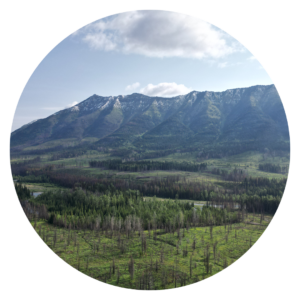
Sabine Rankin is a MSc student currently studying at BCIT. Their research evaluates the effectiveness of low-tech process-based restoration techniques designed to improve stream and wetland health. Using hydrological monitoring and satellite imagery, they will assess whether these restoration approaches increase water storage, reduce flood and drought impacts, and improve ecosystem resilience. The results will help guide future stream restoration projects across British Columbia and beyond.
Sonya Pastran
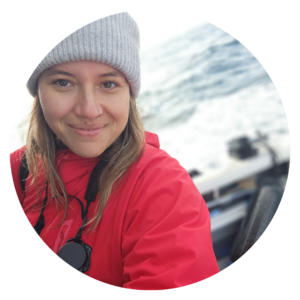
Sonya Pastran is a PhD student at the University of British Columbia’s Institute for the Oceans and Fisheries, supervised by Dr. Brian Hunt. Her research focuses on the habitat connectivity of the Threatened Marbled Murrelet, integrating movement ecology, diet, and habitat use to better understand the links between marine and terrestrial ecosystems. The findings will help identify and protect important habitats while supporting conservation efforts in partnership with the Council of the Haida Nation and the Pacheedaht Nation.
Sydney Dixon
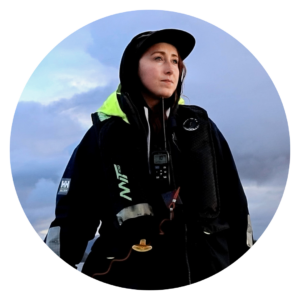
Sydney is a master’s student at Royal Roads University. Sydney’s research focuses on how marine-derived nutrients influence the resource partitioning and spatiotemporal patterns of wolves, black bears, and cougars on the west coast of Vancouver Island. This research will provide data to support wildlife managers, land-use planners, and Nuu-chah-nulth Nations while contributing to the long-term conservation of British Columbia’s biodiversity and keystone species.
If you or someone you know is interested in applying for the Al Martin Scholarship, click the link below.