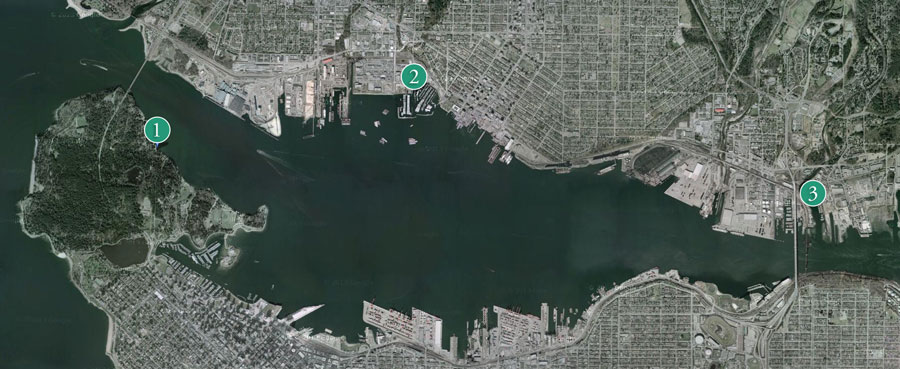
HCTF has announced it will provide over $200,000 in funding this year for estuary restoration projects on Burrard Inlet. Two North Vancouver sites and another in Stanley Park will be rehabilitated from their current industrialized states back into functional habitats that support many types of native fish and wildlife.
Estuaries, areas where rivers and streams meet the sea, make up only a small percentage of BC’s vast coastline, yet over 80% of coastal wildlife are dependent on them for some portion of their lifecycle. They are critical for anadromous fish as they make the adaptation from fresh to salt water. Estuaries are also gaining recognition for their incredible capacity to store carbon, at rates up to ninety times the uptake of equivalent areas of forest. Unfortunately, these habitats are among the most threatened ecosystems on the planet: in highly industrialized waterways such as Burrard Inlet, they have all but disappeared.
HCTF’s Burrard Inlet Restoration Pilot Program is focussed on recreating at least some of Vancouver’s lost estuaries, using money from a creative sentencing award. This initiative has received a phenomenal response from local governments, corporations, First Nations, and educational institutions, who have come together to support these projects both financially and in-kind. This year’s grant recipients and funding partners include:
- Seymour River Estuary Restoration: The Seymour Salmonid Society received a $60,000 grant to remove onsite contaminants and re-vegetate the estuary’s intertidal benches and foreshore areas with native plants. Large woody debris will be added to provide cover for juvenile fish, and to deter geese from grazing the site. The project will receive additional funding from DFO, Metro Vancouver, the District of North Vancouver, the City of North Vancouver , and the Pacific Salmon Foundation, as well as receiving in-kind support from many local organizations.
- Mosquito Creek Estuary Restoration : Northwest Hydraulic Consultants and the Squamish Nation received $88,500 for their stewardship and habitat restoration project on Mosquito Creek, an estuary that has been reduced to a 1% of its historical size by encroachment of waterfront industrial development. Activities will include creation of an intertidal reef and benches, including planting of native vegetation. The site offers an excellent opportunity for community outreach as it is located along the newly completed Spirit Trail. Key supporters of this project include the City of North Vancouver, with in-kind support provided by BCIT and the North Shore Fish and Game Club.
- Restoring Access for Salmonids to Beaver Creek : The Stanley Park Ecology Society received a $55,000 grant to restore salmonid access into Beaver Creek, located within Stanley Park. The project will remove and modify decade-old fish barriers, as well as enhance estuary habitat. The location of this project along Stanley Park’s popular seawall, one of the most highly used recreation trails in Canada, will promote public understanding and participation in conservation. Partners include Environment Canada, HSBC, the TD Friends of the Environment Foundation, Recreation Fisheries of BC and the Pacific Salmon Foundation.
Together, these three projects will build upon the successes of last year’s $180,000 investment by HCTF in estuarine habitat on the Inlet. You can read more about last year’s completed BIRPP restoration work here.
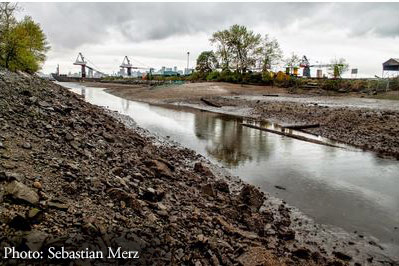
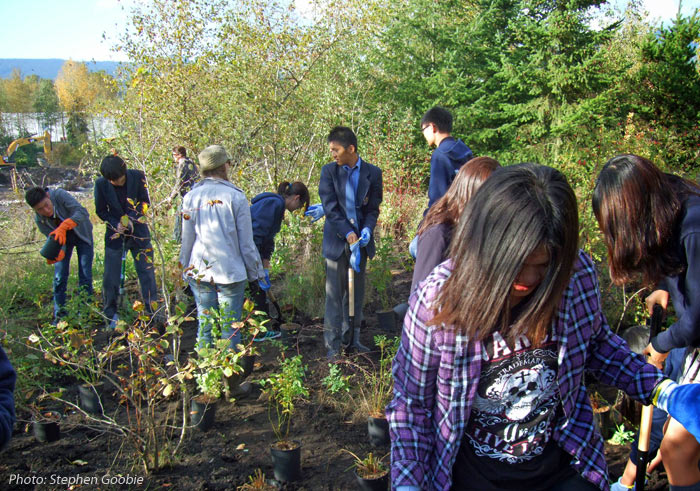
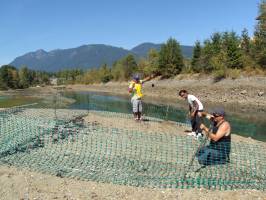
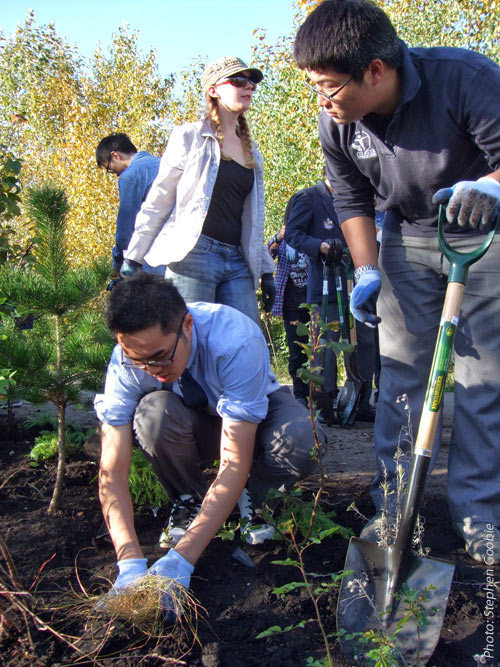 overgrazing the new vegetation. Once the heavy equipment work was complete, it was the students’ turn to start planting native species along the banks of the estuary. Bodwell’s Green Team, mentored by teacher Bianca Ferrajohn, had previously been involved in removing invasive plants from the area, and students were eager to get on with the restorative phase of the project. Julia Alards-Tomalin, who had been coordinating a recently graduated team of Squamish Nation ecological restoration students planting within the estuary, showed the Bodwell students how to pick a good location for their seedlings: for many of them, it was their first experience planting. Because the students routinely walk by this area on their way to and from school, they will have the opportunity to see their work flourish in the coming months.
 North Vancouver, BC – The Habitat Conservation Trust Foundation (HCTF) is partnering with Seaspan Shipyards, Canada’s non-combat shipbuilder, to breathe new life into the estuary at the mouth of MacKay Creek. The MacKay Creek estuary is the first of seven degraded pocket estuaries in Burrard Inlet to be restored. It is important to understand that estuaries are one of our most valuable natural resources, more productive per acre than the richest farmland.
 The HCTF is working with the community, government, educational institutions and First Nations to maximize the scope and extent of the restoration activities.