Mon, 28 Apr 2025

HCTF Approves $8.6 Million for Fish & Wildlife Conservation Projects

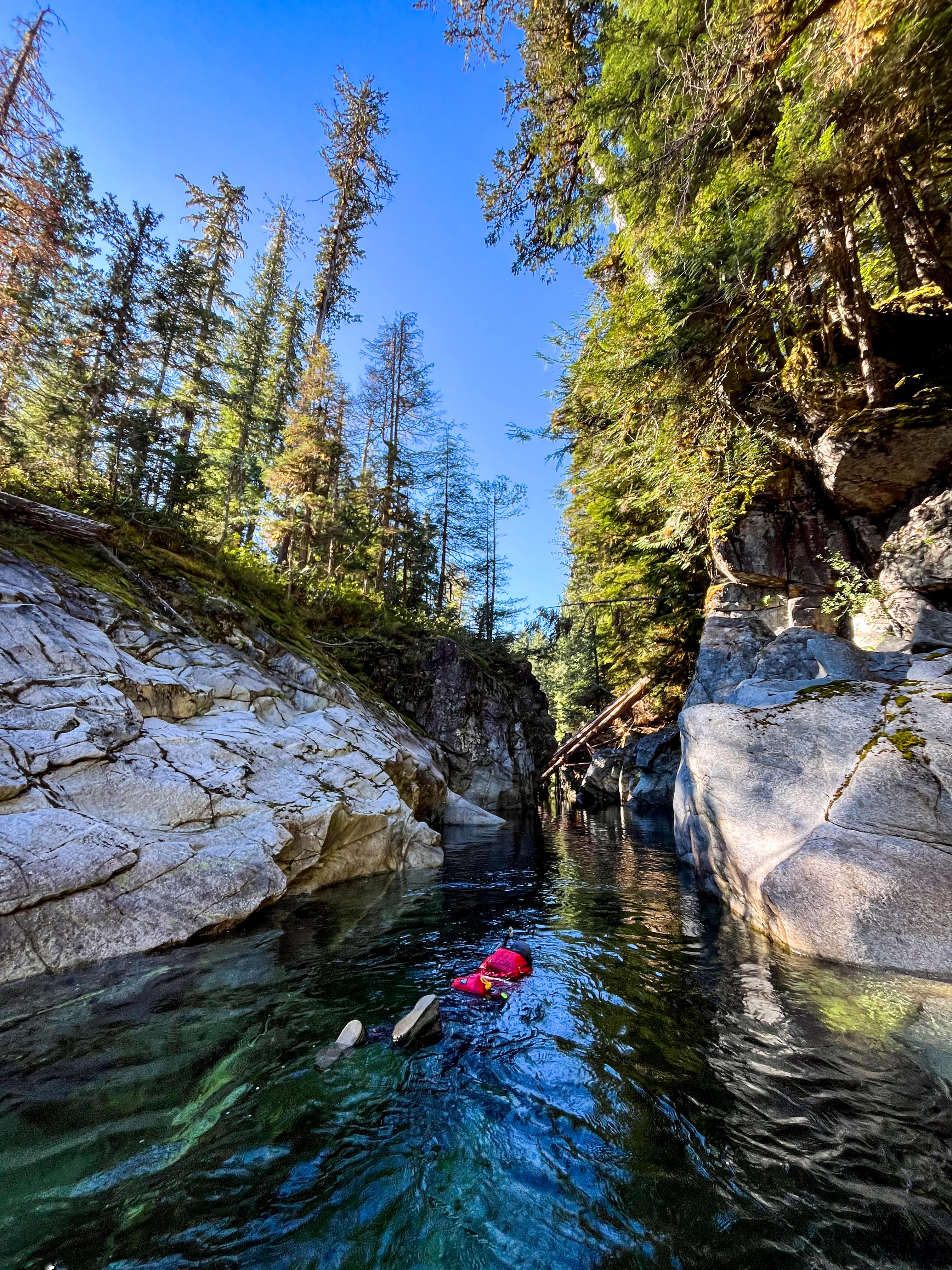
1-826 Vancouver Island Steelhead Stock Decline Investigations, BC Conservation Foundation - Upper Gold Snorkel Survey, photo by Danny Swainson

The Habitat Conservation Trust Foundation is proud to announce over $8.6 million in funding for 110 conservation projects throughout British Columbia. 

For over forty years, the Habitat Conservation Trust Foundation (HCTF) has provided grants with over $242 million contributed to conservation projects and programs. The range of project leaders and conservation actions supported all share the goal of conserving B.C.’s freshwater fish, wildlife, and habitats today for generations. 

As a registered charity and foundation, HCTF’s unique funding model is led by a surcharge on hunting, fishing, trapping, and guide outfitting licences. “Each year, the conservation surcharge from these contributors funds over one hundred fish, wildlife, and habitat projects above and beyond government funding,” says HCTF’s CEO, Dan Buffett. “Yet, we recognize that government funding, such as the Together for Wildlife Strategy, along with funding from partners, First Nations and other organizations and individuals, remains crucial to meet the shared goals to conserve and enhance B.C.’s fish, wildlife and their habitats.” 
7-570 Stone’s sheep seasonal range use in the Omineca Region
Wild Sheep Society of BC

“Our government has been working alongside First Nations, conservation organizations and other key partners for many years to help protect and restore important ecosystems throughout this beautiful province,” says Randene Neill, Minister of Water, Land and Resource Stewardship. “It is deeply rewarding to see the ongoing progress of this crucial work, which is improving the lives of British Columbians today and will continue to benefit future generations. The surcharge revenue, which is dedicated to the Habitat Conservation Trust Foundation’s funding program, complements a suite of integrated conservation initiatives in B.C., including the Together for Wildlife Strategy, the Tripartite Framework Agreement on Nature Conservation, the Conservation Lands Program, the draft Biodiversity and Ecosystem Health Framework, and our commitment to protect 30% of the province’s land base by 2030.” 

Projects supported this year include: 

  • $84,000 to replace aging infrastructure at the Redfish Creek Spawning Channel to continue to supply stock conservation and fishery benefits 
  • $68,224 to restore whitebark pine ecosystems for bear habitat in the Skeena region 
  • $94,050 for the restoration of year-round fish passage and improvement of aquatic and riparian habitat at the Westside Road weirs in Six Mile Creek 
  • $262,650 towards restoring caribou habitat on approximately 86 km of roads within the Whitesail Priority Restoration Area 
  • $99,621 to conduct cultural burns to enhance forest health in the Mount Currie/Líl̓wat area and improve habitats for grizzly bears, black bears, deer, and elk 
  • $45,645 to better understand the factors that limit porcupine survival in north central B.C., given the limited ecological knowledge of this species 

To see the complete list of HCTF-funded projects and learn more about the conservation work being done near you, view the 2025-26 Approved Project List. 

In addition to Fish and Wildlife grants, HCTF provides grants for conservation stewardship and education. Additional projects will be announced in June under our Action, Capacity, and Community Grant programs, and scholarship recipients in autumn.

Update June 18, 2025: The Approved Project List now includes 2025-26 Invasive Mussel Monitoring Grants and Highland Valley Enhancement Fund projects. There are now a total of 122 projects and over $8.9M in funding.
Tue, 22 Oct 2024

Guidance for Applicants: Ecological Corridors Funding

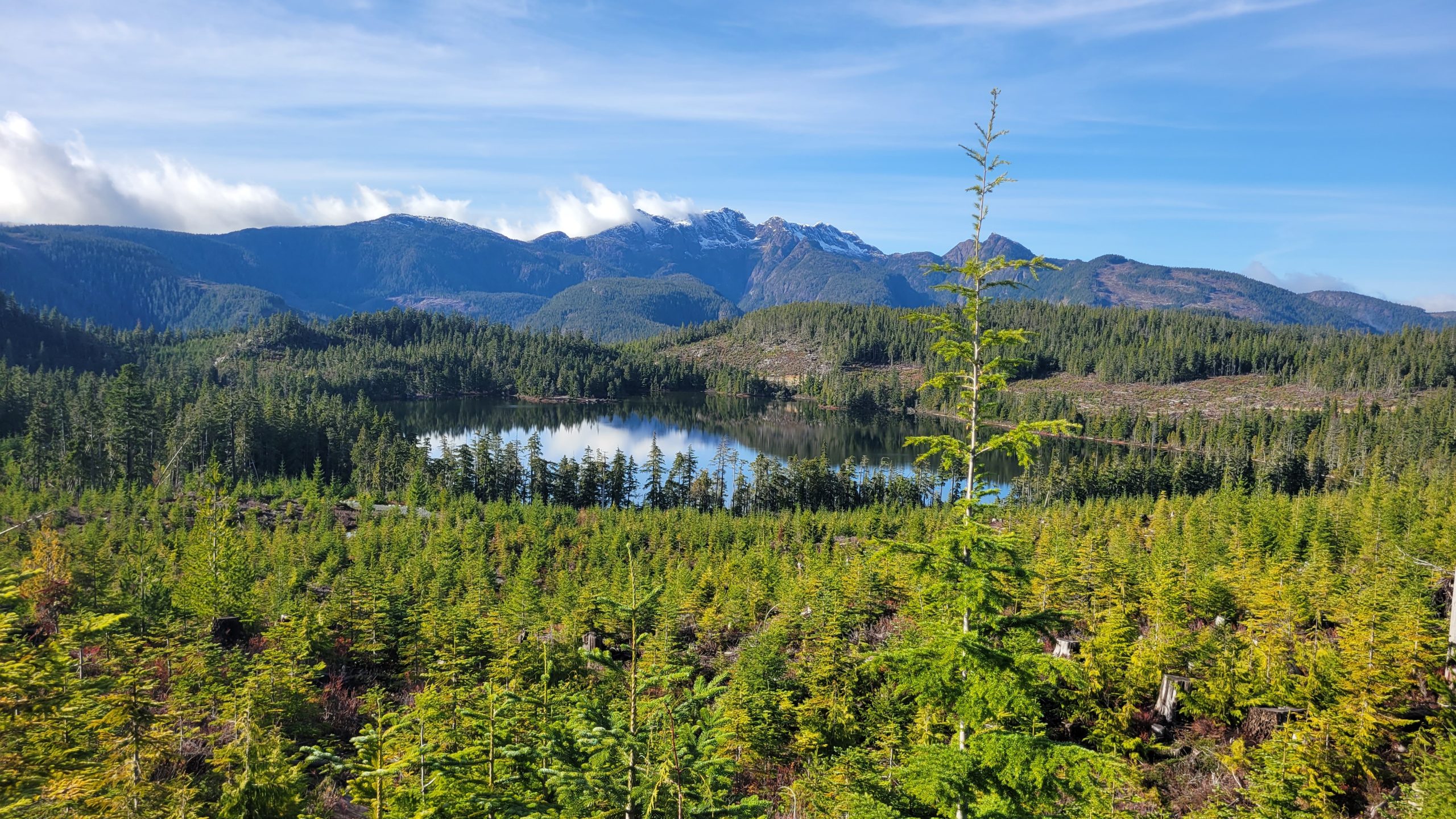
Photo By: British Columbia Conservation Foundation
Project 1-664

Additional information for the ecological corridors funding opportunity for the 2025-26 fiscal year.

The Ecological Corridor funding focuses on identifying, planning, developing, and recognizing ecological corridors, and catalyzing action to maintain or restore ecological connectivity and protect Indigenous stewardship values within them. Check the National Priority Areas of Ecological Corridors 1 to 6 in B.C. (seen here: National priority areas for ecological corridors (canada.ca)).

For more background info on the funding, click here.

This funding is available for applications through the Fish & Wildlife proposal intake. Eligibility for applications to utilize the Ecological Corridors funding is assessed through the same criteria as the Fish & Wildlife Grant and is within the same proposal intake and the same timeline.

Specific aspects of the Fish & Wildlife Grant that are also supported by the Ecological Corridor funding include:

  • On-the-ground fish and wildlife habitat restoration and planning projects (including components that create project plans, restoration plans, and associated land use planning);
  • Population assessment and monitoring for fish and wildlife species to inform habitat management or stewardship; and
  • Monitoring, mapping, and/or application of traditional knowledge that will create habitat conservation, restoration, or enhancement.

Objectives must be to directly inform the management, conservation, restoration, or enhancement of fish & wildlife habitat (i.e. preliminary planning objectives on their own will not be eligible).

Ecological Corridor funding will be applied to projects up to January 2026 including preliminary activities. After this date (i.e. projects assessed in January 2027) will continue to apply to the main Fish & Wildlife Grant, including continuing projects.

It is strongly encouraged that applications demonstrate that a project will be secure in the long term and have a durable impact through its legacy.

Proposals are to be submitted through the regular Fish & Wildlife Grant Survey Apply application process. If you believe that your project would be a good fit for this funding, please add the words “Ecological Corridors” at the end of your project title in your Survey Apply application.

The application deadline for Fish & Wildlife Grants is Friday, November 1, 2024, at 4:30pm PDT.

For questions regarding the ecological corridor funding or Fish & Wildlife Grants, please contact HCTF’s Grants Officer Amy Perkins at amy.perkins@hctf.ca or 250-940-3014.

Projects that have already received funding elsewhere through the Nationals Ecological Corridor program or through the BC-Canada Agreement for Ecological Corridor Stewardship may not be eligible.


Tue, 15 Oct 2024

Meet the 2024 Recipients of the T4W Scholarship!

HCTF in partnership with the First Nations-B.C. Wildlife & Habitat Conservation Forum and the Province of British Columbia’s Together for Wildlife Initiative (T4W) are proud to share more information about the 2024 Together for Wildlife academic scholarship recipients;

The Together for Wildlife scholarship is awarded annually to 10 master’s and Ph.D. candidates conducting research that will have a positive impact on stewardship, management, policy, or decision-making of wildlife in BC. The aim of this scholarship is to support reconciliation and collaboration, diversity of perspectives, and building community among Indigenous communities and rural areas of BC.

More Info


2024 Recipients

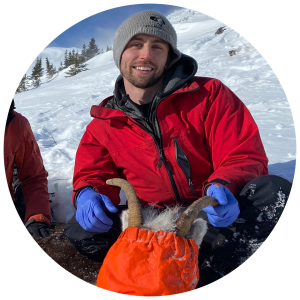
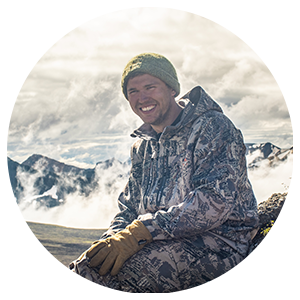
Landon Birch

Landon is a Master’s student studying at the University of British Columbia. His study is investigating nutritional limitations for Stone’s sheep in the Finlay-Russel ranges in north-central British Columbia (BC), the southern extent of Stone’s sheep distribution in the province. His research will help inform efforts to prioritize and improve range conditions, and ultimately, improve the viability of this unique and culturally significant species.

More About Landon

Mitchell Brunet

Mitchell Brunett is a Doctorate student at the University of British Columbia. They are using a suite of GPS-collared mule deer, white-tailed deer, and cougars, as well as vegetation sampling, and camera trap networks to identify the cause of mule deer limitation. Identifying the cause of mule deer decline will ensure we implement management actions such as on-the-ground habitat improvements (e.g., prescribed burns, access mitigation, UWRs) and harvest regulations that make meaningful differences.

More About Mitchell

Tristen Brush

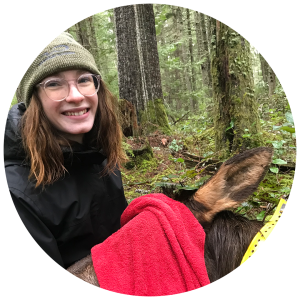
Tristen is a Master’s student at the University of British Columbia. Her work builds on previous research done on elk to apply camera trap distance sampling as a method for estimating the population of other culturally important species such as black-tailed deer and black bears.

More About Tristen

Alexia Constantinou

Alexia is a Ph.D. student at the University of Victoria. Her research is focused on how habitat alteration and human activity are impacting the range, population sizes, inter-, and intra-species interactions of members of the weasel family. This project and the budding relationships are the joyful highlight of Alexia’s professional career thus far. When she’s not in PhD mode, you might find Alexia teaching in the Department of Renewable Resources at BCIT, kayaking, playing Wingspan or biking.

More About Alexia

Westin Creyke

Westin is a MSc student at the University of Northern BC. His research examines the impacts roads have on Stone’s sheep, to define the spatial and temporal extent of the road’s influence on stress in the sheep population.

More About Westin

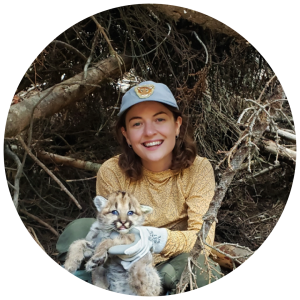
Siobhan Darlington

Siobhan is a Doctorate student at the University of British Columbia. Her research is using GPS data from cougars to evaluate their demography, diet, and seasonal habitat use in the southern interior of British Columbia. This research will address important knowledge gaps on cougar populations in the province and the indirect effects of landscape disturbance on native ungulates.

More About Siobhan

Isabel Giguere

Isabel is a Master’s student at the University of Victoria. Their research will assess how reproduction and immigration shape short-term population dynamics in open and closed populations of black-tailed deer on Vancouver Island who have received immunocontraception. These insights have large-scale applicability and can be extended to large urban wildlife species across North America to promote biodiversity.

More About Isabel

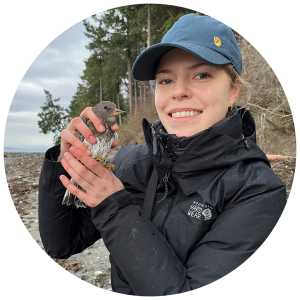
Paige Monteiro

Paige is a Master’s student at Simon Fraser University. They are investigating the overwintering habitat use and diet of two understudied shorebird species, Black Turnstone (Arenaria melanocephala) and Surfbird (Aphriza virgata). By identifying critical habitat and trophic relationships, these findings will help inform conservation efforts, such as designating protected areas and implementing management strategies to safeguard these important bird species and the ecosystems they depend on.

More About Paige

Larisa Murdoch

Larisa is a Master’s student at Thompson Rivers University. Larisa is studying whether female bighorn sheep select rugged, steep terrain—known as escape terrain—during the lambing season and how the availability of such terrain influences their ability to give birth and raise their young safely. Additionally, she is exploring whether herds are more successful when they have better access to escape terrain and the impact of cheatgrass on bighorn sheep movement patterns.

More About Larisa

Megan Roxby

Megan is a Master’s student from Simon Fraser University. Megan is researching how to identify various governance mechanisms that can be used to create an IPCA in the Skagit Headwaters. Megan’s project employs methods from the Collaborative Stewardship Forum (CSF) S’ólh Téméxw Integrity Analysis (STIA) to ensure that it remains Indigenous-led and aligned with Stó:lō principles. It takes a holistic, interconnected, intergenerational approach to relationships, reflecting the Stó:lō worldview and operating within a watershed-based perspective.

More About Megan

If you or someone you know may be interested in applying for the Al Martin HCTF Conservation Scholarship, check out the following links:

Background

Apply Now

Mon, 23 Sep 2024

Al Martin Fellowship Recipients 2024

Photo: BC Conservation Foundation

HCTF and HCTF Education are proud to announce this year’s Al Martin Conservation Fellowship recipients: Adam Kanigan, Carlie O’Brien, and Tessa Rehill. 

The Al Martin HCTF Conservation Fellowship supports graduate students aspiring to careers in fish or wildlife conservation and management in British Columbia. Each recipient is awarded a $10,000 scholarship to advance their research. 

The fellowship honors Al Martin, a respected figure in conservation who began his career in 1977 as a biologist in Penticton, BC. Over the years, Al held key positions including Fisheries Manager, Director of the Watershed Restoration Program, Director of the Fish and Wildlife Branch, Executive Director, and Assistant Deputy Minister of Agriculture and Fisheries. 

After retiring from BC public service, Al continued his leadership in conservation as Director of Strategic Initiatives for the BC Wildlife Federation and served on HCTF’s board. Though Al passed away in October 2019, his legacy of integrity, humor, and passion for preserving fish and wildlife habitats for future generations endures. 

More About Al

2024 Recipients

Adam Kanigan

Adam Kanigan is a Ph.D. candidate at the University of British Columbia, working under the supervision of Dr. Scott Hinch (UBC) and Dr. Nathan Furey (University of New Hampshire). Adam’s research is focused on predator-prey interactions between bull trout and sockeye salmon,and how such interactions between these species may be influenced by climate change. 

More About Adam

Carlie O’Brien

Carlie O’Brien is an MSc student in the Wildlife and Ecosystem Bioindicators Lab at the University of Northern British Columbia working under the supervision of Dr. Heather Bryan in collaboration with the British Columbia Moose Research Group. She holds a Bachelor of Science degree with a specialization in Conservation Biology from Trent University. 

More About Carlie

Tessa Rehill

 Tessa Rehill is an MSc student studying at the University of Victoria. Tessa’s study is investigating urchin distribution and control methods to help revive threatened kelp forest ecosystems in BC. In the underwater seascapes of the North Pacific, kelp forests serve as critical habitats for a diversity of marine life, including important fish, like salmon and herring. Tessa’s study aims to map urchin distributions and test different strategies to mitigate herbivory to achieve targeted and enhanced kelp forest restoration and conservation.  

More About Tessa

Fri, 20 Sep 2024

New Funding Available for Ecological Corridors

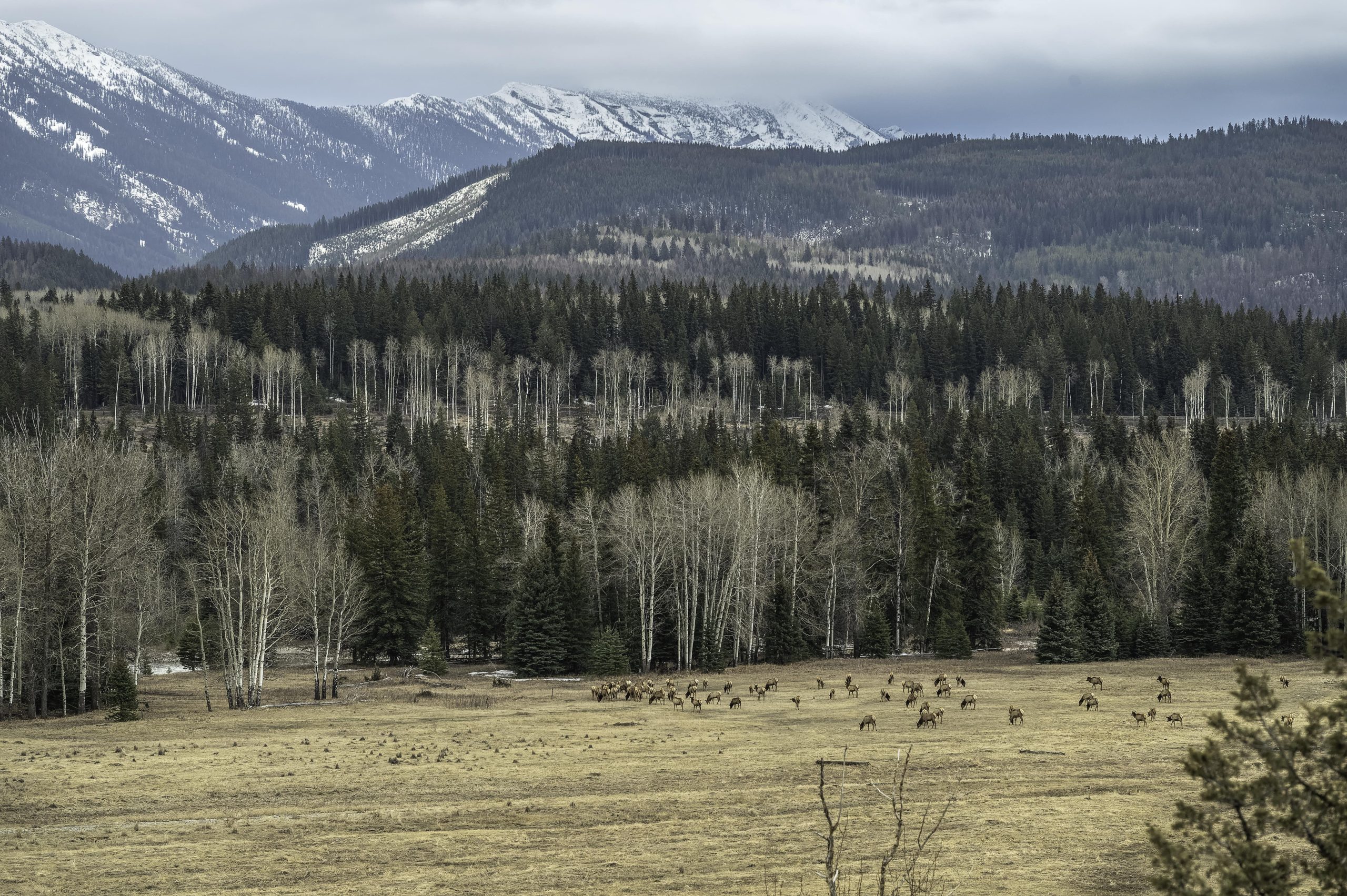
Elk Herd at Big Ranch Conservation Area - photo by Michael Schumacher

In support of the Parks Canada/BC Agreement on the Stewardship of Ecological Corridors in British Columbia program, HCTF is pleased to announce a new funding opportunity for the 2025-26 fiscal year.

This opportunity stems from a collaboration between the Parks Canada National Program for Ecological Corridors and the B.C. Ministry of Water, Land and Resource Stewardship.

The available funding is focused on identifying, planning, developing, and recognizing ecological corridors, and catalyzing action to maintain or restore ecological connectivity and protect Indigenous stewardship values within them. The work is to take place in National Priority Areas of Ecological Corridors 1 to 6 in B.C. (seen here: National priority areas for ecological corridors (canada.ca)).  Within these National priority areas, projects will be favored that coincide with areas of Environment Stewardship Initiative Forums, collaborative stewardship forums, strategic planning processes, or similar government-to-government forums.

The funding is targeted for ecological corridor and habitat connectivity stewardship, through support for
1) area-based planning and local action, like habitat restoration and management, and
2) knowledge acquisition, science, and information development, such as monitoring, mapping, and/or application of traditional knowledge. All area-based planning and local action projects must involve leadership by First Nations or other active First Nations engagement. Knowledge acquisition, science and information development projects with participation from First Nations will be favored although this is not a requirement for work focused on collecting, mapping, and/or modelling ecological data.

Quadra Hill seen from Vanilla Leaf – Galiano Conservancy Association

All projects will need to deliver work that will support durable, long-term ecosystem connectivity before January 2026, or to deliver by the same date a product (e.g., a plan or information to be used in a planning process) that is expected to have a durable impact through its legacy. This funding opportunity is not intended to directly support the construction or purchase of major infrastructure (e.g., wildlife highway overpass), but can be used to support partners in these activities through science, planning, or similar work, or through the purchase of smaller equipment and supplies (e.g., signage, fencing, etc.).

Proposals are to be submitted through the regular Fish & Wildlife Grant Survey Apply application process. If you believe that your project would be a good fit for this funding, please add the words “Ecological Corridors” at the end of your project title in your Survey Apply application.

The application deadline for Fish & Wildlife Grants is Friday, November 1, 2024, at 4:30pm PDT.

For questions regarding the ecological corridor funding or Fish & Wildlife Grants, please contact HCTF’s Grants Officer Amy Perkins at amy.perkins@hctf.ca or 250-940-3014.

Projects that have already received funding elsewhere through the Nationals Ecological Corridor program or through the BC-Canada Agreement for Ecological Corridor Stewardship may not be eligible.

Mon, 16 Sep 2024

Restoring Black Cottonwood Forests of the Kettle River

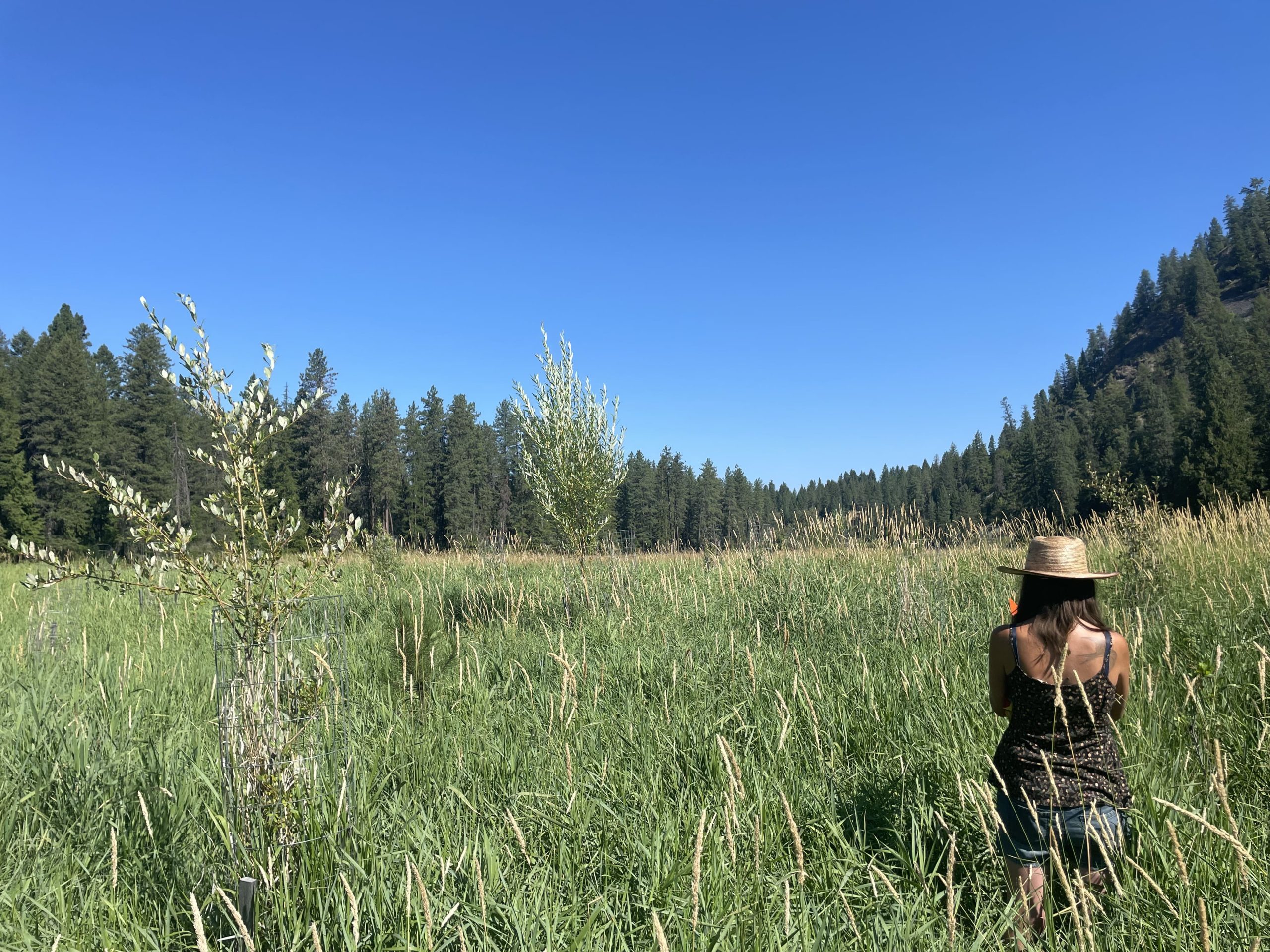
3-year-old cottonwoods growing amongst highly competitive reed canary grass - Barb Stewart

HCTF is proud to commit over $1.3 million in funding for wildlife conservation and conservation stewardship projects in the Kootenay Boundary region this year.

Among this year’s projects in the region is a multi-year project working to conserve the rare black cottonwood forests of the Kettle River. The riparian ecosystems (which help connect land to water and provide fish habitat in B.C.) are home to several species at risk and The Granby Wilderness Society has undertaken restoration work for several years to improve habitat. This year the Society is increasing its stewardship efforts by working with landowners to identify habitat concerns and assist with additional restoration efforts: “The biggest project successes are meeting landowners that have healthy riparian areas and are good stewards. Private lands play such an important role in conservation,” said project leader Jenny Coleshill.

A site planted with rooted stock on the Kettle River north of Rock Creek – Barb Stewart

The project is being supported by the HCTF and the Forest Enhancement Society of BC (FESBC) with $30,480 in co-funding this year.

”HCTF and FESBC believe in the power of a partnership; just like the Granby Wilderness Society, local governments, and landowners who are working together to enhance riparian areas along the river,” said Dan Buffett, CEO of HCTF. “Establishing healthy riparian black cottonwood stands along the Kettle River supports our rivers as they are dynamic systems shifting between flood and drought states. A healthy riparian zone lessens flooding and drought impacts, improves water quality, and supports a more diverse and abundant population of aquatic and terrestrial species along with their habitats.”

Other HCTF-funded projects taking place in the Kootenays include:

  • $130,500 for a River Guardian program in eight Kootenay region watersheds to maintain or improve angling quality and protect our native freshwater fish populations.
  • $83,830 to enhance 112 hectares of elk winter range in the Upper Kicking Horse Canyon through thinning of immature forest to promote forage growth and allow ease of elk movement.
  • $70,150 to restore habitat on approximately 105 km of roads within the Columbia North herd of the Southern Mountain Caribou ecotype.
  • $38,222 for improving the basking log habitat for the blue-listed (Indigenous species which are vulnerable to the region) Western Painted Turtle on Erie Lake.
  • $50,000 for the 2024 Wetlands Institute in the East Kootenays, a seven-day workshop that provides practitioners with the tools and knowledge to initiate wetland stewardship projects.

2023 Wetlands Institute Restoration Design – Jamie Long