
Wed, 9 May 2018
Tags: Stewardship

Opportunity for BC Kids to Participate in Citizen Science

A metallic green sweat bee on a bitterroot flower (Lewisia rediviva) photographed by Valerie Huff in Trail, BC.

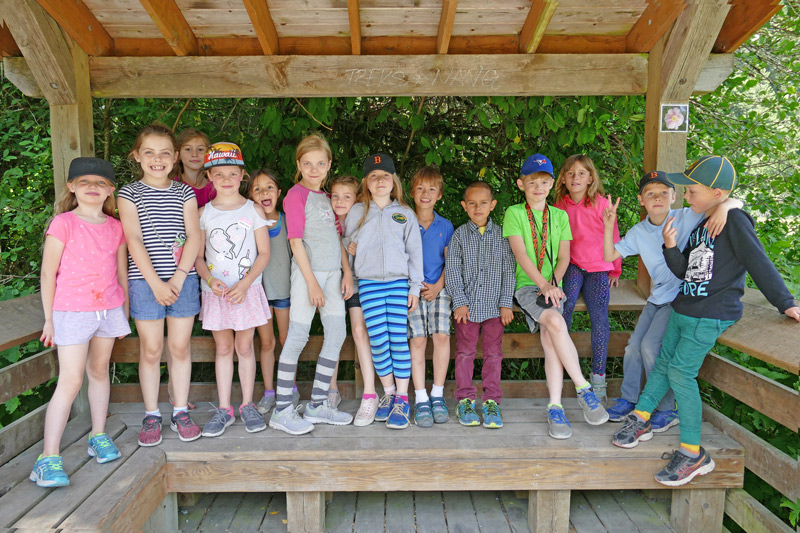
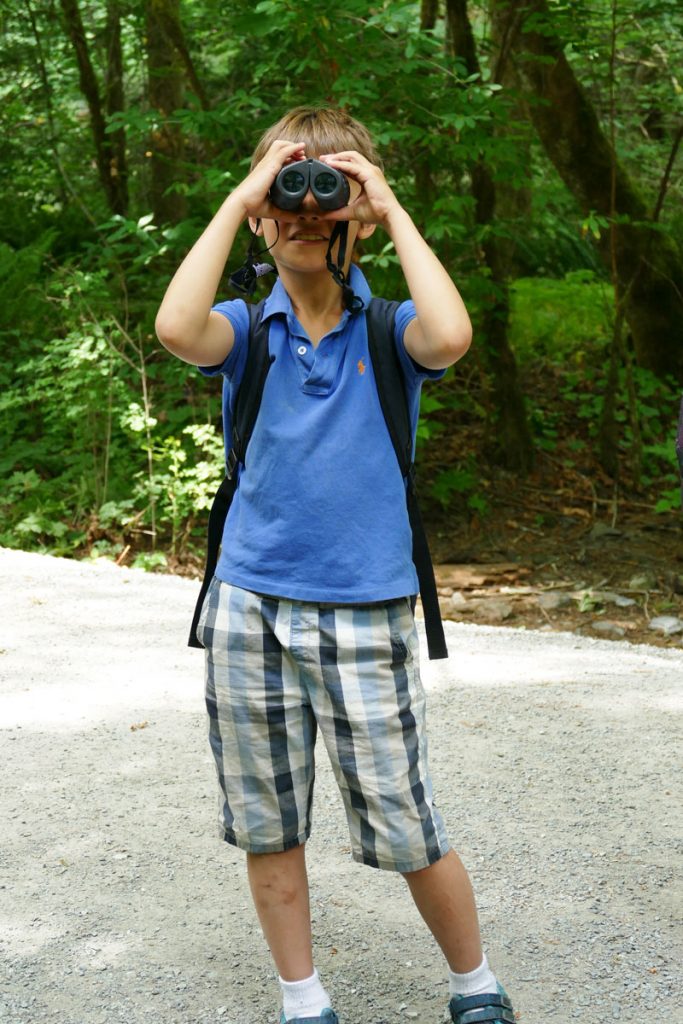
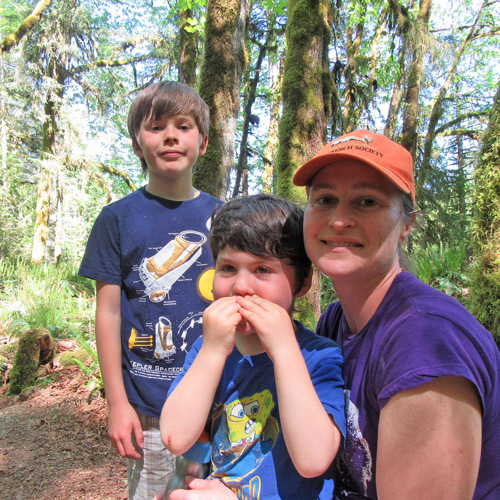
NatureKids BC is launching a new pollinator citizen science project this week that encourages kids and their families all over British Columbia to collect data on local pollinators. The project will provide opportunities for children to get involved in real science and learning about nature on their doorstep.

Through pollinator surveys and education materials, children will learn about wild pollinators and how to identify them. They will collect data on the abundance and diversity of bees, wasps, and butterflies in green spaces in their local area through data collection events and be encouraged to get involved in stewardship activities that increase pollinator habitat.

Pollinators in British Columbia include insects such as beetles, wasps, flies, butterflies and bees that distribute pollen from one flower to another as they forage and as a result fertilize plants. Bees and other pollinators are a key component of global biodiversity because they play a vital role in maintaining wild ecosystems as well as pollinate plants that produce food (crops, fruits, nuts and seeds) that wildlife and humans rely on to survive.

World-wide, pollinator populations are declining with parallel declines in the plants that rely on them for pollination. Both wild and domesticated pollinators are suffering from a range of threats including diseases, pesticide exposure, malnutrition, habitat loss and climate change.

Erin Udal, Pollinator Citizen Science Coordinator with NatureKids BC, says: “Pollinators are a critical component of our environment both here in BC and globally and it takes all of us to help protect them and their essential habitats. Through this citizen science initiative, youth all across BC can contribute to generating local knowledge and awareness and can help our communities make more informed conservation decisions.”

Louise Pedersen, Executive Director with NatureKids BC, adds: “Citizen science is an opportunity to dive into a new universe for children and it’s a great educational tool that harnesses the intrinsic curiosity of children for the natural world. It’s incredibly powerful when children come to understand that they can make a real difference.”

To get involved with NatureKids BC’s pollinator citizen science project and to download instructions and pollinator ID information, visit https://www.naturekidsbc.ca/be-a-naturekid/stewardship-citizen-science/pollinators/

As part of the launch of the pollinator citizen science project, NatureKids BC will host a pollinator survey led by NatureKids BC pollinator educator, Erin Udal on Saturday, May 12 at 1-2:30 pm. by UBC Forest Sciences Center, 2424 Main Mall, Vancouver, BC V6T 1Z4. Learn more here: https://naturekidsbc_2018agm-and-pollintor-explorer-day.eventbrite.ca

NatureKids BC’s pollinator youth citizen science project is supported by the Habitat Conservation Trust Fund, TD Friends of the Environment and Nature Canada.

Mon, 7 May 2018

PCAF Application Deadline May 16th

Salt Spring Island Conservancy staff and volunteers work together re-potting native vegetation as part of their PCAF project.

There’s just over a week left to send in your PCAF application. These grants are available to BC conservation projects with a strong volunteer component. For information on how to apply, see our PCAF application webpage.

Thu, 3 May 2018

Premier Announces Eagle Heights Purchase

Premier John Horgan Announces the purchase and protection of the Eagle Heights property on Vancouver Island

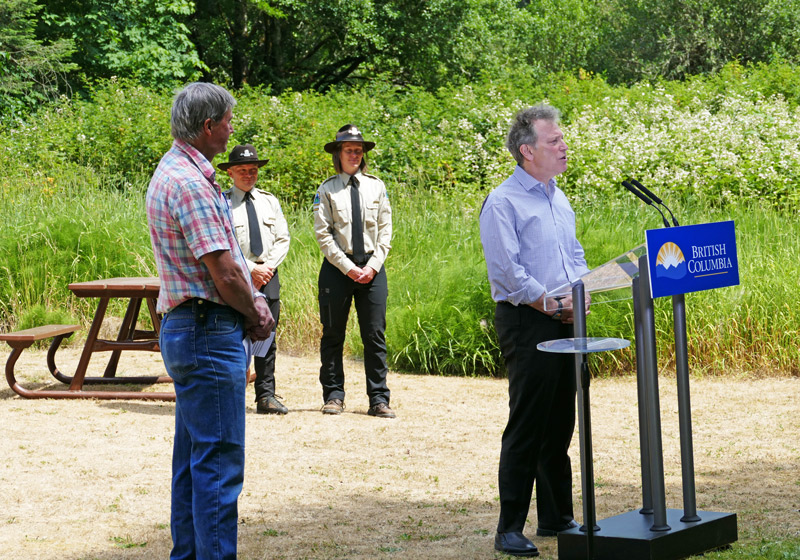
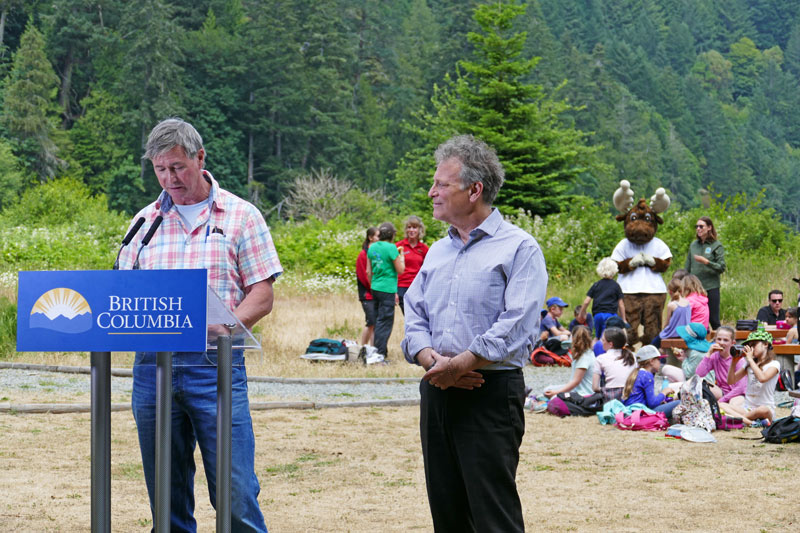
Victoria, BC – Premier John Horgan has announced the successful acquisition of Eagle Heights Grasslands near Koksilah River Provincial Park. Premier Horgan, along with Ministry of Environment and Climate Change Strategy Minister George Heyman and Cowichan Valley MLA Sonia Furstenau, made the announcement on Thursday morning at West Shawnigan Lake Park. They were joined by representatives from Cowichan Tribes, the Cowichan Valley Naturalists and Habitat Conservation Trust Foundation (HCTF) who spoke about their roles in protecting this property and the value of partnerships.

HCTF contributed $400,000 to the purchase of Eagle Heights as part of its habitat acquisition granting program. HCTF CEO Brian Springinotic said the Foundation’s decision to partner with BC Parks on the purchase was because the property contains high-value habitat for many species of wildlife. “Eagle Heights is an interesting mix of habitat types, from pocket grasslands to old-growth forest,” said Springinotic. “These support a diverse assemblage of wildlife, including cougar, black bear, Roosevelt elk, and threatened species like Western Screech Owl and Northern Goshawk.” The Federal Recovery Strategy for the Northern Goshawk laingi subspecies has identified Eagle Heights Grasslands as one of 10 critical habitats on Vancouver Island. The property is also home to many rare and endangered plant communities.

Springinotic credits the province’s hunters and anglers for providing HCTF with the funding used to secure important habitat. “The reason we’re able to help with the purchase of Eagle Heights and the many other conservation properties we’ve helped fund over the years is the conservation surcharge on all angling, hunting, trapping and guide outfitting licences sold in BC,” says Springinotic. “We put a lot of effort into making sure the money raised through licence sales is invested into projects that will make a real difference for fish and wildlife. Buying land to protect its habitat in perpetuity is one way we are working to conserve this province’s incredible natural assets, for the benefit of all British Columbians.”

Mon, 30 Apr 2018
Tags: Stewardship

Tiny Turtles Sign of Spring

HCTF project leader Michelle Evelyn looks at a new painted turtle hatchling on the Sunshine Coast.

Sunshine Coast residents are being asked to keep their eyes open for one of the most wonderful signs of spring: tiny baby turtles emerging from their underground nests.

The coastal population of Western painted turtle is federally threatened and provincially red-listed and faces many threats. For over a decade, the Sunshine Coast Wildlife Project has been working with the community to ensure the survival of this species at risk.

Painted turtles lay their eggs in June and the babies hatch in the fall but remain in their underground nest all winter and don’t leave their nests until the following spring. Baby turtles emerge from distinctive rectangular holes and each tiny hatchling is the size of a loonie.

Identifying nest sites and monitoring nest success is critical to conservation efforts to project the species. If you have seen a baby turtle or a nest emergence hole, please report your sighting by emailing coastwildlife@gmail.com or calling 604-989-1007.

Turtle stewardship efforts on the Sunshine Coast are supported by the Habitat Conservation Trust Foundation, Gencon Foundation, and the Habitat Stewardship Program for Species at Risk. For more information visit www.facebook.com/coastwildlife or www.coastwildlife.ca

Thank you to project leader David Stiles for providing this project update.

Tue, 24 Apr 2018
Tags: Wildlife

Fisher Habitat Extension Program wins Silver Award

Rich Weir is awarded the Silver Award by HCTF Board member Don Wilkins

HCTF project leader Rich Weir has been awarded the HCTF Silver Award for the Fisher Habitat Conservation Provincial Extension Program. This extension project has made great strides in increasing forest managers’ awareness of fishers and their habitat needs.

“Forest management has the single largest human-caused effect on the sustainability of fisher habitat in British Columbia,” says Weir, who is a carnivore conservation specialist with BC’s Ministry of Environment. “It accounts for over 120,000 ha of habitat changes within the range of fishers each year. Fortunately, opportunities exist during all phases of forest management to incorporate decisions that may positively affect the supply of habitats for fishers.”

The program organizes forest planning workshops for licensees, government regulators, and contractors working in areas where fishers live. Workshop participants learn how to identify fisher habitat and how they can help meet habitat retention targets within their operations. The program has also developed information and tools for timber cruising crews, layout personnel, operational foresters, machine operators, and others who make fine-scale forest management decisions that affect the future supply of habitat for fishers. Learning resources and tools are available on the program’s website at https://www.bcfisherhabitat.ca/

The Silver Award was created in 2006 in honour of HCTF’s 25th anniversary and in recognition of the contributions of long-time manager, Rod Silver. It is awarded to projects that have truly made a difference for conservation in BC and that best exemplify the work of the Foundation.

Fri, 13 Apr 2018
Tags: Caribou

Province Grants $2 million to create Caribou Habitat Restoration Fund

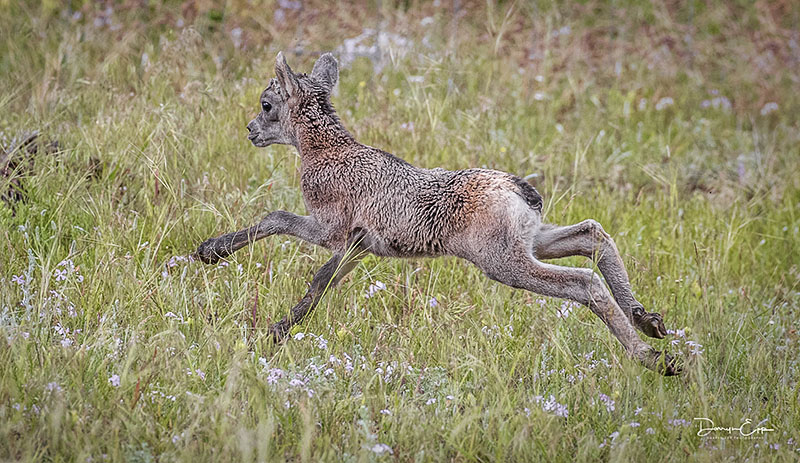
Caribou

The Habitat Conservation Trust Foundation has received $2 million dollars from the Province of British Columbia to help restore caribou habitat.
Doug Donaldson, Minister of Forests, Lands, Natural Resource Operations and Rural Development, announced the funding this morning at the BC Wildlife Federation Conference in Kamloops. The funding is part of the Province’s comprehensive caribou recovery program, designed to conserve BC’s 54 caribou herds, some of which are in serious jeopardy.

“There were about 40,000 caribou in B.C. in the early 1900s. Today, there are only about 19,000 caribou left,” said Donaldson. “We need to do whatever we can to help enhance and recover caribou habitat to rebuild the numbers of this iconic species.”

Caribou require large home ranges and have complex habitat requirements. Many of the areas where caribou live have been affected by human disturbance, negatively impacting caribou survival. Restoring caribou habitat has been identified as a key component of caribou population recovery efforts.

The Habitat Conservation Trust Foundation (HCTF) has a long history of managing funding for projects restoring habitat in BC. Since 1981, HCTF has funded over 2500 projects benefitting BC’s wildlife, freshwater fish and habitats. HCTF CEO Brian Springinotic said he was pleased the Province had chosen to partner with HCTF in its efforts to recover caribou habitat. “The goals of the provincial caribou recovery efforts directly align with the Foundation’s mandate to improve conservation outcomes for British Columbia’s wildlife,” said Springinotic.

Over the next month, government staff will be working with HCTF to develop the funding program. Additional information will be posted on HCTF’s website as details are confirmed.

For further details, see the BC Government News Release: https://news.gov.bc.ca/releases/2018FLNR0060-000624