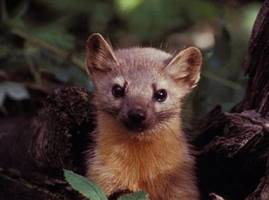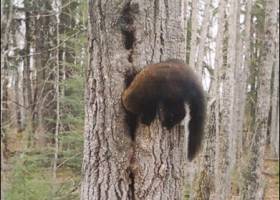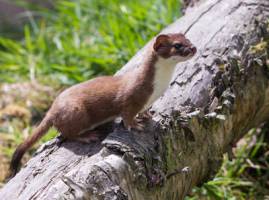

What difference does your HCTF project make to wildlife conservation? We asked 14 wildlife project leaders this question at the annual HCTF Project Evaluation Workshop recently held in Kelowna. These workshops have become an annual highlight for HCTF Board members and staff and, as it turns out, for many project leaders as well. We learned how $14 million provided 60 project-years’ worth of habitat enhancement, population monitoring and habitat requirement studies for a multitude of species: elk, deer, moose, sheep, bear, cougar, wolves, marten, weasel, mink, bats, frogs, owls and bluebirds. The following is a list of presentations given at this year’s workshop:
| Presenter |
Project Name |
| Erin Rutherford | South Coast Bat Conservation |
| Michelle McLellan | Population trend, vital rates, and habitat condition of the endangered Stein/Nahatlatch grizzly bear population |
| Larry Davis | Inventory of fisher populations and dens in the Bridge River watershed |
| Kevin Duncan | Lytton elk (Cervus canadensis) population enumeration and habitat enhancement. |
| Tara Szkorupa | Kootenay Moose General Open Season Monitoring |
| Tara Szkorupa | Mule Deer Population Composition Surveys |
| Lisa Tedesco | Boundary Ecosystem Restoration |
| Doris Hausleitner | Western Screech-owl Habitat Stewardship and Home Range Analysis in the West Kootenay |
| Dennis Jelinski | Assessing predation risk from wolves and cougars for caribou in the Purcell Mountains. |
| Thomas Sullivan | Enhancing Marten and Weasel Habitat on Clearcuts |
| Melissa Todd | Terrestrial Habitat Requirements of Coastal Tailed Frogs in Northwest BC |
| Dexter Hodder | North American Mink Population Densities, Habitat Selection & Diet in Central BC |
| Daniel Lirette | Efficacy of UWR”s and survey optimization for bighorn sheep in MU 7-19 |
| Alicia Goddard | Peace-Liard Burns |
| Jemma Green | Georgia Depression Western Bluebird Reintroduction |
Each person provided a 20 minute presentation summarizing project objectives, results and what these accomplishments implied for conservation and management. Immediately following each presentation, workshop attendees were given time to fill out a presentation evaluation form requesting their comments, suggestions, and opinions on the degree to which the project contributes to wildlife management in BC. In the coming months, HCTF will be collating this project feedback (along with participants’ assessment of the workshop itself) and incorporating it into an evaluation workshop report. We’ll post a notification on our blog when the report is available: in the meantime, you can view reports from past workshops here.
Our sincere thanks to the grant recipients who participated in the workshop, both for sharing information on your project and providing valuable insight on the work of your peers.

Indeed, both Sharp-tailed grouse and Sandhill cranes were observed by celebration participants on an NCC-led tour of the newly-acquired lands. One of those participants was the land’s former owner, Agnes Jackson. Her family sustainably managed these grasslands for over 40 years, and her decision to sell to the Conservancy was based on her desire to see them remain a haven for many plants and animals.
“The success of our last PCAF project has inspired all of us, the sportsmen’s club, the conservation partnership and the provincial government to keep working together for habitat recovery in the Garnet”, said Bryn White, SOSCP Program Manager. In 2012, HCTF’s PCAF program supported an application from the groups to fence one of the last wetlands in the valley called Ritchie Lake that had been significantly degraded by mud-bogging off road vehicles and cattle. In one year after the wildlife-friendly fence was built, the dry rutted area was unrecognizable. In its place was a beautiful and lush wetland complete with reeds, dragonflies and ducks. This year, the group took some time to sit and have lunch at Ritchie Lake to enjoy the view. It wasn’t long before talk of another damaged wetland area seen in the north end of Garnet Valley came up that would benefit from excluding cattle and mud-bogging off road vehicles. McLachlan Lake looks very similar to Ritchie Lake – pre-fence. It is holding water for the first time in a number of years, and would be a perfect joint project given its location between the Summerland and Peachland Sportsmen’s Club. Stay tuned to hear how they tackle this one.