Thu, 3 Jul 2025

$560k for Conservation Stewardship Projects

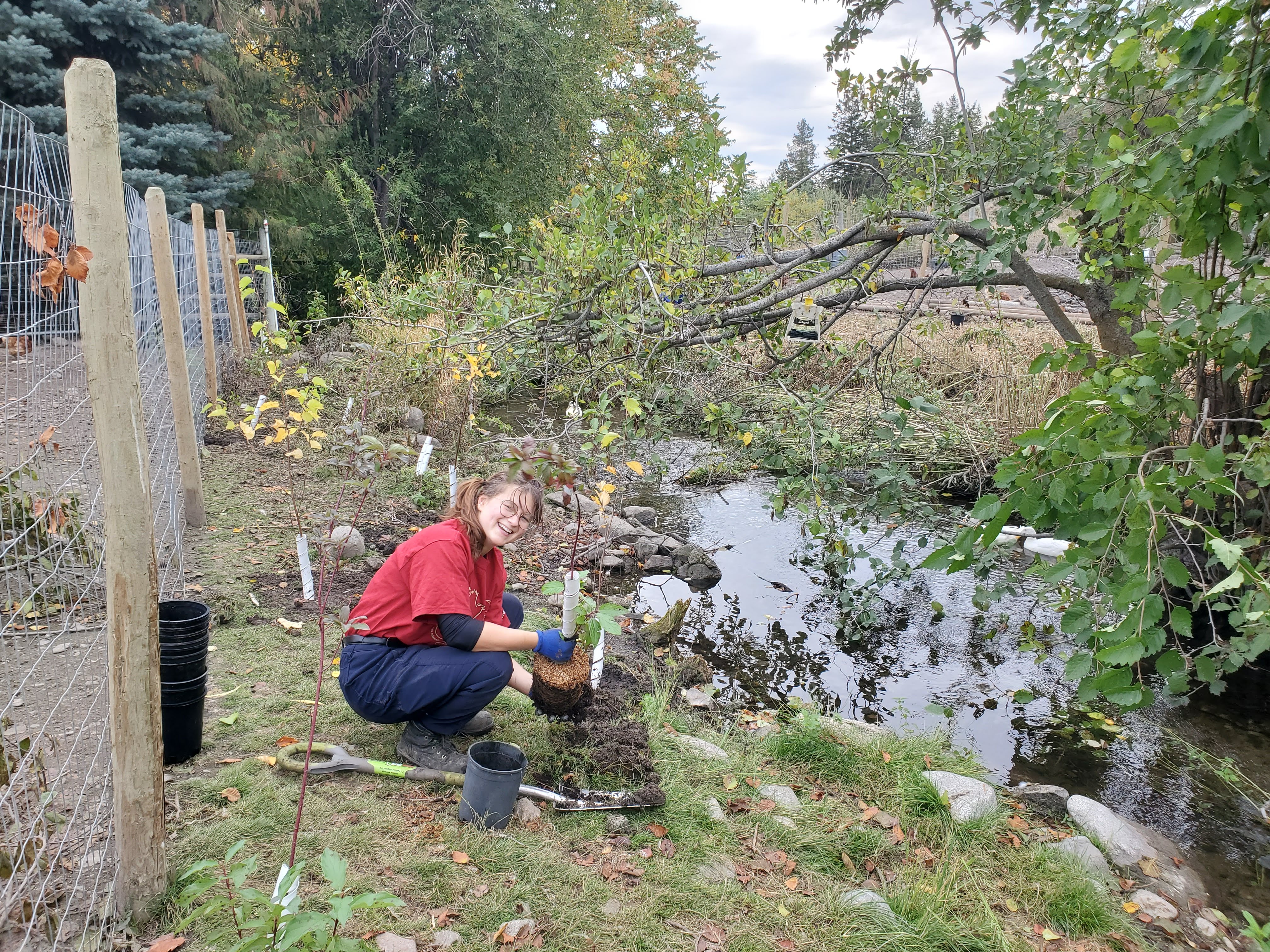
Habitat Restoration in the Garnet Valley - photo by Okanagan Similkameen Stewardship

HCTF recently approved over $560k in funding for 41 conservation stewardship projects throughout B.C.

Projects under HCTF’s Action, Capacity, and Community Grant programs are included in the funding.

Action Grants, which have a two-year term, support projects that directly involve people and communities to change behaviours and/or practices leading to positive and measurable conservation outcomes.

Action Grant projects this year include:
• $32,000 to promote sustainable land stewardship on Anarchist Mountain that supports wildlife habitat, reduces human-wildlife conflict, and integrates FireSmart strategies with caring for wildlife habitat.
• $16,000 to assist residents and managers of six mobile home parks near wildlife corridors in the Prince George area with waste management updates to reduce human-bear conflicts.
• $30,000 to provide landowners in the Craigflower Creek watershed headwaters with the knowledge, resources, and incentives to become habitat stewards on their property for the long-term health and protection of the land, waters, and wildlife.

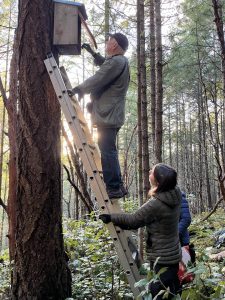
Western Screech Owl Nest Box Cleaning – photo by Habitat Acquisition Trust

Capacity Grants also have a two-year term and provide funding to build and strengthen the capability and capacity of organizations to design and deliver conservation or restoration projects successfully.

Capacity Grant projects this year include:
• $17,880 to ensure Guardians of Skwlāx te Secwepemcúl̓ecw can apply traditional ecological knowledge, cultural protocols, and the Secwépemc language to contemporary environmental stewardship practices.
• $25,000 for the BC Bee Atlas Capacity Building Project to respond to pollinator declines by training community scientists in bee survey and identification techniques.
• $25,000 to develop a comprehensive Wildlife Population and Land Use Plan that aligns with the Nak’azdli Whut’en Land Stewardship Plan, enhancing wildlife and habitat protections across 25,820 km² of traditional territory

Community Grants have up to five years to complete and involve as many volunteers as possible to implement on-the-ground conservation work, with a particular focus on hands-on, community-based, and public awareness initiatives.

Community Grant projects this year include:
• $3,904 to restore an endangered wetland Garry oak ecosystem in Vanier Nature Park in the Comox Valley.
• $7,085 for restoration of native amphibian habitat in Everett Crowley Park through invasive removal, native replanting, and amphibian habitat surveys.
• $7,200 to address habitat loss for Chunih Cho (fishers) by designing and deploying artificial den boxes in heavily fragmented forests.

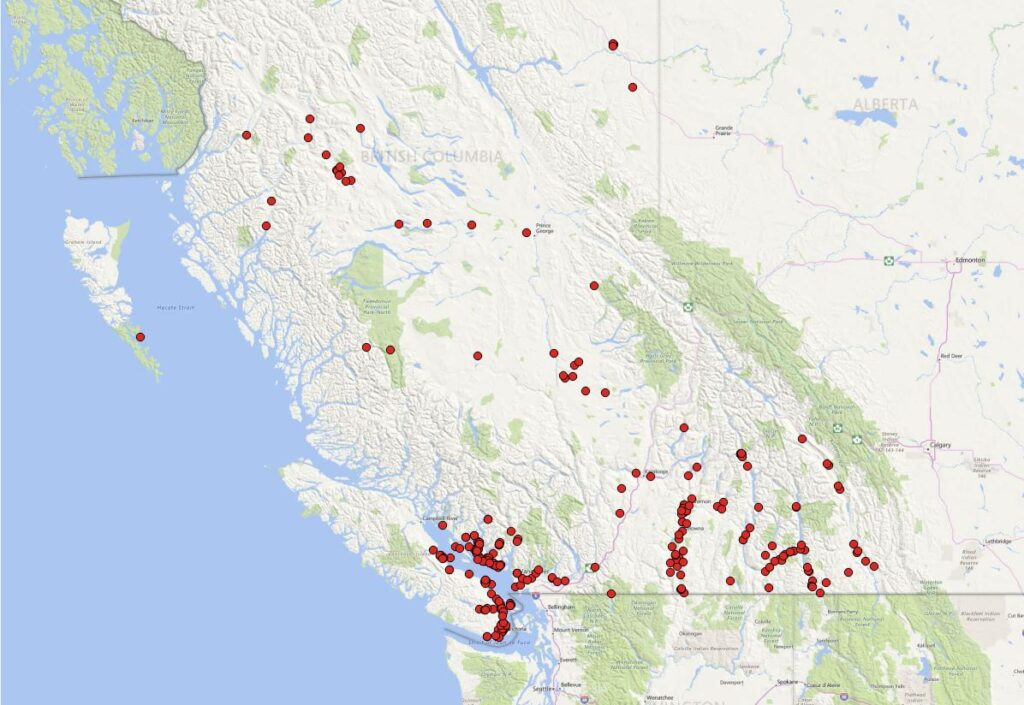
See the list of all 2025 HCTF-funded stewardship projects here (PDF download) or on our Project Map.

Tue, 9 Jul 2024

$650k for Conservation Stewardship Grants

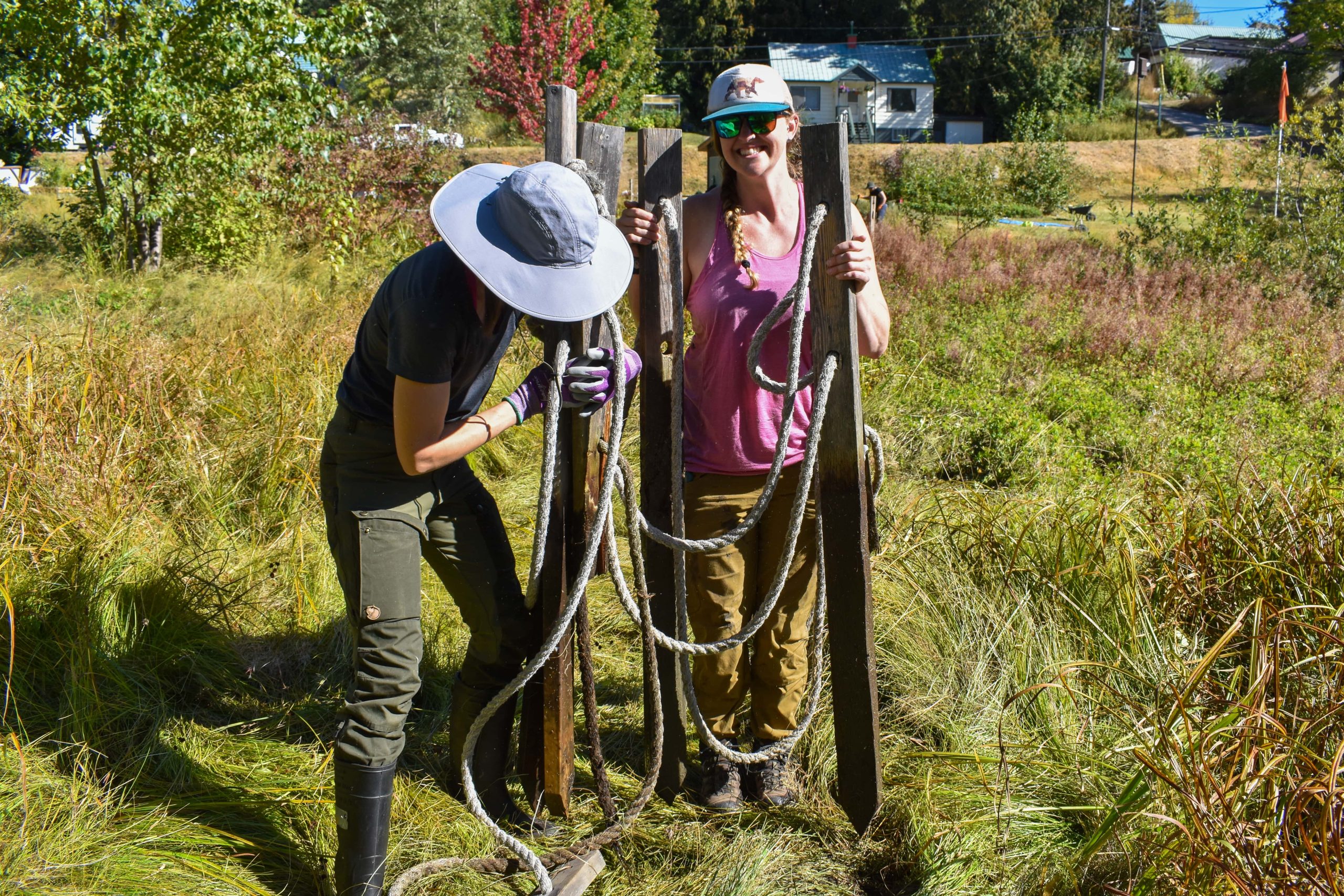
2022 Wetlands Institute participants refencing North Jubilee wetland as it expands outward - BCWF

HCTF has recently approved over $650k in funding for 42 conservation stewardship projects in BC.

Included in the funding are projects under HCTF’s stewardship grant umbrella: Action, Capacity, and Community Grants.

Newly launched Action Grants support projects that directly involve people and communities to change behaviours and/or practices leading to positive and measurable conservation outcomes in British Columbia.

Projects include:

  • $50,000 for the 2024 Wetlands Institute, a 7-day workshop providing necessary tools and knowledge for practitioners to initiate wetland stewardship projects across B.C.
  • $25,000 to connect a community of rural landowners and community partners with skills and resources to improve water quality and aquatic habitats in the Langley area
  • $50,000 to support a landholder engagement program to share cultural teachings and ways of knowing about Xpey’ (cedar) and relationships with the land, and inspire a range of restoration and management actions

Capacity Grants, now in their second year, provide funding to build and strengthen the capability and capacity of organizations to successfully design and deliver conservation or restoration projects.

Projects include:

  • $20,000 to support the development of an Indigenous-led conservation and protection project on Sumas Mountain on the traditional territory of the Semá:th people
  • $24,630 to train and provide experience to Kitselas First Nation members in conducting site assessments for restoration work within the Telkwa caribou herd range
    • This project is funded by the Province of BC and Environment and Climate Change Canada (ECCC) through the Caribou Habitat Restoration Fund (CHRF)
  • $10,000 to create an in-depth management plan to guide moose management in the Chilcotin

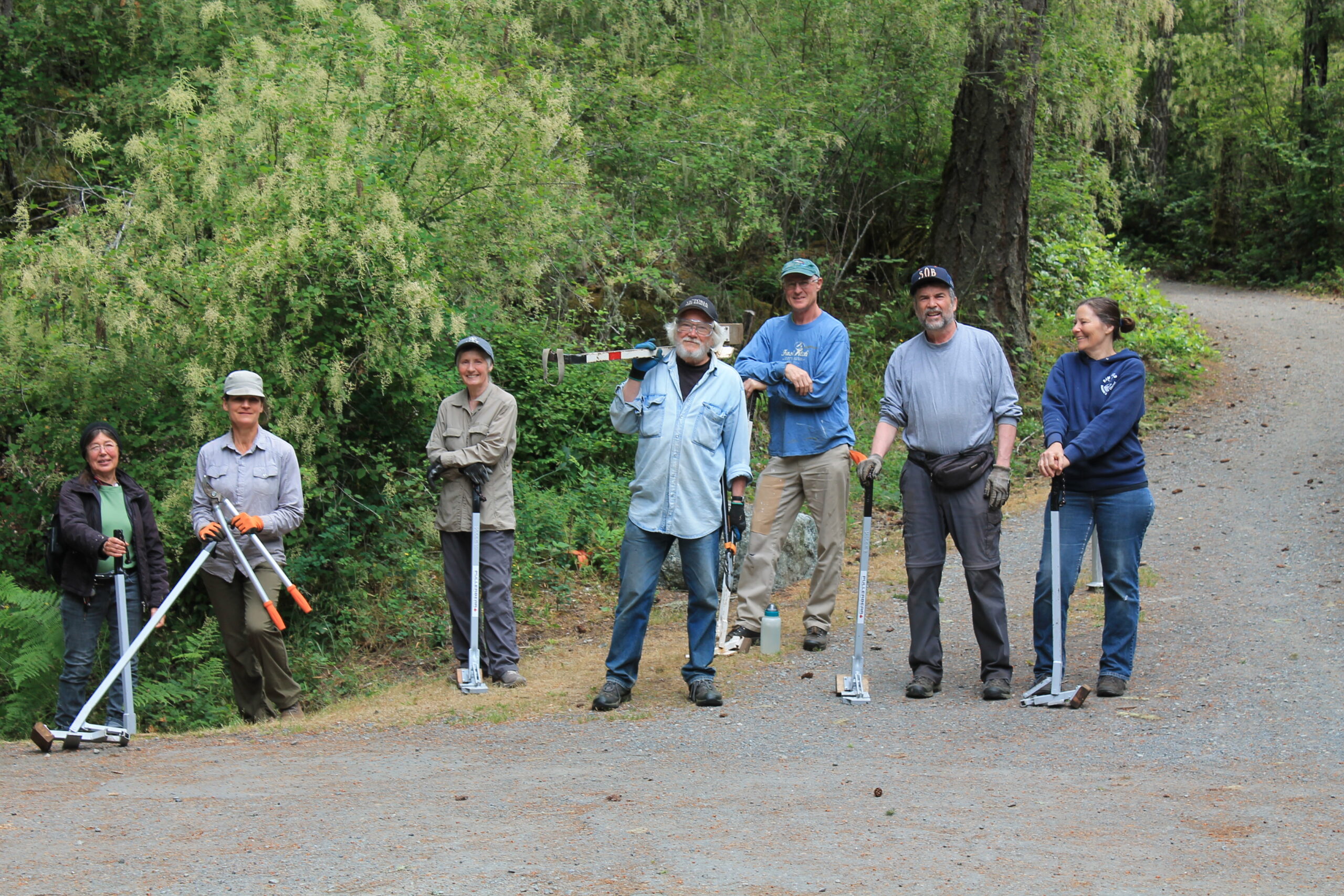
    Volunteers supporting the Metchosin Parks Holly Eradication Project

Community Grants, formerly the Public Conservation Assistance Fund (PCAF), provide funding to organizations and individuals who need financial help to implement a conservation project with a particular focus on volunteer involvement.

Projects include:

  • $10,000 to improve the recovery of native vegetation and enhance breeding habitat for waterfowl and songbirds on Galiano Island through planting of native species and installation of nest boxes
  • $9,700 to restore vital tidal marsh habitats in View Royal Park through eco-cultural fencing, the creation of tidal channels, and replenishing marsh banks
  • $8,120 for a “Nature is for Everyone” program welcoming those who are currently under-represented in the environment restoration movement, and encouraging families to improve habitat while connecting with nature

See the list of all 2024 HCTF-funded stewardship projects here (PDF download).

Thu, 13 Jul 2023
Tags: Community / PCAF

18 Community Grant Projects Receive Funding

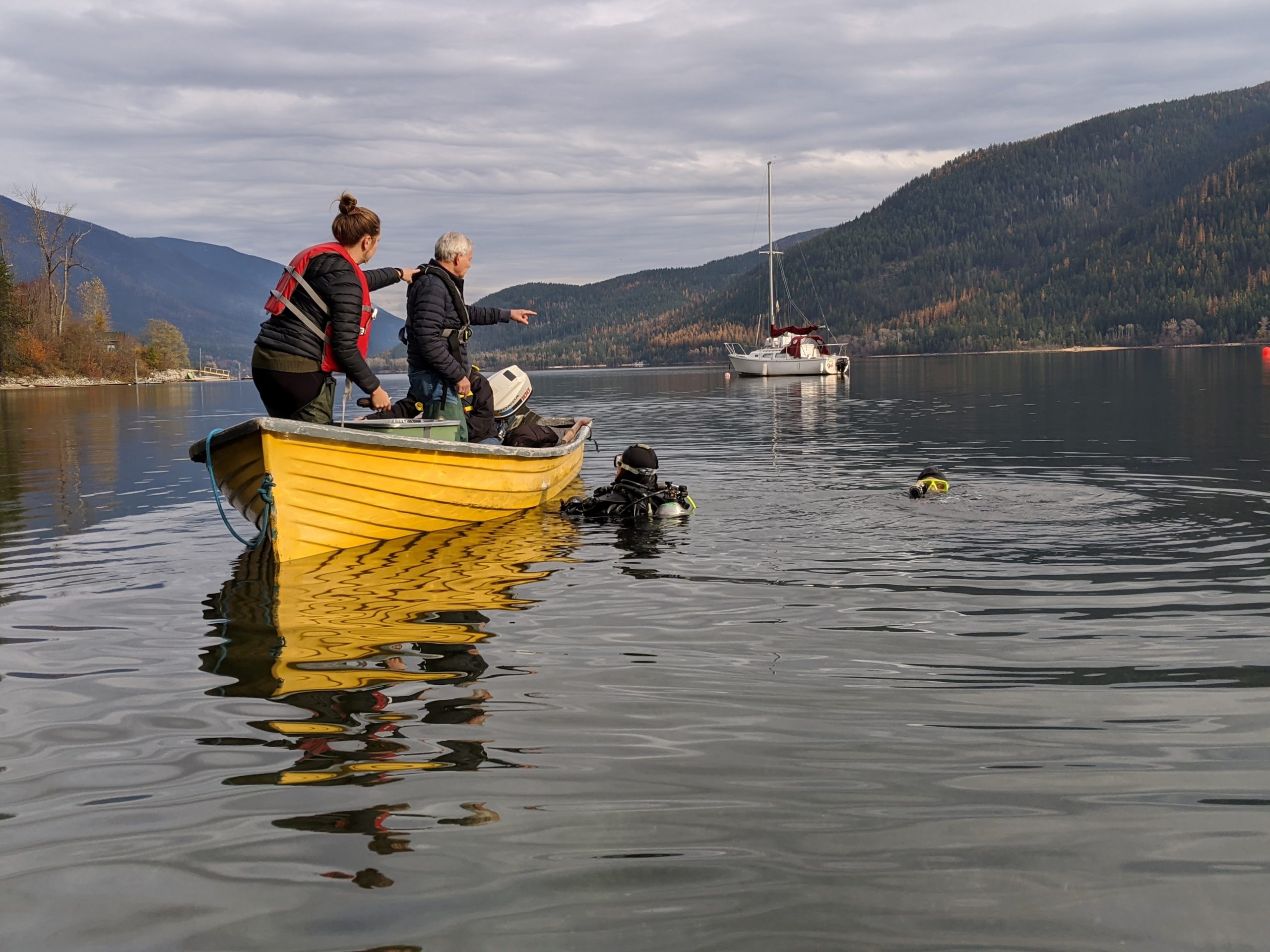
Friends of Kootenay Lake Stewardship Society - Volunteers working on The Kootenay Lake Kokanee Salmon Spawning Habitat Research and Restoration Project

HCTF’s Community Grants (formerly PCAF) will be providing funding to 18 different projects working to complete volunteer-based conservation projects in BC. The Foundation approved $149,656 in grants this year for projects ranging from creek restoration to bat protection and monitoring. A full list of this year’s grant recipients is below.

You can find out more about HCTF’s Community Grants program here.


Mill (Harrop) Creek Kokanee Spawning Gravel Weir

SPONSOR: WEST ARM OUTDOORS CLUB

The West Arm Outdoors Club is undertaking a kokanee spawning habitat project in Mill Creek located at Harrop BC. Two gravel platforms will be constructed at the lower reach of Mill Creek before it flows into the West Arm of Kootenay Lake. Volunteers and local community members will build two engineered gravel platforms that are designed to support quality spawning gravel. Kokanee spawners will utilize the platforms and club members will work with the Ministry of Forests–fisheries to count spawner numbers.


Simpcw Caribou Lichen Collection

SPONSOR: SIMPCW NATURAL RESOURCE DEPARTMENT

Simpcw is undertaking a lichen collection project to aid in a supplemental caribou feeding program. The Project will deploy help from community members, while on a guided interpretive walks, volunteers will aid in lichen collection. The lichen, along with an ungulate grain feed, will supplement caribou diets during the winter to help improve overall health for the herd.


Whitebark Pine Community Cone Cleaning

SPONSOR: SIMPCW NATURAL RESOURCE DEPARTMENT

The Whitebark Pine Community Cone Cleaning Project will help conserve and restore whitebark pine populations, which are keystone species in high elevation forests of Simpcw Territory. Whitebark pine cones contain nutrient-rich seeds that are important food sources for wildlife and are critical to the tree’s reproductive cycle. Community members will help to remove the seeds from the cones, then clean and prepare the seeds to grow new trees for restoration planting. Some of the seed will also be retained by the community for food and medicinal use. The project will provide an opportunity for community members to get involved in conservation efforts, learn more about the importance of whitebark pine trees, and build partnerships between different organizations.


Revitalizing Lost Lagoon

SPONSOR: STANLEY PARK ECOLOGY SOCIETY

This project will revitalize Lost Lagoon in Stanley Park with six connected artificial islands and six floating logs for wildlife. The goal is to improve the natural infrastructure surrounding Stanley Park’s freshwater ecosystem and enhance biodiversity for climate resiliency. The project will engage community volunteers in hands-on habitat enhancement and restoration to foster an appreciation for freshwater ecosystems and build a community of stewards and create a knowledge transfer strategy to encourage sustainable behavior changes for the protection of freshwater in Canada.


Elk Valley Cottonwood Restoration – Phase 2: Conservation Lands

SPONSOR: ELK RIVER ALLIANCE

Elk Valley Cottonwood Restoration – Phase 2: Conservation Lands will restore riparian and floodplain forests on conservation properties in the Elk Valley. Volunteers will plant thousands of native plants to improve and protect aquatic and terrestrial habitat for vulnerable species like Westslope cutthroat trout, elk, grizzly bear, blue heron and other species while improving flood resilience to protect downstream communities.


Silver Star Black Bear Education Trail

SPONSOR: SILVERSTAR PROPERTY OWNERS ASSOCIATION

The Silver Star Black Bear Stewardship Group will use art, wonder and play to inspire people to conserve black bears in their habitat. Multiple themed stations along a newly formed black bear education trail will be created, each with its own unique purpose. The stations will guide the public on black bear biology and behaviour as well as provide stories of bears in their habitat throughout history.


S,DÁYES Flycatcher Forest Restoration Project

SPONSOR: RAINCOAST CONSERVATION FOUNDATION

Raincoast’s Forest Conservation Program (FCP) aims to strengthen protection and stewardship of rare Coastal Douglas-fir (CDF) forests characteristic to BC’s south coast. A strategy to achieve this goal has been to establish a land trust. Having co-purchased two conservation properties on S,DÁYES (North Pender Island) since 2021 we are working to establish restoration strategies that involve community members, honour W̱SÁNEĆ Knowledge systems, enhance biodiversity, increase carbon sequestration, and maximize climate resilience.


Stewardship Initiatives for Invasive Plant Management on Public/Crown Lands

SPONSOR: EAST KOOTENAY INVASIVE SPECIES COUNCIL

The East Kootenay Invasive Species Council is utilizing HCTF Community Grant funding to mobilize individuals for invasive species management across the East Kootenays. Through this community-driven initiative, resources for tackling invasive species are being made accessible to the public. The project aims to assist in identifying invasive species, actively removing them, and restoring sensitive ecosystems by replanting native species. Tangible outcomes are being achieved as a result of this collaborative effort.


Education and Restoration at Dallas Creek

SPONSOR: WILDCOAST ECOLOGICAL SOCIETY

Wildcoast Ecological Society will restore a portion of Dallas Creek in James Park with the help of community volunteers and 400 students from Ecole Moody Middle School of the Arts. Everyone will learn how to protect their neighbourhood creek so that it may provide habitat for salmon and other wildlife for generations.


Bat Habitat Protection and Community Education

SPONSOR: NORTH OYSTER AND AREA HISTORICAL SOCIETY

The North Oyster Hall located in Yellow Point area in Ladysmith, has discovered hundreds of bats roosting in the attic of the hall. This is the largest roosting site in mid Vancouver Island. Our goals are to provide a safe and secure nesting area for the bats, and to be engaged in providing community education on bats and bat conservation. We will set up a live webcam for public viewing and learning about bats and produce informational material that will be available to the public and engage volunteers taking part in bat counts.


Fish Habitat & Riparian Restoration Stewardship Workshops

SPONSOR: B.C. WILDLIFE FEDERATION

The B.C. Wildlife Federation’s Fish Habitat Stewardship Workshops will restore streams and green spaces in Metro Vancouver and Invermere and train participants to become stewards of their local streams. BC is home to many native fish species that are under threat from anthropogenic-caused habitat loss and fragmentation. In many of BC’s urban streams, the quality of available habitat and resident fish populations have been dramatically declining due to pollution and development. Many fish species are extremely vulnerable to climate change, often as a result of struggling to adapt to rapidly changing environments. Our workshops address these issues by improving habitat conditions for native species through habitat enhancements and streamkeeper training.


Lois Creek Stream and Wetland Enhancement Project

SPONSOR: WILDSIGHT

The Lois Creek stream and wetland enhancement is a small-scale ecosystem restoration focused project. It will enhance stream and wetland function along Lois Creek, in Kimberley BC, while engaging many grassroots community groups and local citizens.


Riparian Habitat Restoration and Reed Canarygrass Removal in Mallard Creek

SPONSOR: COMOX VALLEY PROJECT WATERSHED SOCIETY

Robust and healthy riparian corridors through agricultural land are important landscape assets for salmon, amphibians, and birds, providing rearing, spawning, and nesting habitat and filtering pollutants from nearby farming activities. Project Watershed will remove an aggressive invasive forage grass, Reed canarygrass, from Mallard Creek and reestablish a native riparian species that will enhance habitat quality within this stream for fish, amphibians, and birds.


Firehall, Lily and Bilston Creek Riparian Restoration Projects

SPONSOR: BILSTON WATERSHED HABITAT PROTECTION ASSOCIATION

Funding from this grant will be used for educational signage and for restoration of riparian areas along Firehall, Lily and Bilston Creeks in the Luxton neighborhood of Langford. The creeks in that part of Bilston Watershed have been and continue to be heavily impacted. Many new residents of the area are not aware of the restoration potential and ecological value of the creeks. Thanks to the high volume of pedestrian, bicycle and vehicle traffic in Luxton, signage and restoration activities in the Luxton neighbourhood will effectively raise awareness of the interconnectedness and vulnerability of the entire Bilston Watershed.


Ecosystem Restoration via Cultural and Prescribed Fire in the Dry Interior

SPONSOR: B.C. WILDLIFE FEDERATION

The B.C. Wildlife Federation is partnering with First Nations, NGOs, and the government to undertake cultural and prescribed fire treatments in three sites in the Interior, along with other restoration techniques, to restore wildlife and vegetation habitat. Subsequent research will monitor wildlife and vegetation activity to demonstrate the effects of prescribed burns on wildlife and vegetation, which will be used to support future prescribed burn projects. The Community Grant will be used to train volunteers setup and maintain cameras used for data collection and vegetation monitoring.


Quadra Hill Wetland Restoration and Carbon Enhancement Project

SPONSOR: GALIANO CONSERVANCY ASSOCIATION

The Galiano Conservancy Association is restoring 3 ha of degraded pasture and farmland into a forested wetland ecosystem to improve ecological connectivity across its 660+ ha Mid-Island Protected Areas Network. The goal of this project is to restore and enhance the landscape and increase its ability to absorb freshwater and sequester carbon through native vegetation and wetland creation. Central to this goal is establishing climate-resilient western redcedar forest.


Turtles and Toads: Engaging Volunteers To Protect Two At-Risk Species

SPONSOR: COASTAL PARTNERS IN CONSERVATION SOCIETY

Western Painted Turtles and Western Toads are two at-risk species that face many threats in the South Coast region of BC. To protect these iconic species, the Coastal Partners in Conservation Society will engage volunteers and the public to restore habitat and collect important breeding and migration data that can be used to mitigate threats and preserve populations of these species, and their habitats, for years to come.


Lower Craigflower Creek Riparian Restoration

SPONSOR: COASTAL COLLABORATIVE SCIENCES (A DIVISION OF WORLD FISHERIES TRUST)

Coastal Collaborative Sciences (a division of World Fisheries Trust) is working with CRD Parks, the Town of View Royal, the Songhees Nation Marine Team, the Gorge Waterway Action Society, New Roads Recovery, and other community members and stewards to restore the degraded reaches of lower Craigflower Creek. This restoration project will remove invasive plants that have taken over the floodplains and replace them with native riparian vegetation to support birds, amphibians, and endangered salmonids within Craigflower Creek. This multi-year project will improve the stream’s resilience to the impacts of climate change by increasing shade, flood and erosion control, and biodiversity, while providing environmental education, outreach, and natural beauty to our local community.

Wed, 29 Jun 2022
Tags: PCAF

8 Community Conservation Projects Receive PCAF Funding

Volunteers supporting the Metchosin Parks Holly Eradication Project funded by PCAF.

HCTF’s Public Conservation Assistance Fund (PCAF) will be providing grants to 8 different organizations working to complete volunteer-based conservation projects in BC. The Foundation approved over $46,281 in PCAF grants this year for projects ranging from meadow restoration to enhancing barn swallow habitat. A full list of this year’s grant recipients is below.

You can find out more about HCTF’s PCAF program here.


Linley Valley Native Pollinator Meadow Restoration

GRANT RECIPIENT: Nanaimo & Area Land Trust

The NALT Linley Valley Native Pollinator Meadow Restoration project will restore 800 square meters of meadow in the much-loved Linley Valley Cottle Lake municipal park. We hope to transform a non-native grass meadow to one filled with native flowering plants beneficial to native pollinators and birds. In tandem with this restoration work we will be doing education and outreach with the public and with elementary school classes on the benefits of enhancing habitat with native plant species for our threatened native pollinators.


Metchosin Parks Holly Eradication

GRANT RECIPIENT: Metchosin Invasive Species Cooperative

Invasive species in the Metchosin area are becoming a significant concern in our parks and boulevards. MISC members made a presentation to the Metchosin Parks and Trails Committee in April 2018 to bring attention to the proliferation of holly in our area. The Metchosin Parks and Trails Committee passed a unanimous resolution to eradicate holly from all Metchosin parks.


Mill (Harrop) Creek Kokanee Spawning Gravel Weir

GRANT RECIPIENT: West Arm Outdoors Club

This proposed project is intended to involve the local community in a pilot restoration project for West Arm of Kootenay Lake kokanee. Local people will assist in construction of two spawning platforms on Mill (Harrop) Creek. An engineered design calls for logs to be located across the creek at two locations with kokanee spawning gravel placed upstream of the logs thus providing good habitat for kokanee.for kokanee to spawn in.


Cedars for the Next Century

GRANT RECIPIENT: Galiano Conservancy Association

The Galiano Conservancy Association is restoring the Chrystal Creek watershed in a 4-5 year project on Galiano Island. The goal of this project is to restore and enhance natural infrastructure across the watershed, improving the landscape’s ability to absorb freshwater and sequester carbon through native reforestation and wetland creation. Central to this goal is the establishment of diverse native vegetation within a successional framework that will result in the restoration of climate-resilient western redcedar forest in the long term.


Gambier Island Amphibian Monitoring

GRANT RECIPIENT: Gambier Island Conservancy

This project aims to determine the presence and distribution of the Coastal Tailed Frog, Wandering Salamander and Red legged frog on Gambier Island by eDNA testing in the seven largest watersheds on the island in order to inform the Islands Trust Conservancy and Howe Sound Biosphere initiative’s conservation management plans.


Xwaaqw’um Stream Restoration

GRANT RECIPIENT: Stqeeye Learning Society

This project will lead to the conservation of Xwaaqw’um through practices grounded in the knowledge of Quw’utsun Elders and Knowledge Keepers and collaborating with partners who hold Western knowledge and expertise. The benefits from this project are the presence of Quw’utsun Elders and Knowledge Keepers, and the restoration of stream, riparian and wetland habitat at Xwaaqw’um.


Barn Swallow Nesting Structure

GRANT RECIPIENT: Victoria Rowing Society

Support and enhance the population of Barn Swallows at Elk Lake by building a new nesting structure and providing access to new nest sites within an existing building. The project will also prevent accumulation of feces (on equipment) and enhance understanding of Barn Swallows amongst facility-users and the general public, ensuring continuing support for the nesting population currently using the boathouse.


Wetland Protection Toolkit

GRANT RECIPIENT: Invasive Species Council of BC

The Invasive Species Council of BC (ISCBC) is engaging volunteers to be wetland stewards through the Wetland Protection Toolkit project, which will benefit fish and wildlife directly through education and habitat restoration. The toolkit includes resources, habitat restoration at Swan Lake in Victoria, and virtual sessions to encourage local action throughout the province. The focus will be on invasive species, native plants, and their effects freshwater fish and wildlife habitat.


Tue, 10 May 2022

BC Annual Bat Count Seeks Bat Roosts and Volunteers

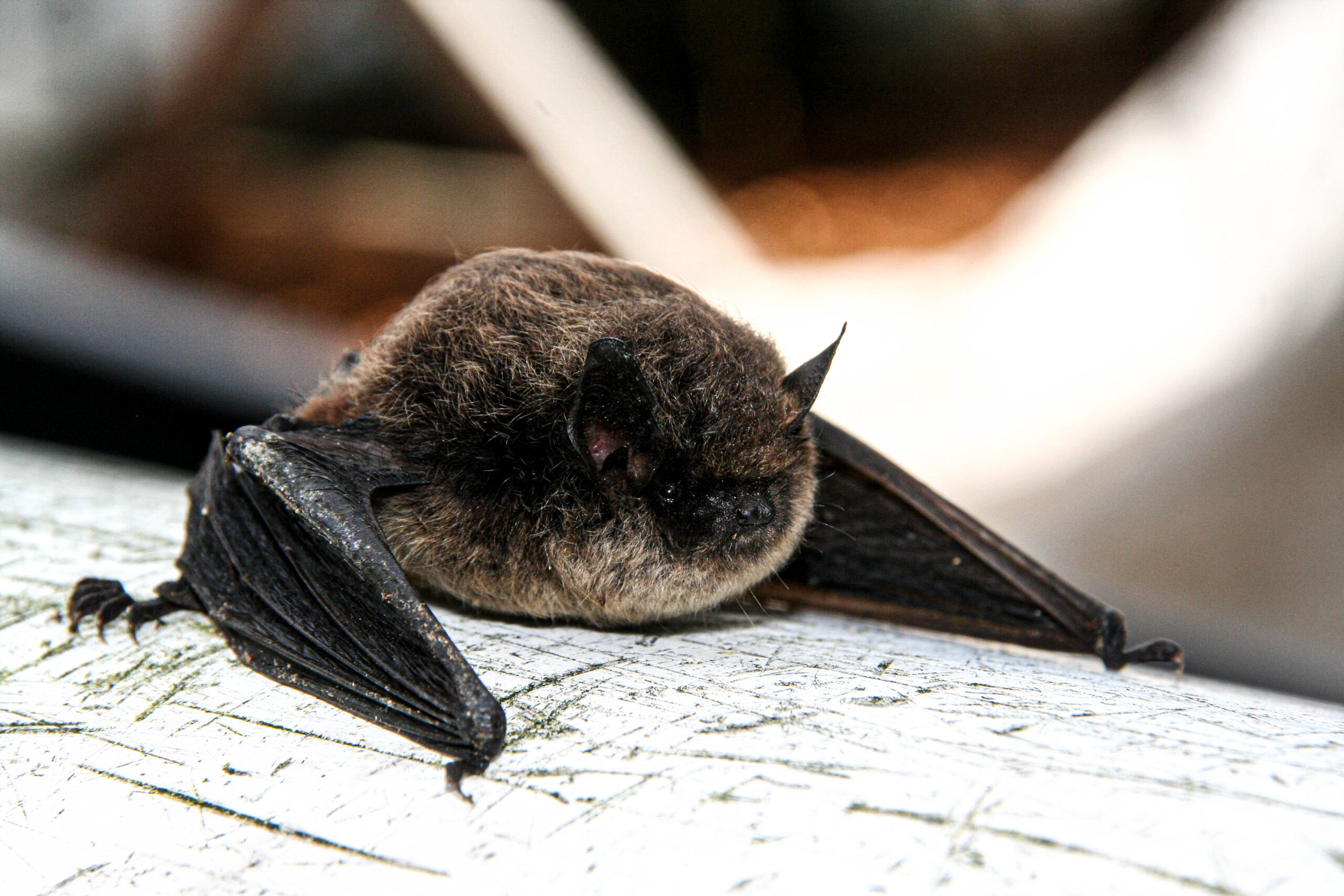
Four species of bats that are commonly found in buildings in BC (photo by Sunshine Coast Wildlife Project)

Bat Count helps monitor endangered wildlife

Spring is here, with rain, flowers, insects, and – bats! Our BC bats are now returning to summer roost sites. One of our more familiar species in buildings and bat boxes is the Little Brown Myotis. Like all BC bats, the Little Brown Myotis is an essential part of our ecology, consuming many insect pests each night. Unfortunately, the Little Brown Myotis is now endangered in Canada. In fact, bats in BC suffer from many threats, and almost half of our 15 species are ‘at-risk’.

A simple way to support bats is to participate in the BC Annual Bat Count this June. The BC Community Bat Program is requesting colony reports and volunteer assistance for this citizen-science initiative that encourages residents to count bats at local roost sites.

Volunteers counting bats ( photo by Sunshine Coast Wildlife Project)

The BC Annual Bat Count is easy, fun, and safe, not to mention vital for monitoring bat populations. “The counts are a wonderful way for people to get outside, learn about bats, and be involved in collecting important scientific information,” says biologist Mandy Kellner, coordinator of the BC Community Bat Program. Volunteers wait outside a known roost site, such as a bat-box, barn, or attic, and count bats as they fly out at twilight. A guano sample can also be sent in to identify the species of bat at the roost site. Find more information at https://bcbats.ca/get-involved/counting-bats/.

The count data helps biologists understand bat distribution and monitor for impacts of the devastating bat disease called white-nose syndrome. White-nose syndrome is an introduced fungal disease, fatal for bats but not for other animals or humans. Not yet identified in BC, the disease continues to spread in Washington State, less than 100 km from our border. Results from the Bat Count may help prioritize areas in BC for research into treatment options and recovery actions.

Map of bat count sites across BC. (photo by BC Community Bat Project)

Funded by the Habitat Conservation Trust Foundation, the Forest Enhancement Society of BC, the Habitat Stewardship Program, and many local funders, and with the support of the BC Conservation Foundation and the Province of BC, the BC Community Bat Program provides information for people dealing with bat issues on their property or who have questions about how to attract bats. To find out more about bat counts or white-nose syndrome, to report a dead bat, or to get advice on managing bats in buildings, visit www.bcbats.ca or call 1-855-9BC-BATS.

Mon, 4 Apr 2022

Now Accepting PCAF Grant Applications for 2022-23

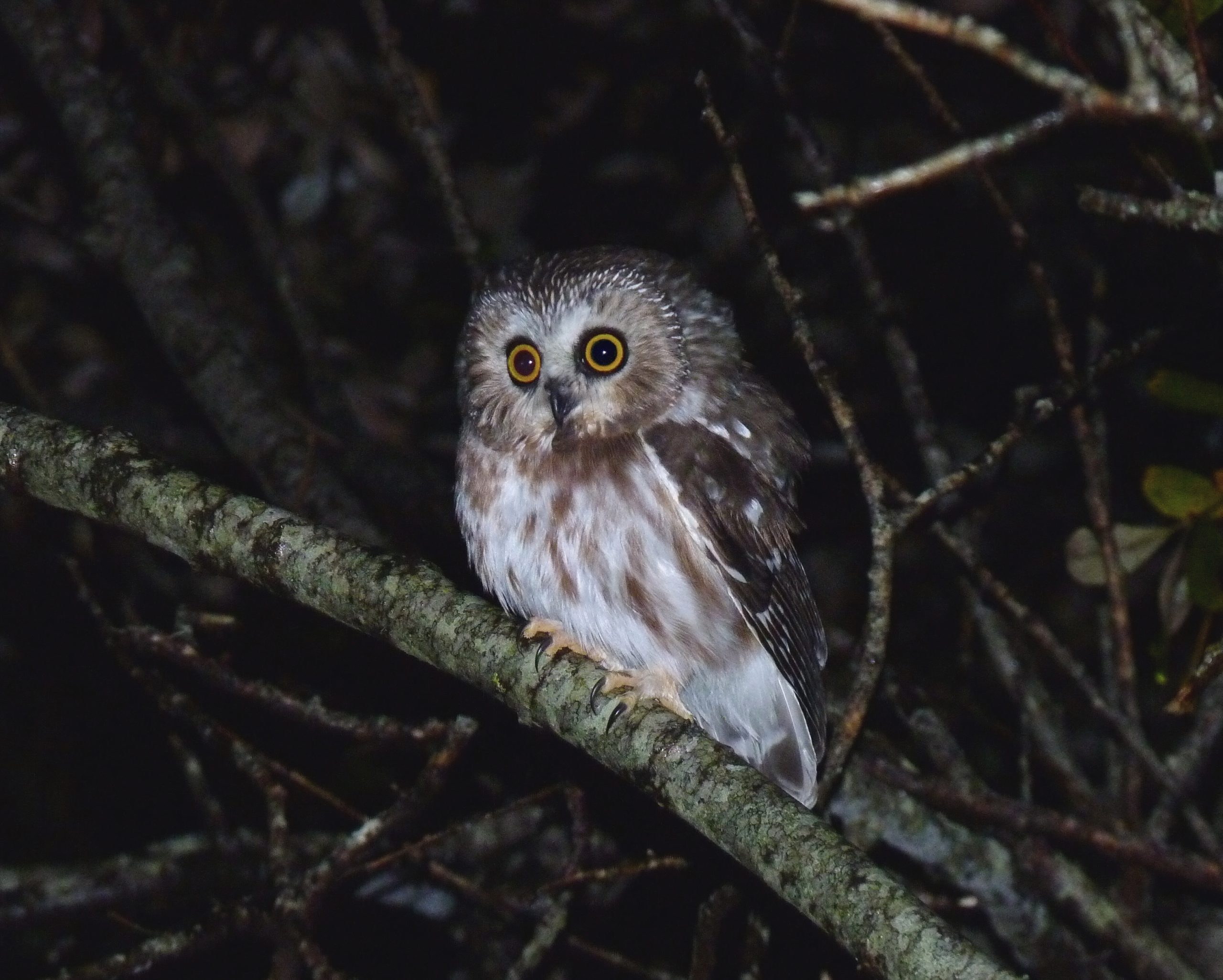
A Northern Saw-whet Owl, banded through the Bird Migration and Community Education Project - Janna Chick

HCTF is now accepting applications for the Public Conservation Assistance Fund (PCAF). Applications must be submitted via the Survey Apply online system before 4:30pm (PST) on Friday, May 13, 2022.

Before beginning your application on the Survey Apply system, we strongly recommend that you complete your application on the Word worksheets posted on our website. Once completed you can copy-and-paste your answers into the online form. The worksheets also provide a useful overview of the questions and information requirements.

Please visit our PCAF FAQ to find useful tips and guidance for the new Survey Apply system. To access application resources and the link to apply, visit our PCAF Apply webpage.

Questions? Please contact Lisa Wielinga for further details.