
Thu, 19 Jun 2014

Antelope Brush Property Secured

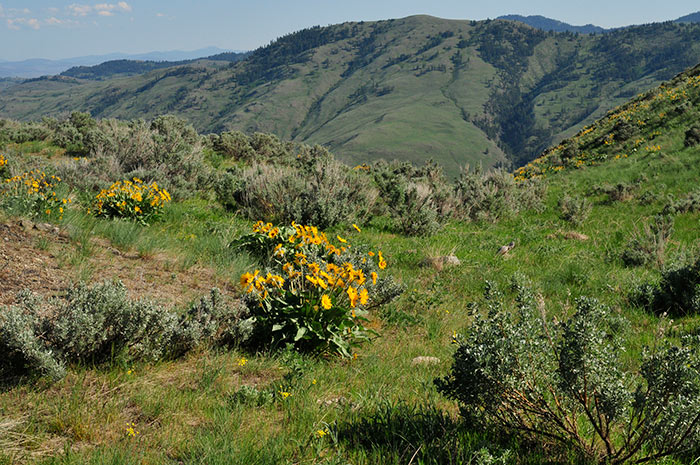
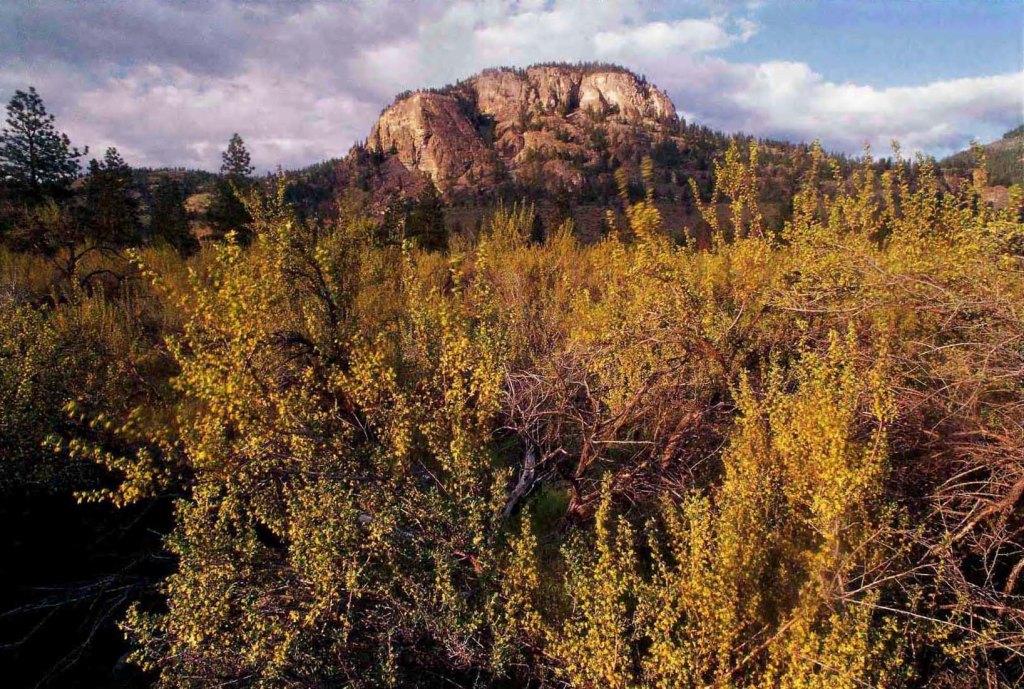
Antelope brush in bloom on the newly-acquired conservation property. Photo: Graham Osborne

The Nature Trust of British Columbia has just announced the successful acquisition of 30 acres of endangered antelope-brush habitat in the South Okanagan . The purchase was made possible by a $500,000 contribution by the Habitat Conservation Trust Foundation as part of its acquisition granting program.

“Antelope-brush is the latest purchase of conservation land made possible through the contributions of the anglers, hunters, guide outfitters and trappers of BC. In the past two years alone, the Habitat Conservation Trust Foundation has invested $1.3 million of their licence surcharges into the securement of over 1300 hectares of valuable South Okanagan habitat,” said Brian Springinotic, CEO of the Foundation. “The proximity of the Antelope-brush property to other conservation lands will allow wildlife to move between protected areas – a critical feature when working to preserve biodiversity in areas fragmented by development.”
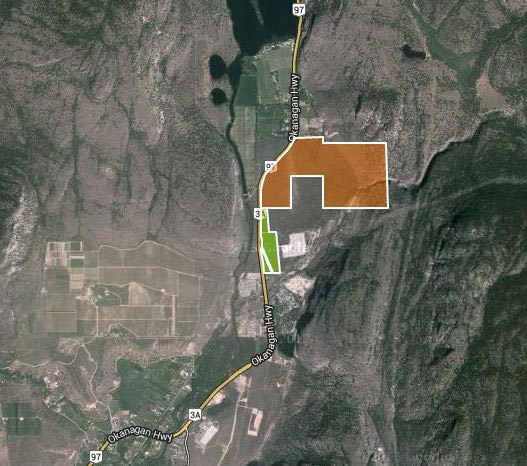
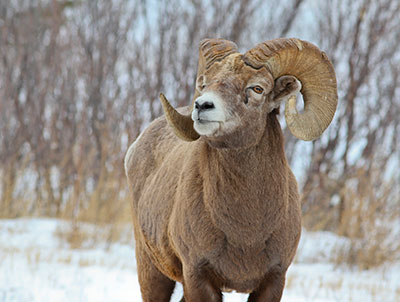
Antelope_Brush_Map.JPGThe property is adjacent to The Nature Trust’s Antelope-brush Conservation Area, home to more than 20 species at risk, including over 50% of the Canadian population of Behr’s Hairstreak butterfly. Other federally or provincially listed species at risk that are known to occur on these lands include Bighorn Sheep, Pallid Bat, Desert Night Snake, Great Basin Spadefoot, and Lewis’s Woodpecker.
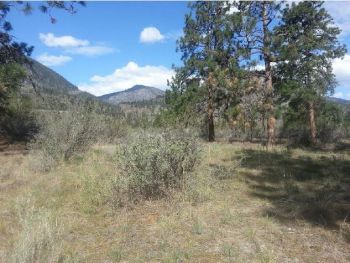
a1sx2_Original1_Ponderosa-Pine-Habitat.JPGAdditional support for this acquisition was provided by the landowner, FortisBC, the Habitat Stewardship Program, Sitka Foundation, Grayross Foundation, and the South Okanagan Naturalists’ Club. For additional information on HCTF-funded acquisition properties, click here.
 

Wed, 25 Sep 2013

HCTF Board Visits Acquisition Properties in the South Okanagan

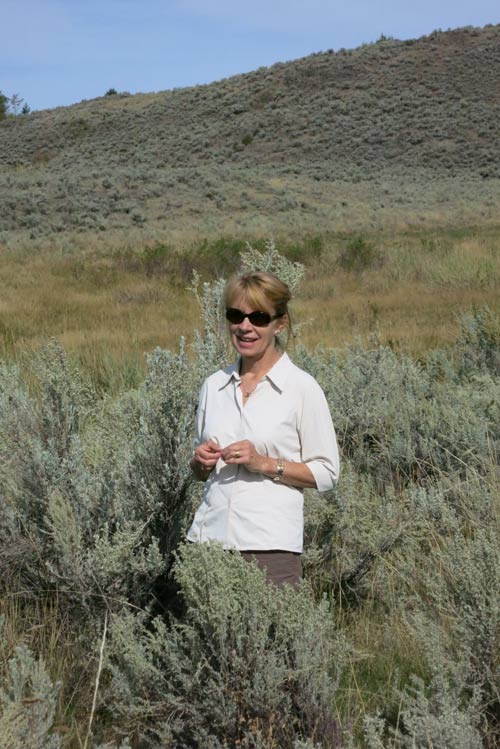
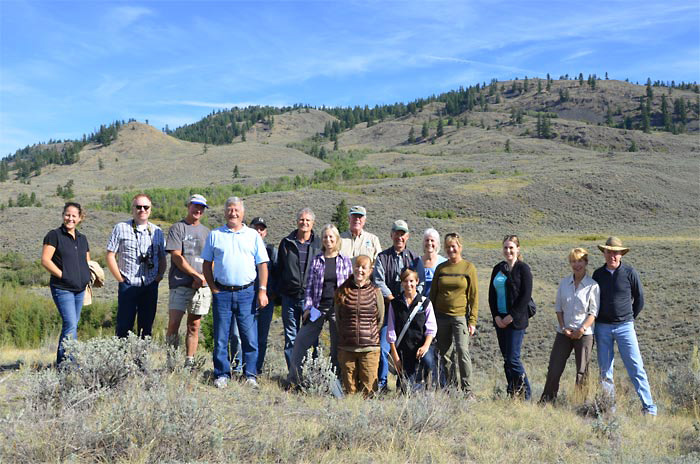
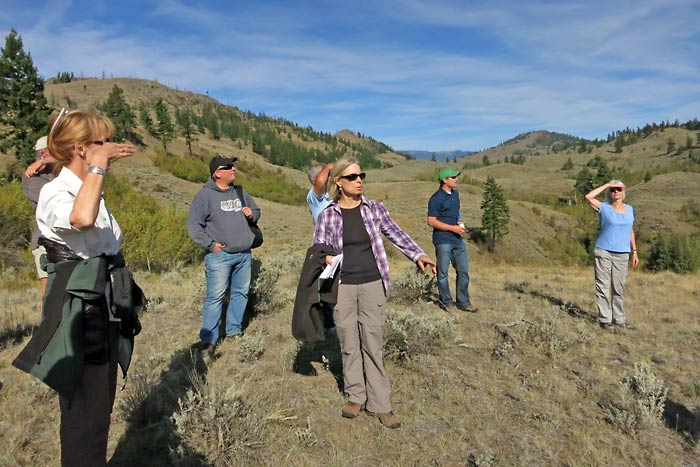
NCC’s Okanagan Property Manager Barb Pryce points out some key conservation features of the Sage & Sparrow Grasslands.

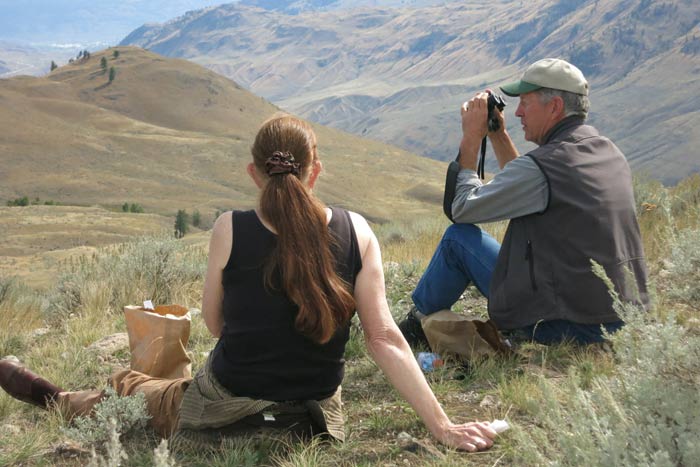
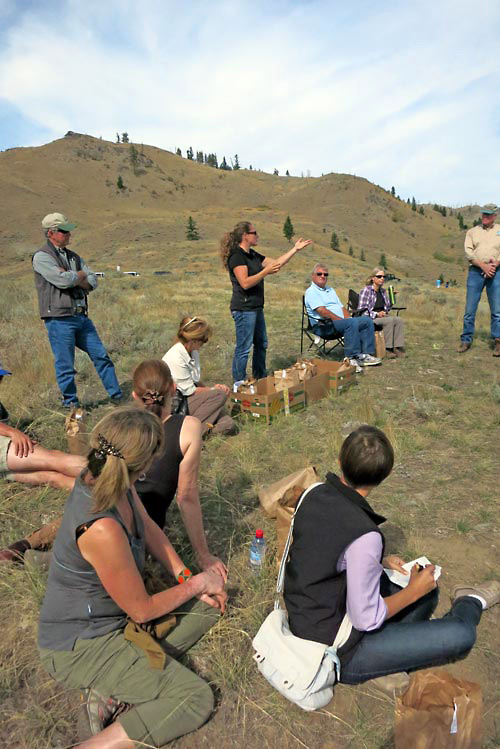
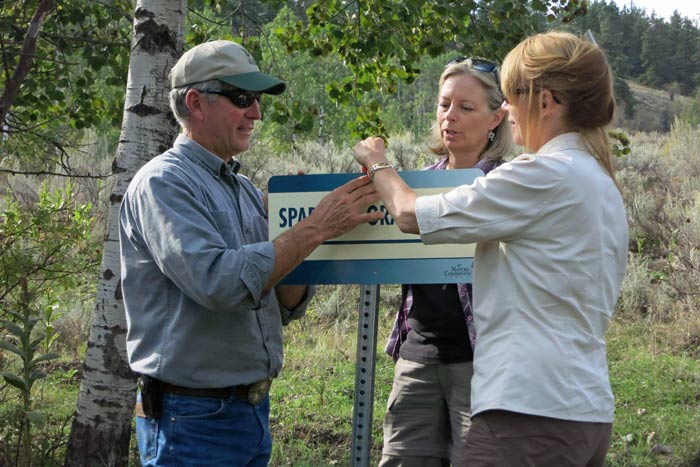
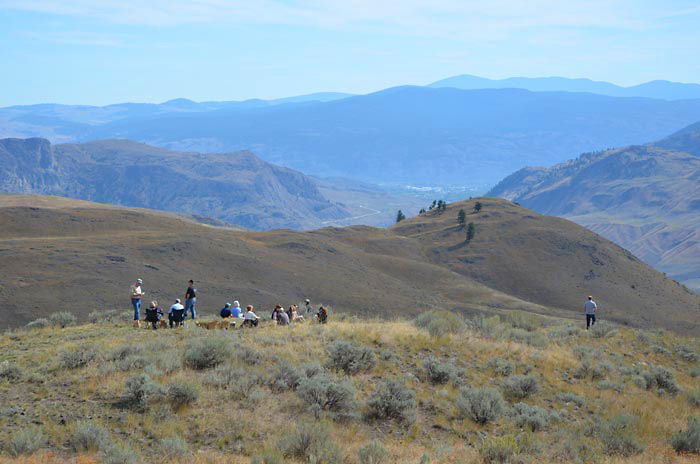
It was a perfect day for touring two of HCTF’s most recent acquisition properties: Sage & Sparrow Grasslands and Elkink South Block. Led by NCC’s Okanagan Property Manager Barb Pryce, HCTF board members got to experience first-hand the subtle beauty of these grasslands, and learn more about their incredible ecological values.

HCTF contributed $300,000 to NCC’s purchase of the Sage & Sparrow Grasslands in 2012, and then granted a further $500,000 to NCC’s campaign to purchase Elkink South Block last June. Together, the properties create over 3,100 acres of continuous rare grassland habitat that is home to a diverse range of amphibian, reptile, bird and mammal species, some of which occur nowhere else in the world. As part of the excursion, Board Members got to visit the site of the Burrowing Owl Recovery Program on the South Block property, and view some of the research sites where scientists are now conducting surveys of the many plants and animals inhabiting this rare ecosystem.

In addition to experiencing the impressive sights (and fragrant smell of sagebrush), board members were provided with some excellent information on enhancement projects taking place within the area, as well as some of the conservation challenges facing the region. A big thank-you to field trip guests Bryn White (SOSCP), Dan Peterson (MFLRNO), and Linda Hannah (NCC) for taking the time to join us and share your experiences. An especially big thank-you to our guide, Barb Pryce, for leading us through an informative and thoroughly enjoyable day in the South Okanagan.


View_to_states.jpg

L_Hannah_partners.jpg

Sage_Sparrow_Lunch.jpg

Bryn_White_SOSCP.jpg

Sparrow_sign.jpg

Group_photo.jpg


Tue, 3 Sep 2013

Elkink South Block, Sagebrush Slopes and Sparrow Grasslands

Photo of the Elkink Acquisition,now known as South Block (image courtesy of NCC)


HCTF-South-Block_Photo-by-NCC.jpg

The South Okanagan-Similkameen region is a biodiversity hotspot, home to unique assemblages of plants and animals. The Bunchgrass Zone ecosystem of this region is found in less than one percent of BC, yet it supports a tremendous diversity and density of wildlife. Unfortunately, agricultural use and urbanization have resulted in this delicate ecosystem becoming one of the three most endangered in Canada. With thirty percent of the province’s at-risk species dependent on it, there has been a great impetus to conserve grassland properties before the ecosystem and its inhabitants are lost.

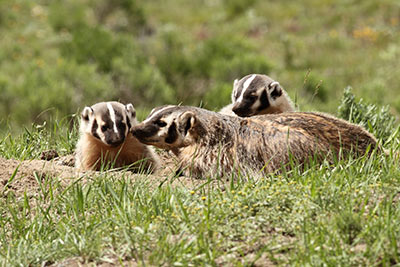
HCTF contributed $800,000 to NCC’s purchase of three properties in the South Okanagan Similkameen that contain significant amounts of grassland habitat. Sagebrush Slopes, Sparrow Grasslands and Elkink South Block added a total of 1,263 hectares of invaluable habitat to existing protected areas. Together, these parcels comprise the most extensive sagebrush community in the region. Their protection preserves migration corridors and allows wildlife to move freely between the Similkameen and Okanagan Valleys, and through to the desert areas of the western United States. Red-listed species on site include the Grasshopper, Lark and Brewer’s Sparrows, Lewis’s Woodpecker, American Badger and Burrowing Owl. Once the management plan for the recently-purchased Elkink South Block is in place, all three of these previously-inaccessible properties will be available to the public for hunting (non-motorized), hiking and wildlife viewing.

Badgers_HCTF.jpg

Tue, 3 Sep 2013

Columbia Lake: Marion Creek Benchlands and Lot 48

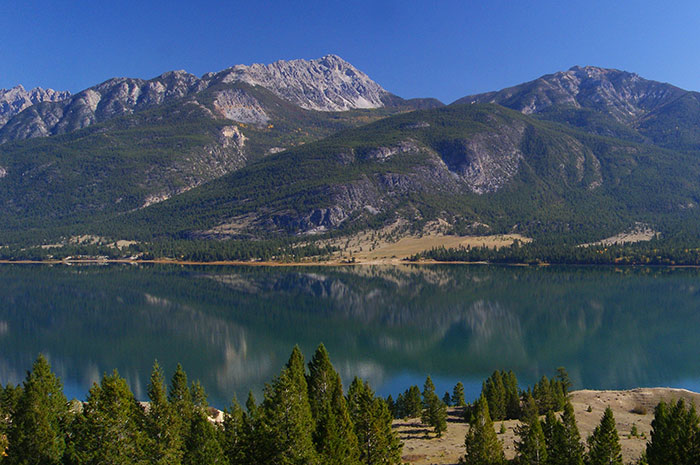
Lot 48, Columbia Lake. Photo by Steve Short, supplied courtesy of NCC.


Columbia Lake sits at the head of the Columbia River, nestled between the Purcell and Rocky Mountains, about 7km South of Fairmont Hot Springs. The lands surrounding the lake are part of the East Kootenay Trench Ecosection, home to one of the largest and most diverse assemblages of species in the province. These include many of BC’s iconic large mammals, supported by a mosaic of habitat types that include native grasslands, Douglas-fir forests, and long stretches of wetland that comprise one of the last intact portions of the Pacific Flyway.

In 2010 and 2011, HCTF was approached by the Nature Conservancy of Canada (NCC) to help secure both the Marion Creek Benchlands (204 ha) to the west of Columbia Lake, and Lot 48 (127 ha) on its eastern shore. These properties were “missing links” in established tracts of conservation lands, which risked being fragmented by residential development. Both contain grasslands used as vital winter range for ungulates, including blue-listed Rocky Mountain Bighorn Sheep. They also provide critical habitat for non-game species, such as the red-listed Badger, and are used as movement corridors by wildlife including Grizzly Bear and Elk. HCTF contributed $750,000 towards the purchase of these properties to protect their habitat values and ensure long-term connectivity between conservation lands, while simultaneously ensuring they would be accessible to the Foundation’s contributors.

Bighorn-Sheep-hctf.ca.jpg

Wed, 24 Apr 2013

Mission Creek Celebration

Mission Creek

On Tuesday, HCTF had the opportunity to take part in a wonderful event on the banks of Mission Creek in Kelowna, celebrating the recent acquisition of 2.7 hectares of land immediately beside the creek (see video). Working with the MCRI, City of Kelowna, Regional District of Central Okanagan and a cast of others, HCTF is supporting the long term plans to return parts of the heavily-channelized Mission Creek to a more natural state.

Mission Creek was channelized many years ago to control the destructive flooding that was impacting adjacent landowners. What was formerly a sinuous, natural and fish-friendly stream became, in effect, a much straightened “chute”. That straightening helped to solve the flooding problem, but removed important fish habitat.

HCTF has provided $315,000 in funding to purchase some adjacent land from the Casorso family (without whom this project would not be possible) which will eventually be restored to provide critical habitat for native Kokanee stocks. It’s an important first step in a long process, and HCTF is happy to be part of this initiative. For more information on the plan to restore Mission Creek, please visit the MCRI website.