Wed, 16 Aug 2017

Photos of Englishman River Estuary Restoration

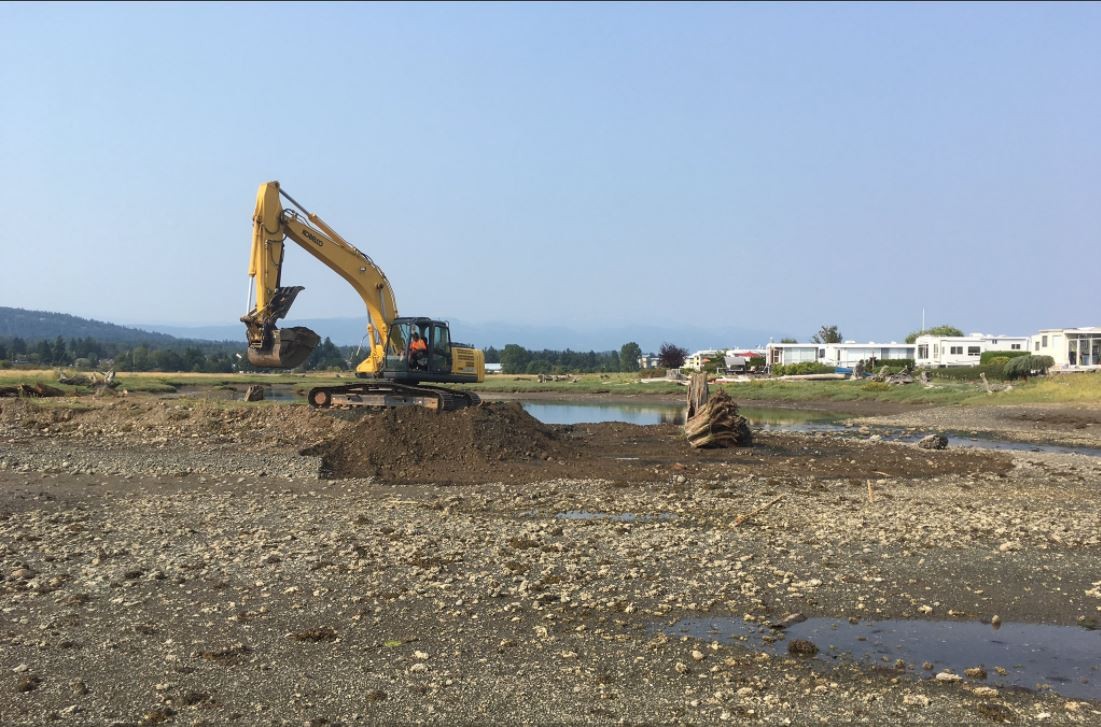
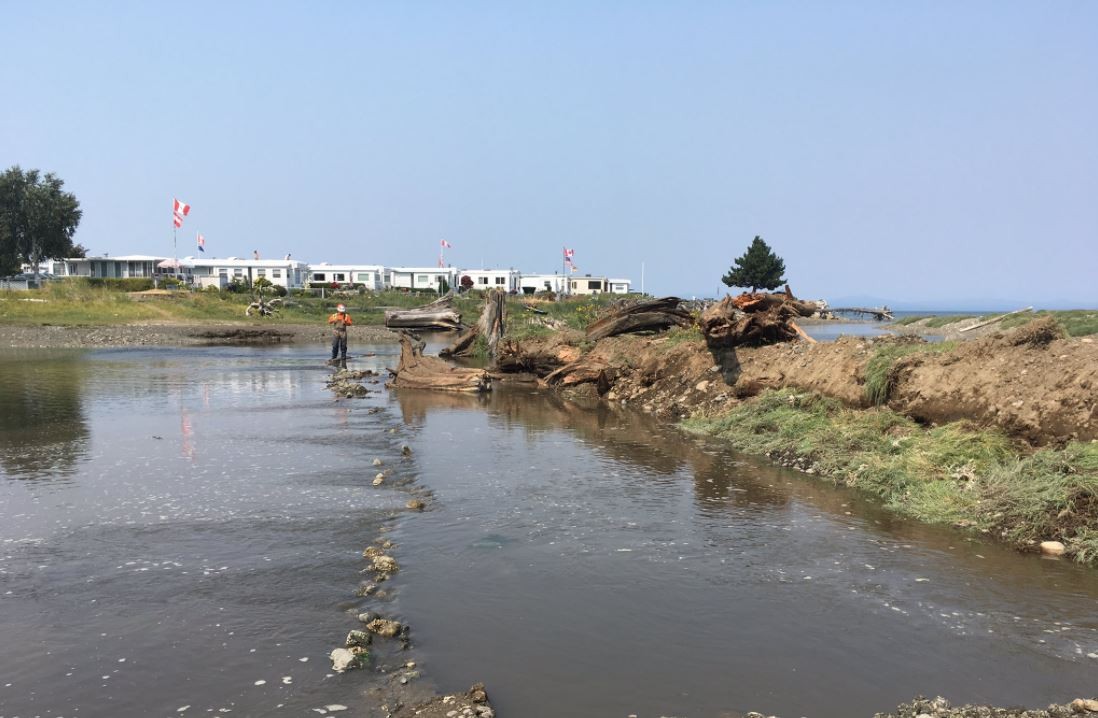
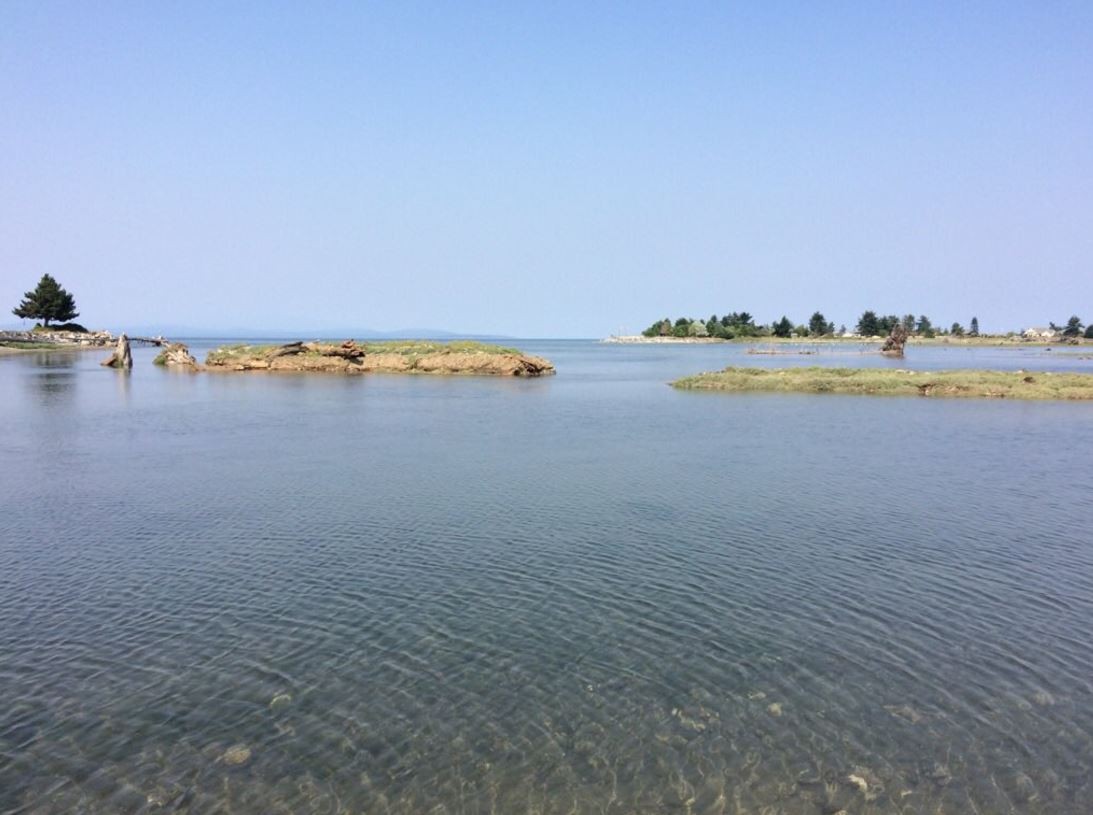
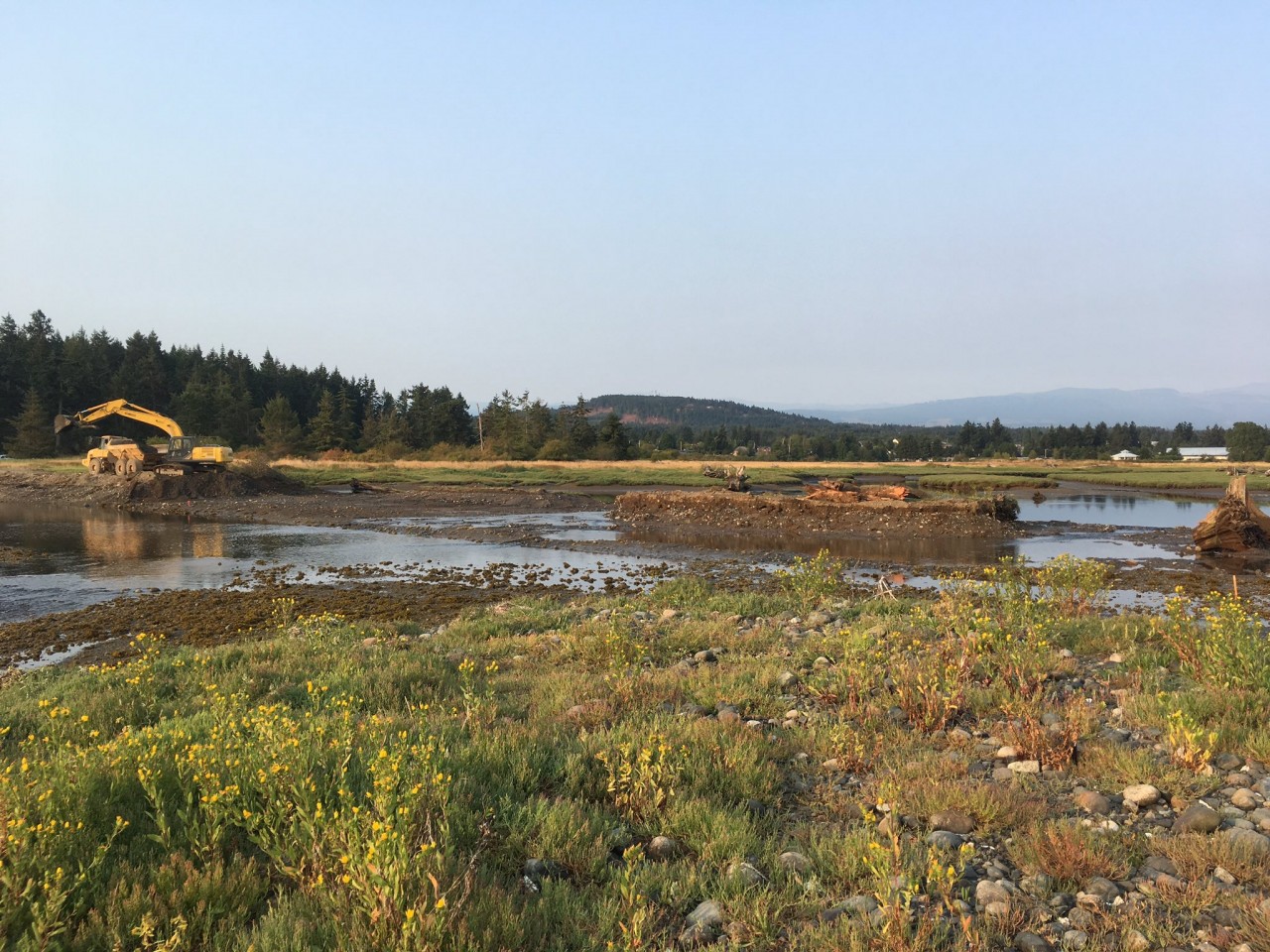
We love to receive photos of our grant recipients’ conservation projects, and the Vancouver Island Conservation Lands Management Program (VICLMP), in conjunction with The Nature Trust of BC, has been doing a fantastic job of capturing and sharing their progress in restoring the Englishman River Estuary in Parksville, BC. Thanks to Tom Reid, VICLMP Manager, for these images.

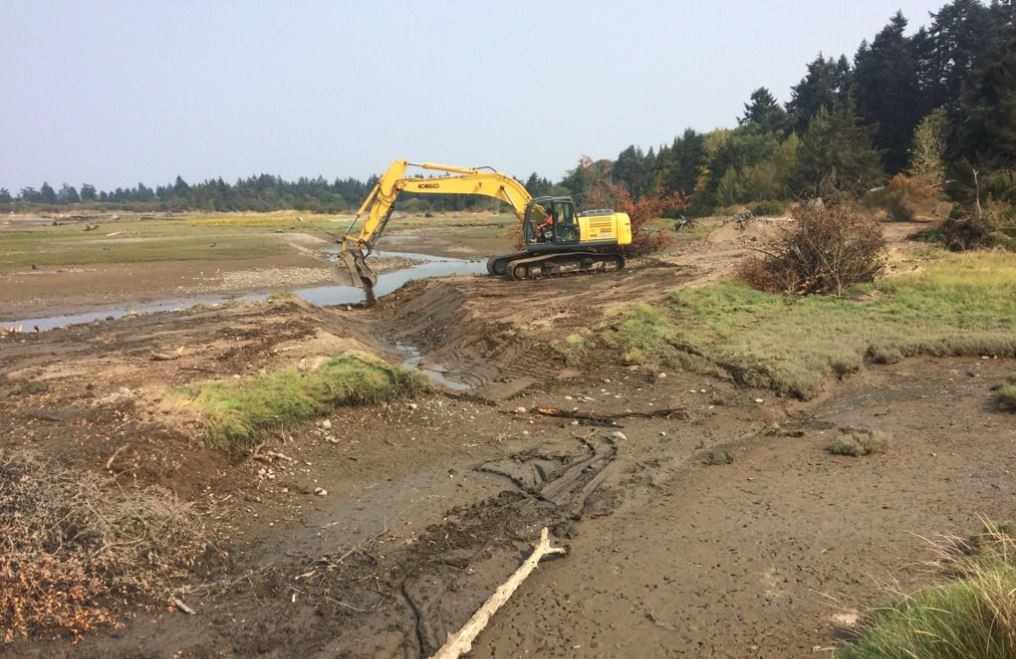
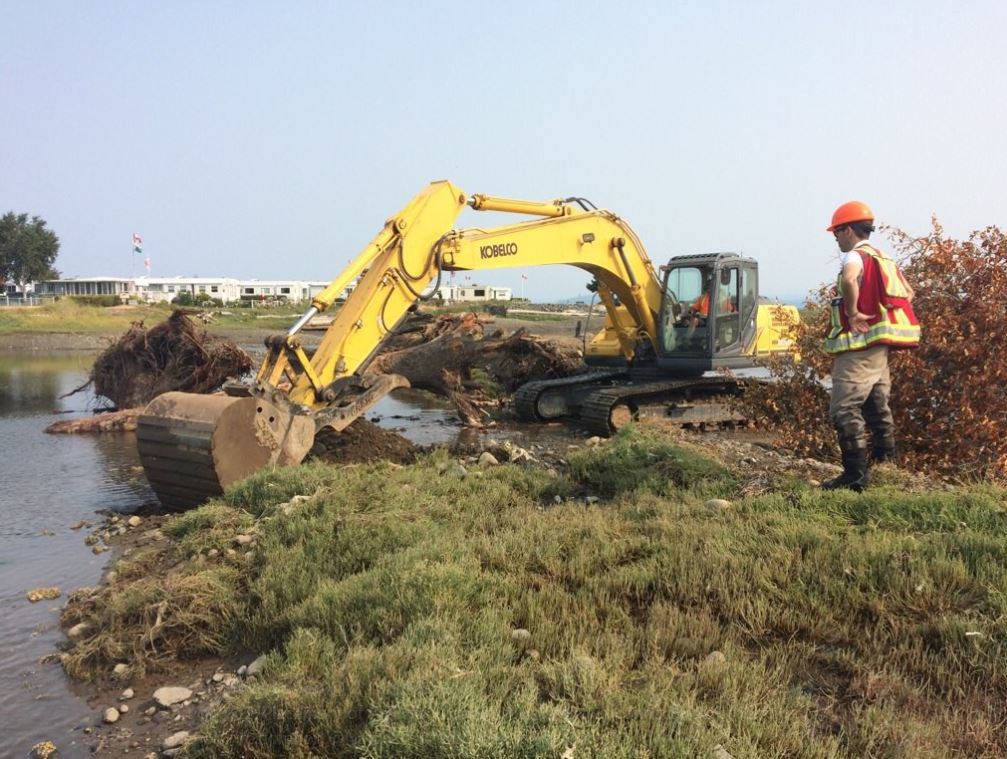
Day 1: Removing the remnant roadway that bisected the estuary.

Day 2: Road removal continues

Day 3: 1500 cubic metres of fill removed…

Resulting in water flowing through this area of the Englishman Estuary for the first time in over 50 years!

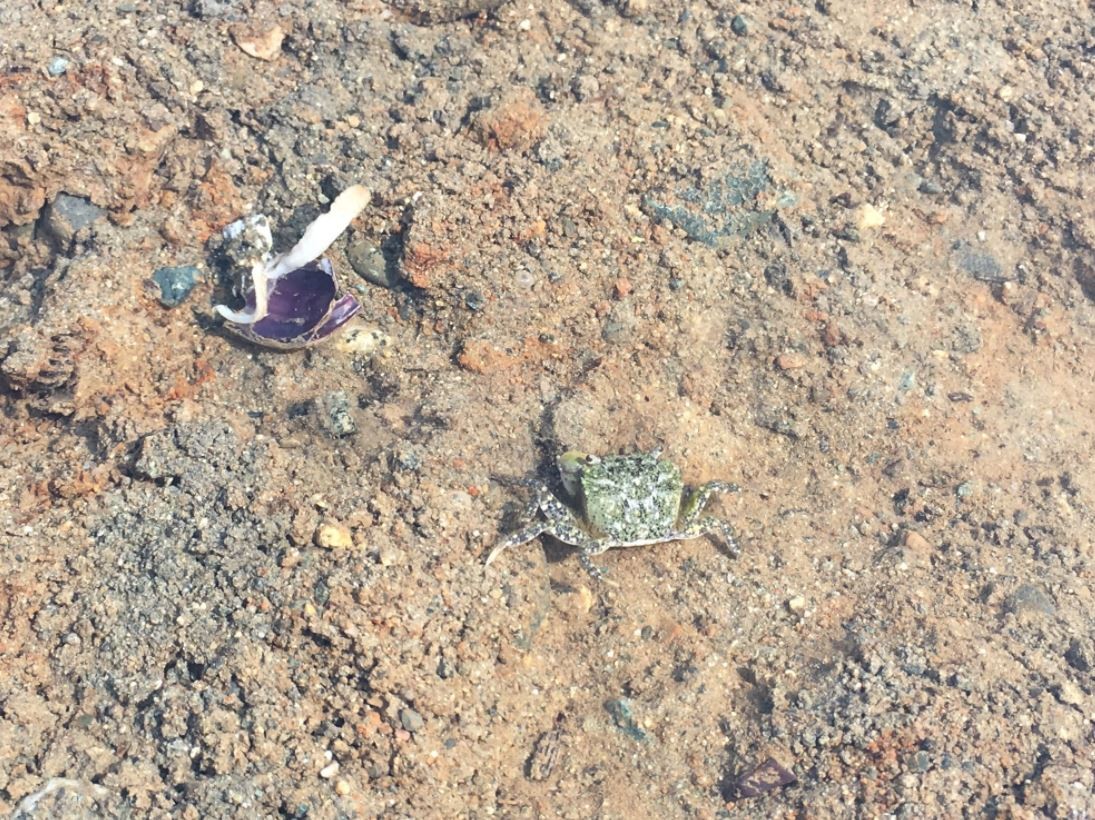
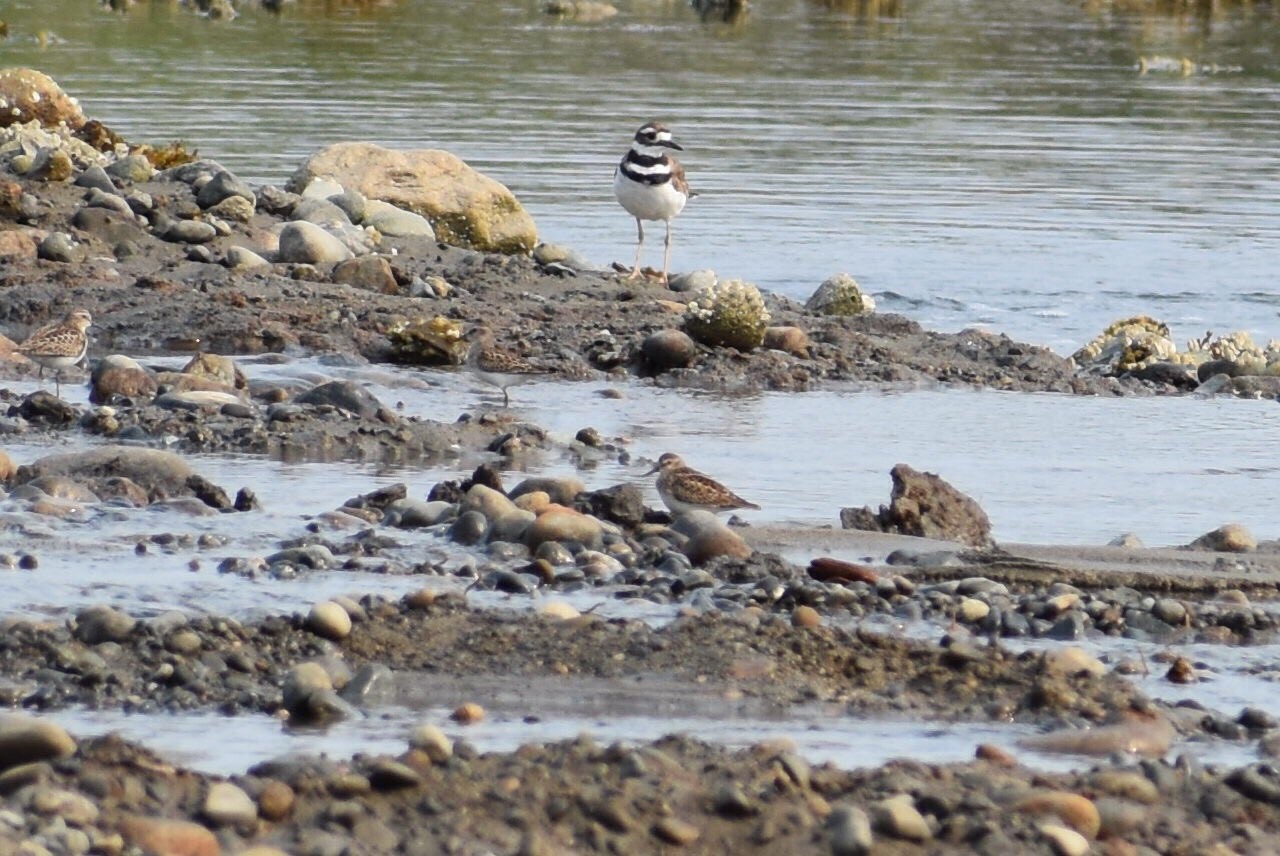
The next day, the first new occupants are already moving in.

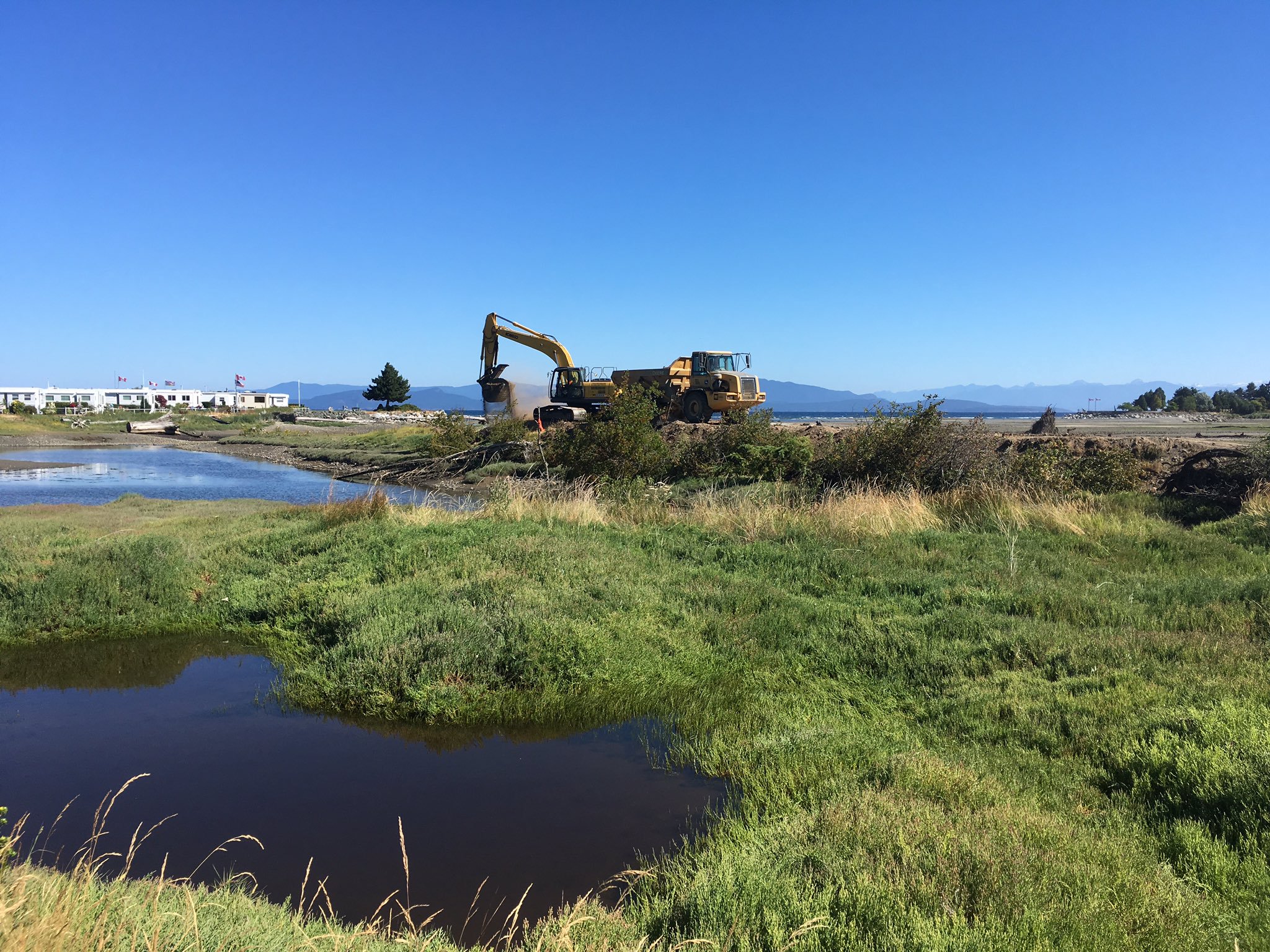
By the end of day 4, the team has removed 2500m3 of fill.

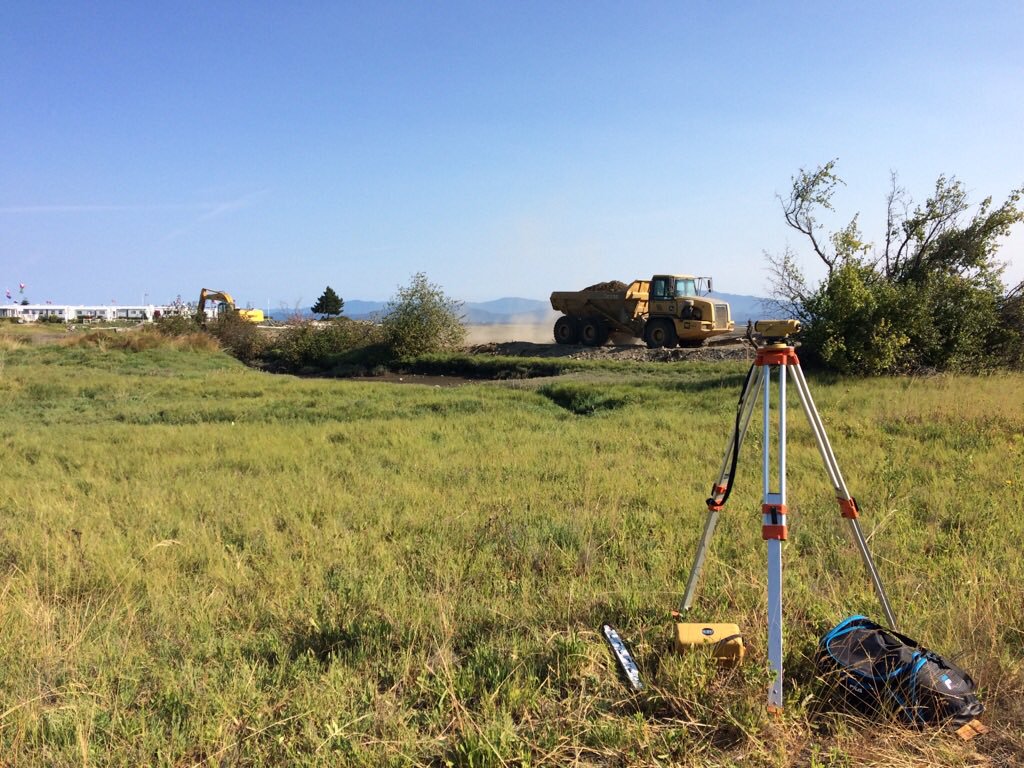
Day 5: An early start, but more than half way there.

Shorebirds come to check out the newly restored area:

Week 2: Placement of large woody debris for fish habitat and connecting the channels.

By the end of week 2, 3500 cubic metres of fill had been removed, channels connected, and fish habitat structures installed. Great job!

You can read more about the Englishman River Estuary Restoration Project here, or follow VICLMP on twitter for more updates on this project.

Thu, 10 Aug 2017

Salmon Arm Watering Bee Saturday August 12th

SABNES is looking for help watering the 3000+ native plants planted this spring on newly created hummocks in Salmon Arm Bay. Hundreds of local students and volunteers helped create the beginnings of a diverse habitat for wildlife this spring, but the plants need a little more TLC to make it through the hot summer. Details of this Saturday’s even are below – as this event is being put on by SABNES, please contact Kim Fulton on 250-309-6535 with any questions.

When: Saturday August 12 anytime between 8am – 12pm

Where: Hummocks at Raven Gate of Foreshore Trail (1060 47th Ave NE Salmon Arm)

Please bring: your favourite weeding tool, a water bucket, a smaller 1 or 2L container for watering, gloves, drinking water, and a snack.

You should wear: a hat, long pants, sturdy closed toe footwear, sunscreen, and sunglasses.

Fri, 28 Jul 2017

Wanted: Reports of Barn Swallow Nests and Bat Roosts on the South Coast


Above: Barn swallow and chicks in nest. Photo: TexasEagle

The Sunshine Coast Wildlife Project is asking for the community’s help in monitoring populations of two threatened wildlife groups: swallows and bats. Both groups often live in proximity to humans.

The Barn Swallow was once one of world’s most widespread and common birds, but has experience devastating population declines, declining by more than 90% across North America in the past 40 years. Barn Swallows nest on houses, barns, garages, sheds, and bridges, upon which they build cup-shaped nests of mud mixed with grasses. Many bats have adapted to live in human structures, and maternity colonies may be found in the summer under roofs or siding, or in attics, barns, or other buildings.

Half on BC’s bats are species at risk, and the recent arrival of White Nose Syndrome on the west coast has dramatically increased the threat.

Community members can help these threatened animals by reporting swallow nests and bat roost on their property so they can be included in province-wide monitoring efforts. Wildlife Project biologists can provide guidance about how to coexist with the animals, or options for exclusion if desired. Please email coastwildlife@gmail.com or call 604-989-1007 to report a swallow nest or bat roost. The Wildlife Project also has bat houses and swallow nest structures available for those wishing to enhance habitat on their property.

HCTF is a proud supporter of the Sunshine Coast Community Wildlife Habitat Stewards project

Wed, 12 Jul 2017

BC Students to Attend the World Recreational Fishing Conference

The eighth World Recreational Fishing Conference is happening next week in Victoria. As Official Education Sponsor for the event, HCTF is happy to be sponsoring four BC post-secondary students to attend the conference. They are:

Midoli Bresch

Midoli is a MRM Candidate at Simon Fraser University. She was born and raised in north eastern British Columbia, but moved to Vancouver Island in her early teens. Her father decided to take up commercial salmon trolling, which he did for several years before making the switch to become a recreational fishing guide. Through his influence, Midoli’s love of fish and fishing was born. She returned to northern BC to complete her undergrad degree in fisheries and wildlife management at the University of Northern British Columbia. While at UNBC, she took as many fisheries classes as possible and worked in a genetics lab on bull trout and Dolly Varden hybridization rates. While still at school, she began working for the Hakai Institute, where she was the lead field tech on a project studying forage fish and nearshore fish community ecology. In 2016, Midoli began graduate studies at Simon Fraser University and is a student in the Quantitative Fisheries Lab under Dr. Sean Cox. Her research focuses on testing methods to incorporate emerging abundance trends into management procedures for data-limited stocks.


Melissa Pietramala:

Melissa is a 4th year undergraduate student at Thompson Rivers University. She anticipates receiving her Bachelor of Science degree in Ecology and Environmental Biology at the end of 2017. As a devoted fly fisher, she has a passion and concern for the health of freshwater systems/networks. Upon receiving her degree, she intends to gain field experience to broaden her knowledge and identify potential concerns in preparation of pursuing a master’s degree in Environmental Science. In her free time, Melissa loves to tend to her garden, tie flies for her next excursion, and contemplate how to spend the rest of her life with a line in the water.


Scott Brydle:

Scott is a first year master’s student at UBC, working in the Institute of Oceans and Fisheries. His research, being conducted at Kawkawa Lake in Hope, British Columbia, is centered on how fishing pressure and physical conditions in the lake affect the size and abundance of the lake’s main game species, kokanee salmon. Scott graduated from Capilano University in 2014 with an associate’s degree in biological sciences, and in 2016 from UBC with a bachelor of science in biology.


Rachel Chudnow:

Rachel is a PhD candidate at the University of British Columbia working with Dr. Murdoch McAllister and Dr. Brett van Poorten. Her PhD research focuses on the meta-population structure and population dynamics of fluvial bull trout within the Upper Fraser Watershed (UFW), British Columbia. Rachel’s thesis research is being conducted in collaboration with the British Columbia Provincial government with the goal of expanding our understanding biological limits to sustainable harvest of bull trout based on meta-population structure, seasonal movements, and juvenile compensatory survival. The outcomes of Rachel’s thesis research will be used to help inform provincial managers in their decision making for the management of this species, both within the UFW and beyond. Prior to starting her PhD, Rachel completed her MSc. with Dr. Villy Christensen at UBC focusing on management and regulations shaping Canada’s commercial Dungeness crab fisheries and completed her BSc. Honours at Dalhousie University in Halifax, Nova Scotia working with Dr. Boris Worm. She has also spent time working on juvenile lobster settlement and lobster maturity with both Fisheries and Oceans Canada and the Fishermen Scientists Research Society in Bedford, Nova Scotia.


The students will be sharing their WRFC highlights with us following the conference. For live updates, follow @WRFC on Twitter.

Mon, 10 Jul 2017

2017 Photo Contest Now Open

The HCTF photo contest is back! If you’ve captured a spectacular image of BC’s wildlife, freshwater fish, natural landscapes, or a photo of people participating in activities that connect them to nature, you could enter to win this year’s grand prize of a $500 VISA gift card. For full contest information, official rules and digital entry form, click here.

Fri, 9 Jun 2017

News Release – HCTF Announces North Island Conservation Fund

Fish and wildlife will receive an extra boost next year from a new fund explicitly for conservation projects on the northern half of Vancouver Island.

The Habitat Conservation Trust Foundation (HCTF) has announced it will begin accepting applications for the $350,000 North Island Conservation Fund starting this fall.

HCTF CEO Brian Springinotic said the Foundation decided to create the Fund following receipt of a $174,000 creative sentencing award from Neucel Specialty Cellulose Ltd after it was convicted for polluting Port Alice waters in 2011.

“In a perfect world we’d never receive these types of payments, because environmental damage wouldn’t take place,” said Springinotic. “Unfortunately, these types of infractions are still occurring, and our job is to ensure that money payable by the offender goes back into the habitats and species impacted, above and beyond any remediation required. Creative sentencing allows that to happen.”

The judge in the Neucel case specified that the creative sentencing award be used to “support of fish and wildlife conservation projects on Northern Vancouver Island”. HCTF’s Board of Directors decided to match the court award funding with revenue from surcharges on hunting and fishing licences to create the new $350,000 fund. HCTF is hopeful other local organizations will offer additional financial and in-kind support to grant applicants.

“We’re encouraging local conservation groups, fish and game clubs, First Nations, biologists –anyone who has a good idea to help fish and wildlife on North Vancouver Island – to visit our website or get in touch with us to learn more about this opportunity,” said Springinotic.

The deadline for the 2017 application intake will be November 2nd. You can find out more about the North Island Conservation Fund at https://www.hctf.ca/apply-for-funding/nicf