
Wed, 18 Mar 2026

Prescribed Fire and Partnerships Help Restore Wildlife Habitat Throughout B.C.

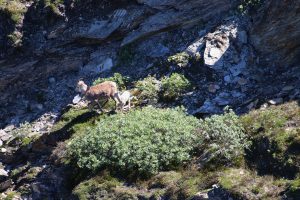
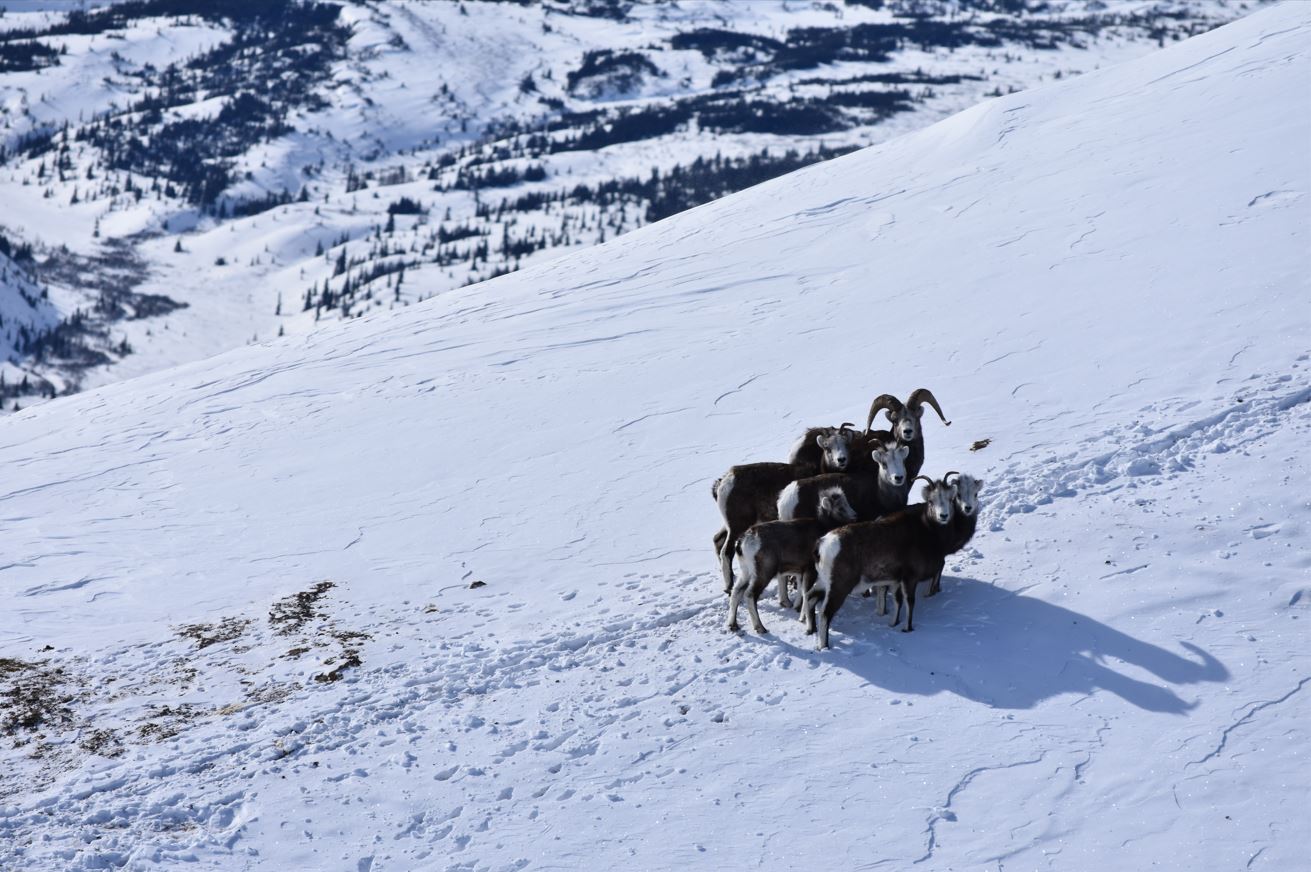
A group of Stone's sheep observed during an annual recruitment survey - Alicia Woods, Ridgeline Wildlife Enhancement

British Columbia: As the Forest Enhancement Society of BC marks its 10th anniversary, the Society is reflecting on the investments made and the meaningful impacts achieved, many in partnership with other organizations. One such partnership with the Habitat Conservation Trust Foundation (HCTF) has supported coordinated investments in research and field work that strengthen the health and resilience of B.C.’s forests – home to a diverse range of wildlife species. In total, FESBC and HCTF have co-funded 117 projects throughout B.C.

Enhancing Wildlife Habitat in the Boundary Region

One example of a project jointly supported by FESBC and HCTF is the Province’s Boundary Restoration and Enhancement Program (BREP), which has led restoration efforts in the Boundary Region for more than a decade. The program implemented by B.C.’s ecosystems and habitat restoration staff focuses on improving wildlife habitat quality and increasing forage availability for species at risk, ungulates, and other wildlife, while strengthening ecosystem resilience by restoring degraded habitats across the region.

Strategically utilizing investments from HCTF and FESBC from 2017 to 2024 alongside provincial funding, the project conducted forest thinning and prescribed burn treatments and then monitored vegetation changes within restoration sites.

“One key aspect of the project was integrating vegetation assessments, restoration activities, and monitoring across multiple sites in the Boundary region to inform subsequent restoration treatments. This iterative approach of assess-restore-monitor and repeat over many years and sites generates better wildlife habitat and forestry objectives,” said Dan Buffett, CEO, HCTF.
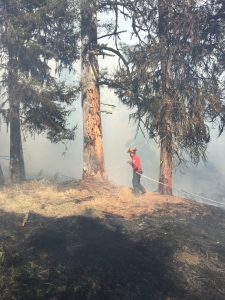
BCWS crew member hosing down a high value wildlife tree after ignitions – Boundary Restoration and Enhancement Program

The program continued vegetation and wildlife monitoring, treated invasive plants, and completed two additional prescribed burns in partnership with the BC Wildfire Service and First Nations partners. By 2024, approximately 126 hectares had been treated with prescribed burning. These controlled burns help restore habitat conditions for wildlife species such as mule deer, white-tailed deer, elk, Williamson’s sapsucker, and Lewis’s woodpecker. They also reduce the risk and intensity of future wildfires by lowering the amount and continuity of forest fuels (combustible materials) in the area.

“Partnerships were crucial to the success of this project,” added Buffett. “Building strong relationships with First Nations, and bringing together western and traditional knowledge, not only improves this habitat enhancement work, but also improves success for planning future initiatives together.”

This long-term monitoring data, along with First Nations’ traditional ecological knowledge, is helping inform ecosystem restoration and conservation initiatives. The Province is continuing the program led by ecosystem and habitat restoration teams in the Ministry of Water, Land and Resource Stewardship.

“Restoring degraded habitats and reducing wildfire risk are critical priorities for our government,” said Randene Neill, Minister of Water, Land and Resource Stewardship. “Through partnerships like this, we are investing in practical, on-the-ground work that improves wildlife habitat, strengthens forest resilience, and supports long-term ecosystem health across British Columbia.”


Utilizing Fire to Enhance Wildlife Habitat in Northeast B.C.

Another project jointly funded by HCTF and FESBC utilized prescribed burning to restore degraded Stone’s sheep habitat and improve forage quality. The project began in 2020 as an initiative of the Wild Sheep Society of BC and to date, approximately 1,200 hectares of sheep habitat across Northeastern British Columbia have been treated, restored, and improved.

“There has been research done before on sheep and prescribed burns, but one part that was missing was understanding the health effects when sheep have access to better forage, specifically when the burns are done in places where the sheep are able to feed close to escape terrain,” explained Alicia Woods, Wildlife Biologist, Ridgeline Wildlife Enhancement Inc. “We partnered with the University of Northern British Columbia to look at that health component. From there, we conducted the prescribed burns and then monitored the vegetation response as well as the sheep response, both before and after the burn.”

Prescribed burning has been conducted in specific terrain, at distinct times of the year, to maximize benefits to Stone’s sheep. These, as Woods explained, differ greatly from normal wildfires, as they are done in a controlled manner under specific weather and site conditions, and utilize knowledge and expertise from partners like BC Wildfire Service.

“Within two months after the burn, most people wouldn’t even know that there was a fire there,” she added.

Area before and 8 weeks after a prescribed burn – Alicia Woods, Ridgeline Wildlife Enhancement

Woods also wants people to understand that controlled burns have long been an integral part of Indigenous practices and culture.

“The way we carry out prescribed burns today closely follows how First Nations communities traditionally did them. We have spoken with Elders over the years, and they have confirmed that burning early in the year, when the ground is still cold or frozen, reduces the risk of scorching the soil and improves wildlife habitat. Respecting Indigenous knowledge is very important to us. We make sure our work does not impact cultural values and that we honour their traditional methods.”

The funds provided by HCTF and FESBC have resulted in direct and immediate benefits to Stone’s sheep and their habitat. Vegetation that comes back post-fire has been shown to be more nutritious, which is generally more digestible and higher in protein, all of which benefits not just sheep but often other animals like Grizzly bears. The resulting post-burn habitat also helps reduce the dense shrub cover, allowing Stone’s sheep to see predators from a distance and move more easily through their habitat.

“The funding from HCTF and FESBC has been important, not only the research component, but also for the implementation of the burns. As the project area is large and only accessible via helicopter, a project like this can be very expensive,” said Woods. “Without funding, the number of hectares that we burn would be reduced and we wouldn’t be able to conduct the research activities to help fill some of these information gaps on prescribed fire and Stone’s sheep.”

The project has become a leading example of how integrating Indigenous ecological knowledge with contemporary scientific practices can lead to more effective and sustainable forest management. In the future, Woods would like to grow the program to target multiple species, including those important to Indigenous Peoples such as moose, and ensure the program continues every year.

“Being good stewards means working with the land, as First Nations have done since time immemorial,” said Ravi Parmar, Minister of Forests. “This is work that uses First Nations knowledge to build forest health and wildfire resilience. It shows us that only through actively managing the land do we make our forests stronger.”

Both the Boundary Restoration and Enhancement Program and the Stone’s Sheep Habitat Enhancement project demonstrate that thoughtful, well-managed prescribed fires can be used as a forest management tool and significantly benefit wildlife and ecosystems. These projects also highlight what is possible when partners commit to longer-term monitoring and collaboration through predictable and sustained funding.

“As we reflect on ten years of FESBC investments, it is clear that sustained funding and strong partnerships are an essential part of how we restore ecosystems and improve wildlife habitat across our province,” said Jason Fisher, Executive Director of FESBC. “Moving forward, we need to look at how all forest management activities, from thinning to fuel management, can be planned and carried out in ways that support and improve wildlife habitat over the long term. Continuing this work will ensure these benefits extend to future generations, setting the table for more healthy and resilient forests.”


About FESBC: the purposes of FESBC are to advance environmental and resource stewardship of B.C.’s forests by – preventing and mitigating the impact of wildfires; improving damaged or low-value forests; improving habitat for wildlife; supporting the use of fibre from damaged and low-value forests; and treating forests to improve the management of greenhouse gases. FESBC has been granted millions of dollars in funding and has partnered with the governments of B.C. and Canada to support hundreds of projects throughout B.C. to date.

About HCTF: The Habitat Conservation Trust Foundation is a non-profit organization dedicated to conserving the natural diversity of British Columbia’s wildlife and habitats. HCTF works in partnership with governments, non-profit organizations, and the public to ensure a sustainable future for B.C.’s wildlife and their habitats through funding conservation projects, as well as providing educational opportunities on B.C.’s freshwater fish, wildlife, and their habitats. Since 1981, HCTF has provided over $242 million in grants for over 3,800 conservation projects across B.C.
FESBC would like to gratefully acknowledge the financial support of the Province of British Columbia through the Ministry of Forests.
Wed, 17 Sep 2025
Tags: F&W / News

Funding Available for Fraser Valley Raptor Projects

Photo by Susie McAdam

HCTF is pleased to announce a new funding opportunity beginning in the 2026-27 grant year, “Raptors of the Fraser Valley Lowlands.” This opportunity stems from a collaboration between HCTF, the B.C. Ministry of Water, Land and Resource Stewardship, and the Hancock Wildlife Foundation.

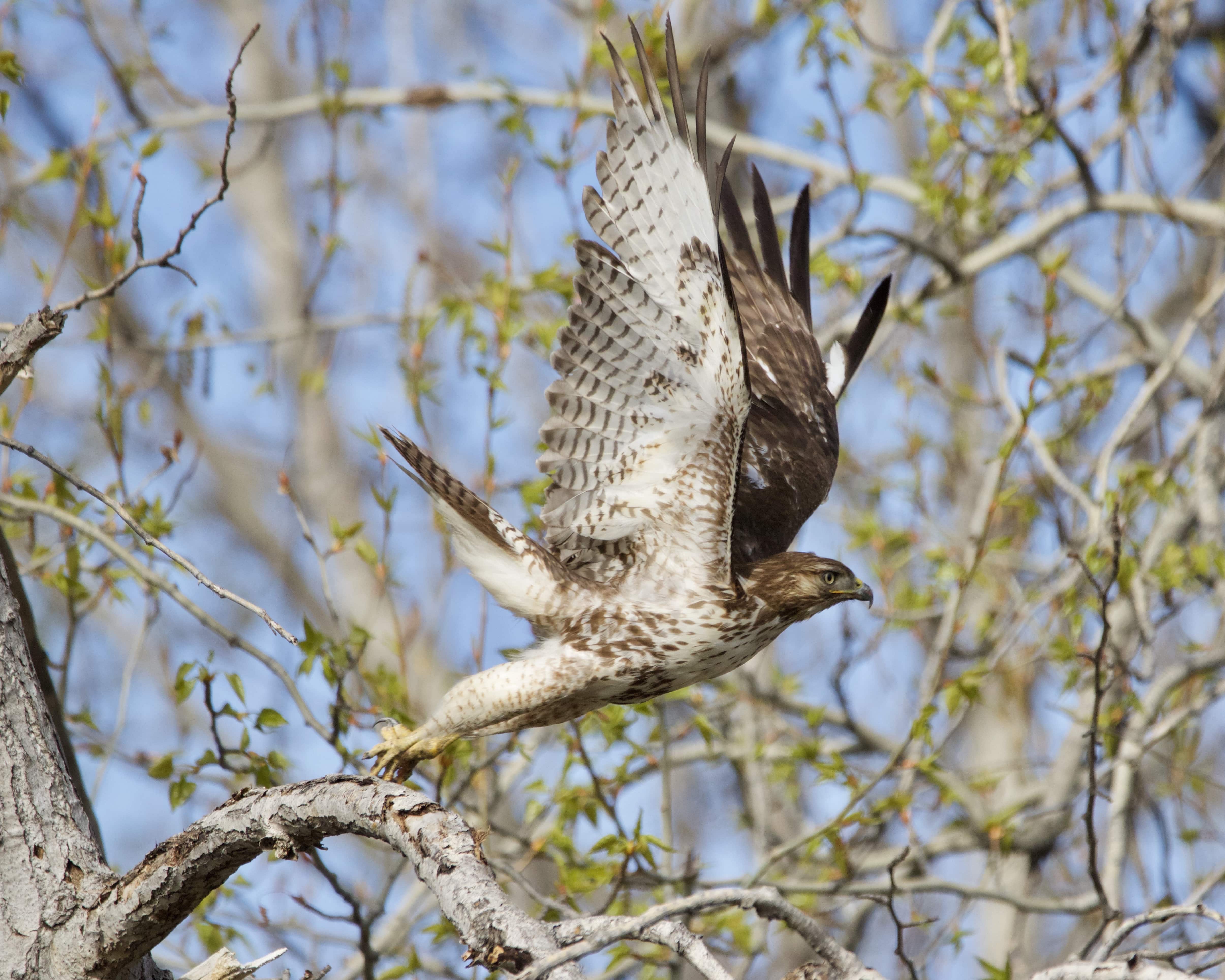
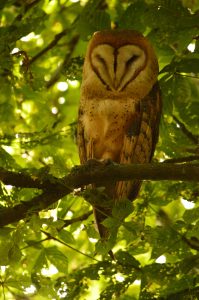
HCTF has a long history of investing in projects that restore, conserve, or enhance fish and wildlife populations and habitats, including avian raptor populations at risk. This new fund will support prioritized activities that improve outcomes for raptors (eagles, hawks, falcons, owls, etc.) of the Fraser Valley Lowlands (FVL) of B.C. (Hope to Richmond/Delta). These outcomes include both direct and indirect improvements to populations or habitat for these birds.

Photo by Laura Thede

The Fraser Valley is recognized as one of the most ecologically significant areas in B.C. for raptor populations. Its unique geography, climate, and historic land use patterns have created ideal conditions for a wide variety of raptor species throughout the year. The habitat mosaic of wetlands, estuaries, riparian corridors, agricultural fields, and forested areas supports foraging, nesting, and roosting for over 20 species of raptors.

Updated October 28, 2025

Priority outcomes for the new fund are to focus on those species and habitats most at risk that represent the unique characteristics of the Fraser Valley Lowlands and prioritize those species that serve as ‘umbrellas’ where their conservation indirectly protects many other species that share their habitat. The three major goals of the fund are:

  • Protect and/or restore lowland grasslands, agricultural areas and wetlands for raptor breeding and/or foraging in the FVL;
  • Improve our understanding of the use and dependence by FVL raptors of remaining lowland grasslands, agricultural areas and wetlands for breeding and foraging to support their protection; and,
  • Establish clear, flexible and realistic raptor breeding and foraging habitat supply objectives for the FVL to drive and inform their protection.

HCTF will consider project proposals aligned with the above priority outcomes along with the following recommendations:

  • The first year of this funding grant should focus on initiating small projects (potentially suitable for HCTF seed grants or small Fish & Wildlife Grants). These projects should include literature reviews and/or data mining to develop a current status of breeding and feeding habitat requirements and condition, pulling together appropriate landcover data for habitat mapping, and assessing gaps in current knowledge and practices.
  • An initial focal species list includes Short-eared Owl, Northern Harrier, Snowy Owl, Barn Owl, and American Kestrel.
  • Findings from these scoping projects will guide multi-year project proposals such as collaborative conservation actions to protect, enhance, and restore lowland grasslands, agricultural areas and wetlands in the Fraser Valley Lowlands; and, where necessary, implementing applied research, habitat modeling, and communication efforts to support direct conservation actions.

The approximate geographic extent of this initiative is represented by the yellow polygon on the image below:

Applicants should use the Word worksheet provided on the HCTF Resources tab to draft the application(s) prior to transferring text (via cut-and-paste) over to the Survey Apply online application form.

Photo by Allan Farrant

Applying for Funding

This funding is currently available under HCTF’s existing Fish & Wildlife granting program, which is now open receive proposals until November 7, 2025, at 4:30pm (PST). To apply under the current intake, review the guidance document and additional information on the Apply tab. If you believe that your project would be a good fit for this funding, please add the acronym “FVL” at the beginning of your project title in your Survey Apply application.

We will provide additional guidance in 2026 if the funding expands to other programs, such as Action Grants or scholarships.

This will be a long-term program with available funding for at least the next 5 years, so applicants are welcome to submit multi-year proposals (note: the maximum duration of a continuing Fish & Wildlife proposal is 3 years). It is estimated that approximately $200,000 will be available each year. There is no minimum or maximum amount that one project can apply for, but the intention is to fund multiple projects per year, so applicants are encouraged to budget accordingly. There is no leveraging (match-funding) requirement, but additional partnership or in-kind funding will be viewed as a strength to an application.

Please direct any project-related inquiries to grants@hctf.ca for further assistance.

Mon, 28 Apr 2025

HCTF Approves $8.6 Million for Fish & Wildlife Conservation Projects

1-826 Vancouver Island Steelhead Stock Decline Investigations, BC Conservation Foundation - Upper Gold Snorkel Survey, photo by Danny Swainson

The Habitat Conservation Trust Foundation is proud to announce over $8.6 million in funding for 110 conservation projects throughout British Columbia.

For over forty years, the Habitat Conservation Trust Foundation (HCTF) has provided grants with over $242 million contributed to conservation projects and programs. The range of project leaders and conservation actions supported all share the goal of conserving B.C.’s freshwater fish, wildlife, and habitats today for generations.

As a registered charity and foundation, HCTF’s unique funding model is led by a surcharge on hunting, fishing, trapping, and guide outfitting licences. “Each year, the conservation surcharge from these contributors funds over one hundred fish, wildlife, and habitat projects above and beyond government funding,” says HCTF’s CEO, Dan Buffett. “Yet, we recognize that government funding, such as the Together for Wildlife Strategy, along with funding from partners, First Nations and other organizations and individuals, remains crucial to meet the shared goals to conserve and enhance B.C.’s fish, wildlife and their habitats.”

7-570 Stone’s sheep seasonal range use in the Omineca Region
Wild Sheep Society of BC

“Our government has been working alongside First Nations, conservation organizations and other key partners for many years to help protect and restore important ecosystems throughout this beautiful province,” says Randene Neill, Minister of Water, Land and Resource Stewardship. “It is deeply rewarding to see the ongoing progress of this crucial work, which is improving the lives of British Columbians today and will continue to benefit future generations. The surcharge revenue, which is dedicated to the Habitat Conservation Trust Foundation’s funding program, complements a suite of integrated conservation initiatives in B.C., including the Together for Wildlife Strategy, the Tripartite Framework Agreement on Nature Conservation, the Conservation Lands Program, the draft Biodiversity and Ecosystem Health Framework, and our commitment to protect 30% of the province’s land base by 2030.”

Projects supported this year include:

  • $84,000 to replace aging infrastructure at the Redfish Creek Spawning Channel to continue to supply stock conservation and fishery benefits
  • $68,224 to restore whitebark pine ecosystems for bear habitat in the Skeena region
  • $94,050 for the restoration of year-round fish passage and improvement of aquatic and riparian habitat at the Westside Road weirs in Six Mile Creek
  • $262,650 towards restoring caribou habitat on approximately 86 km of roads within the Whitesail Priority Restoration Area
  • $99,621 to conduct cultural burns to enhance forest health in the Mount Currie/Líl̓wat area and improve habitats for grizzly bears, black bears, deer, and elk
  • $45,645 to better understand the factors that limit porcupine survival in north central B.C., given the limited ecological knowledge of this species

To see the complete list of HCTF-funded projects and learn more about the conservation work being done near you, view the 2025-26 Approved Project List.

In addition to Fish and Wildlife grants, HCTF provides grants for conservation stewardship and education. Additional projects will be announced in June under our Action, Capacity, and Community Grant programs, and scholarship recipients in autumn.

Update June 18, 2025: The Approved Project List now includes 2025-26 Invasive Mussel Monitoring Grants and Highland Valley Enhancement Fund projects. There are now a total of 122 projects and over $8.9M in funding.

Tue, 22 Oct 2024

Guidance for Applicants: Ecological Corridors Funding

Photo By: British Columbia Conservation Foundation
Project 1-664

Additional information for the ecological corridors funding opportunity for the 2025-26 fiscal year.

The Ecological Corridor funding focuses on identifying, planning, developing, and recognizing ecological corridors, and catalyzing action to maintain or restore ecological connectivity and protect Indigenous stewardship values within them. Check the National Priority Areas of Ecological Corridors 1 to 6 in B.C. (seen here: National priority areas for ecological corridors (canada.ca)).

For more background info on the funding, click here.

This funding is available for applications through the Fish & Wildlife proposal intake. Eligibility for applications to utilize the Ecological Corridors funding is assessed through the same criteria as the Fish & Wildlife Grant and is within the same proposal intake and the same timeline.

Specific aspects of the Fish & Wildlife Grant that are also supported by the Ecological Corridor funding include:

  • On-the-ground fish and wildlife habitat restoration and planning projects (including components that create project plans, restoration plans, and associated land use planning);
  • Population assessment and monitoring for fish and wildlife species to inform habitat management or stewardship; and
  • Monitoring, mapping, and/or application of traditional knowledge that will create habitat conservation, restoration, or enhancement.

Objectives must be to directly inform the management, conservation, restoration, or enhancement of fish & wildlife habitat (i.e. preliminary planning objectives on their own will not be eligible).

Ecological Corridor funding will be applied to projects up to January 2026 including preliminary activities. After this date (i.e. projects assessed in January 2027) will continue to apply to the main Fish & Wildlife Grant, including continuing projects.

It is strongly encouraged that applications demonstrate that a project will be secure in the long term and have a durable impact through its legacy.

Proposals are to be submitted through the regular Fish & Wildlife Grant Survey Apply application process. If you believe that your project would be a good fit for this funding, please add the words “Ecological Corridors” at the end of your project title in your Survey Apply application.

The application deadline for Fish & Wildlife Grants is Friday, November 1, 2024, at 4:30pm PDT.

For questions regarding the ecological corridor funding or Fish & Wildlife Grants, please contact HCTF’s Grants Officer Amy Perkins at amy.perkins@hctf.ca or 250-940-3014.

Projects that have already received funding elsewhere through the Nationals Ecological Corridor program or through the BC-Canada Agreement for Ecological Corridor Stewardship may not be eligible.


Fri, 20 Sep 2024

New Funding Available for Ecological Corridors

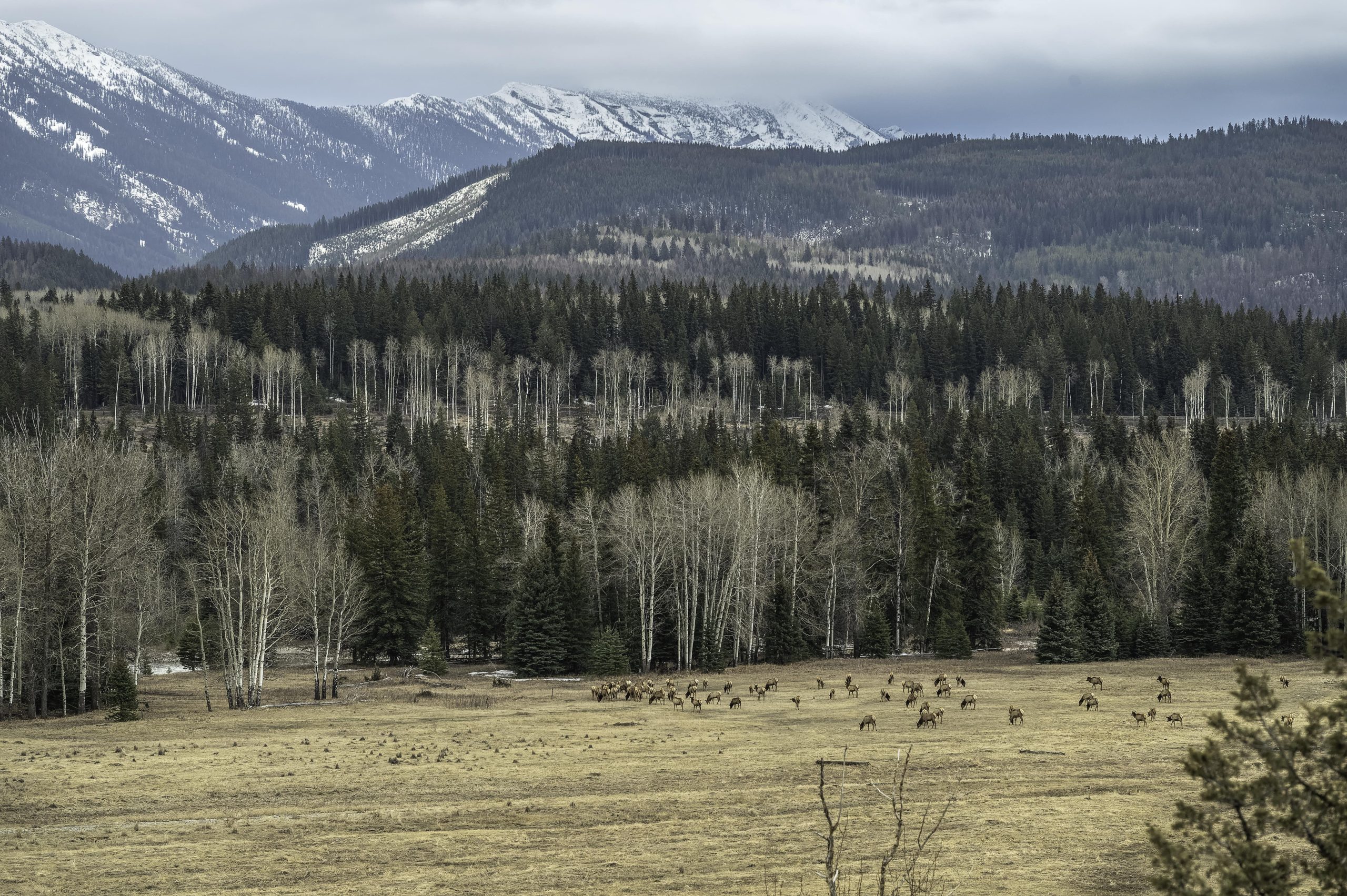
Elk Herd at Big Ranch Conservation Area - photo by Michael Schumacher

In support of the Parks Canada/BC Agreement on the Stewardship of Ecological Corridors in British Columbia program, HCTF is pleased to announce a new funding opportunity for the 2025-26 fiscal year.

This opportunity stems from a collaboration between the Parks Canada National Program for Ecological Corridors and the B.C. Ministry of Water, Land and Resource Stewardship.

The available funding is focused on identifying, planning, developing, and recognizing ecological corridors, and catalyzing action to maintain or restore ecological connectivity and protect Indigenous stewardship values within them. The work is to take place in National Priority Areas of Ecological Corridors 1 to 6 in B.C. (seen here: National priority areas for ecological corridors (canada.ca)). Within these National priority areas, projects will be favored that coincide with areas of Environment Stewardship Initiative Forums, collaborative stewardship forums, strategic planning processes, or similar government-to-government forums.

The funding is targeted for ecological corridor and habitat connectivity stewardship, through support for
1) area-based planning and local action, like habitat restoration and management, and
2) knowledge acquisition, science, and information development, such as monitoring, mapping, and/or application of traditional knowledge. All area-based planning and local action projects must involve leadership by First Nations or other active First Nations engagement. Knowledge acquisition, science and information development projects with participation from First Nations will be favored although this is not a requirement for work focused on collecting, mapping, and/or modelling ecological data.

Quadra Hill seen from Vanilla Leaf – Galiano Conservancy Association

All projects will need to deliver work that will support durable, long-term ecosystem connectivity before January 2026, or to deliver by the same date a product (e.g., a plan or information to be used in a planning process) that is expected to have a durable impact through its legacy. This funding opportunity is not intended to directly support the construction or purchase of major infrastructure (e.g., wildlife highway overpass), but can be used to support partners in these activities through science, planning, or similar work, or through the purchase of smaller equipment and supplies (e.g., signage, fencing, etc.).

Proposals are to be submitted through the regular Fish & Wildlife Grant Survey Apply application process. If you believe that your project would be a good fit for this funding, please add the words “Ecological Corridors” at the end of your project title in your Survey Apply application.

The application deadline for Fish & Wildlife Grants is Friday, November 1, 2024, at 4:30pm PDT.

For questions regarding the ecological corridor funding or Fish & Wildlife Grants, please contact HCTF’s Grants Officer Amy Perkins at amy.perkins@hctf.ca or 250-940-3014.

Projects that have already received funding elsewhere through the Nationals Ecological Corridor program or through the BC-Canada Agreement for Ecological Corridor Stewardship may not be eligible.

Mon, 16 Sep 2024

Restoring Black Cottonwood Forests of the Kettle River

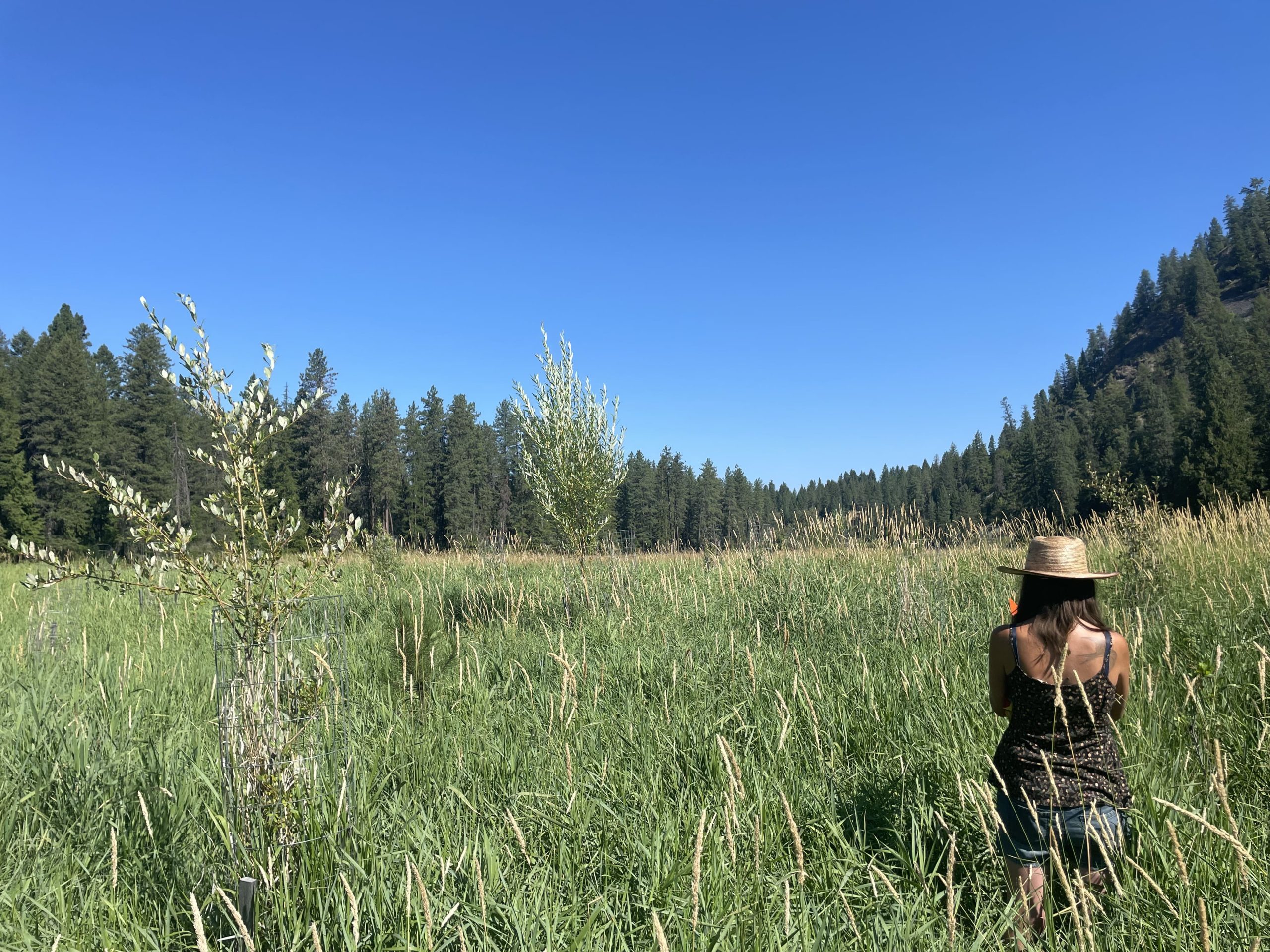
3-year-old cottonwoods growing amongst highly competitive reed canary grass - Barb Stewart

HCTF is proud to commit over $1.3 million in funding for wildlife conservation and conservation stewardship projects in the Kootenay Boundary region this year.

Among this year’s projects in the region is a multi-year project working to conserve the rare black cottonwood forests of the Kettle River. The riparian ecosystems (which help connect land to water and provide fish habitat in B.C.) are home to several species at risk and The Granby Wilderness Society has undertaken restoration work for several years to improve habitat. This year the Society is increasing its stewardship efforts by working with landowners to identify habitat concerns and assist with additional restoration efforts: “The biggest project successes are meeting landowners that have healthy riparian areas and are good stewards. Private lands play such an important role in conservation,” said project leader Jenny Coleshill.

A site planted with rooted stock on the Kettle River north of Rock Creek – Barb Stewart

The project is being supported by the HCTF and the Forest Enhancement Society of BC (FESBC) with $30,480 in co-funding this year.

”HCTF and FESBC believe in the power of a partnership; just like the Granby Wilderness Society, local governments, and landowners who are working together to enhance riparian areas along the river,” said Dan Buffett, CEO of HCTF. “Establishing healthy riparian black cottonwood stands along the Kettle River supports our rivers as they are dynamic systems shifting between flood and drought states. A healthy riparian zone lessens flooding and drought impacts, improves water quality, and supports a more diverse and abundant population of aquatic and terrestrial species along with their habitats.”

Other HCTF-funded projects taking place in the Kootenays include:

  • $130,500 for a River Guardian program in eight Kootenay region watersheds to maintain or improve angling quality and protect our native freshwater fish populations.
  • $83,830 to enhance 112 hectares of elk winter range in the Upper Kicking Horse Canyon through thinning of immature forest to promote forage growth and allow ease of elk movement.
  • $70,150 to restore habitat on approximately 105 km of roads within the Columbia North herd of the Southern Mountain Caribou ecotype.
  • $38,222 for improving the basking log habitat for the blue-listed (Indigenous species which are vulnerable to the region) Western Painted Turtle on Erie Lake.
  • $50,000 for the 2024 Wetlands Institute in the East Kootenays, a seven-day workshop that provides practitioners with the tools and knowledge to initiate wetland stewardship projects.

2023 Wetlands Institute Restoration Design – Jamie Long