
Tue, 20 Aug 2019
Tags: F&W / Wildlife

Seeking ways to protect western bats from deadly white-nose syndrome

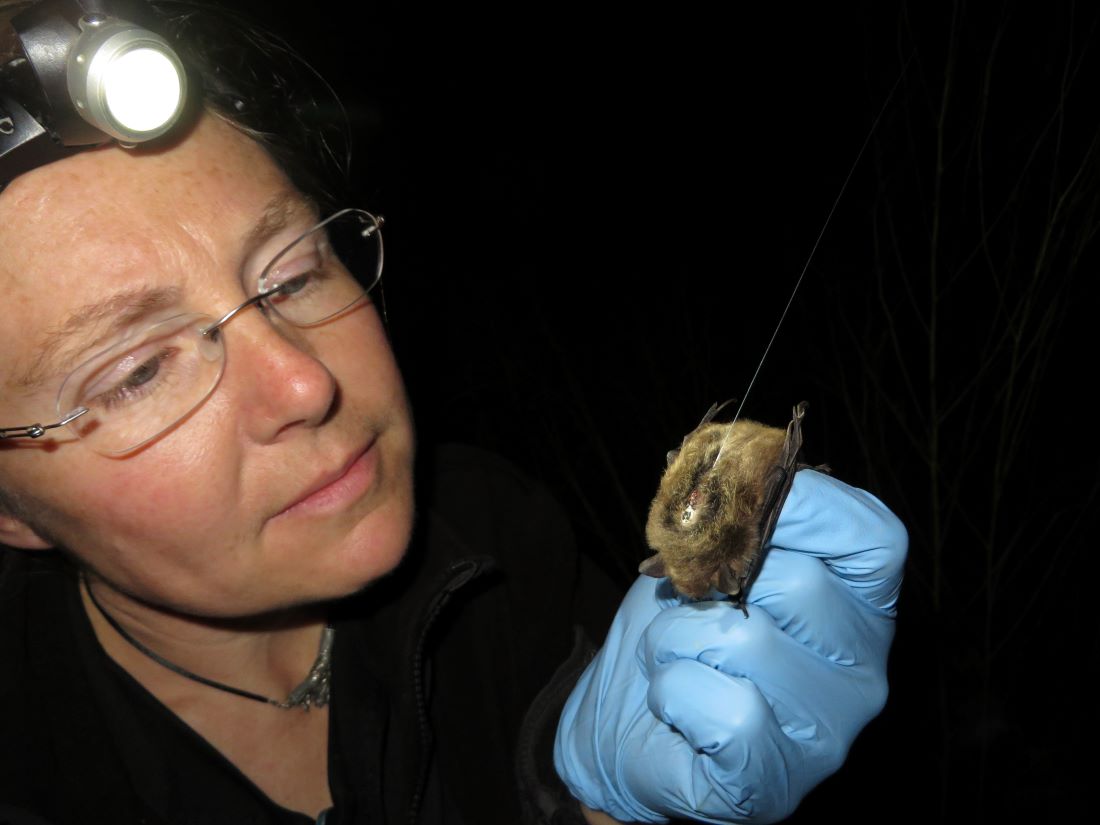
Cori Lausen glues a transmitter onto a bat in fall which will help locate roosts as well as provide valuable information about hibernation behaviours and physiology, needed to understand how white-nose syndrome may impact bats in BC.

The first time Cori Lausen held a big brown bat in her hands, it was love at first sight. “She was so tiny, she fit in my hand. And the band showed that she was older than I was.”

The more Cori learned about bats, the more she realized how unique they are – and when she asked questions about them there were often no answers. “There are so many things we just don’t know about them.”

So she took a leave of absence as a high school teacher in 1999, earned a Masters’ degree on bat ecology at the University of Calgary and a PhD in bat population genetics.

Today as associate conservation scientist with Wildlife Conservation Society Canada, Cori is looking for ways to protect western bat populations from deadly white-nose syndrome (WNS). This includes cutting-edge research supported by Habitat Conservation Trust Foundation (HCTF) to develop and apply a probiotic cocktail that can help bats survive the disease. HCTF has contributed nearly one fifth of the $583,000 budget for the two-year project.

WNS originated in Europe and is caused by the fungus Pseudogymnoascus destructans. It first appeared in North America in New York State in 2006, and has since killed millions of bats. “Many of us shed tears when we first heard of it,” Cori says. “We did not understand it, but knew its devastation was going to spread like wildfire.”

The disease started in the east and gradually moved south and north. Its spread west was slower because of migration patterns, until 2016 when it made a giant leap into Washington State. “The jump was a big shock,” says Cori. She expects the infected bat hitched a long-distance ride on a transport truck going to the port in Seattle, highlighting the importance of checking trailers, campers, and trucks for stowaway bats.

WNS causes a white fungal growth across a bat’s muzzle and wings, and has a death rate of up to 100 per cent. It disrupts winter hibernation, rousing the bats so they use up the valuable fat reserves they need to survive until spring.

There’s an added challenge in western North America because there are no large bat hibernacula like in the east. Instead, bats overwinter in smaller numbers in rock crevices, trees, caves and mines, and even in some buildings.

Cori was already interested in what bats in western Canada do in winter when WNS appeared in Washington State, and thanks to help from many BC naturalists, had detected eight of the 14 species that overwinter in British Columbia. “When the fungus first showed up, we realized that understanding where bats are is now more than curiosity – it is absolutely urgent.”
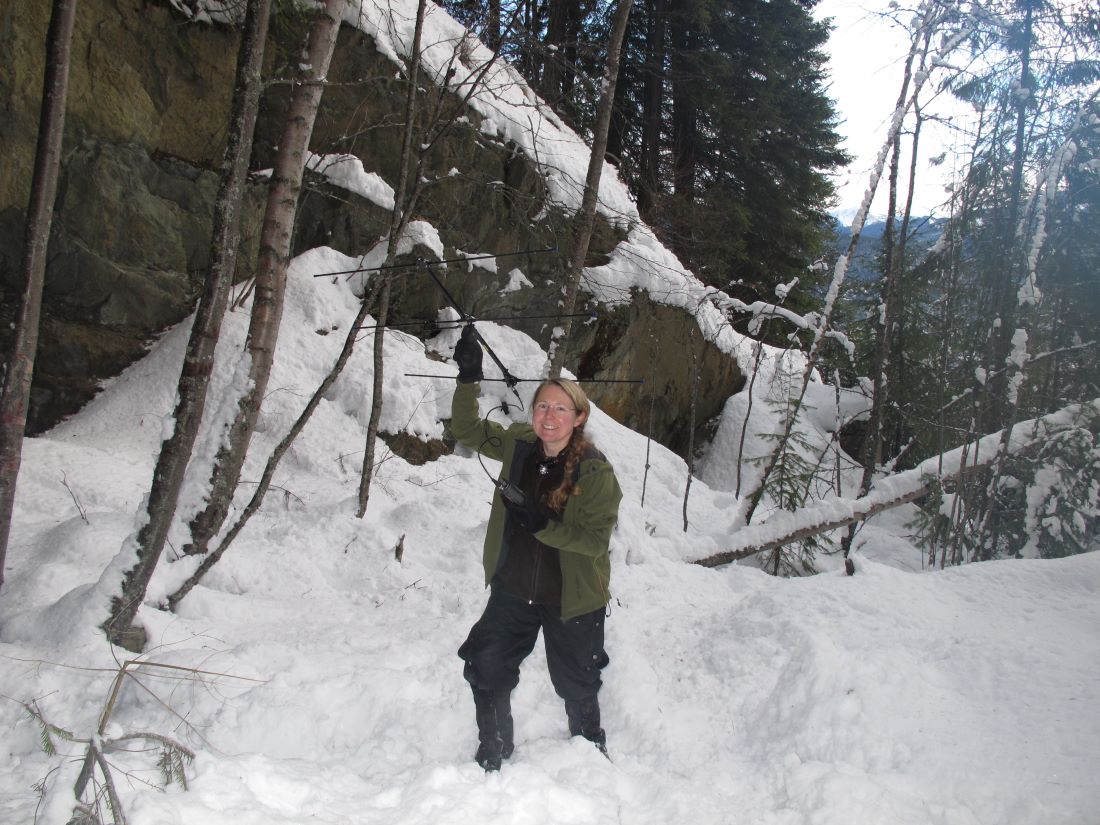
 

Cori Lausen tracks bats in winter in the West Kootenay region. Telemetry is used to locate hibernacula, as well as provide valuable information about hibernation behaviours and physiology, needed to understand how white-nose syndrome may impact bats in BC.

Cori Lausen tracks bats in winter in the West Kootenay region. Telemetry is used to locate hibernacula, as well as provide valuable information about hibernation behaviours and physiology, needed to understand how white-nose syndrome may impact bats in BC.

But with few locations and few bats, these winter hibernacula are unlikely to yield a solution to the WNS problem. “We need a ‘made in the west’ approach to fight off the fungus, and set them up to come back in the spring alive,” Cori says. “We decided to target our vulnerable building-roosting bats as we know where thousands of them roost in the summer.”

Through the HCTF project, the researchers developed a probiotic using bacteria sourced from local healthy bats. They first tested it on captive bats at the British Columbia Wildlife Park in Kamloops in 2018.

This spring, they developed an application method, and will test it in the Vancouver region where WNS will probably appear first in British Columbia. At roost entrances, they will dust powdered clay infused with the probiotic, so it sticks to the bats and they get a small dose every time they come and go.

“We are the first to propose treating bats in summer, introducing probiotic gradually so it does not overwhelm their immune system,” Cori says. “We will take wing swab samples from the bats now, and repeat in spring to see if the probiotic is still there and still viable.”
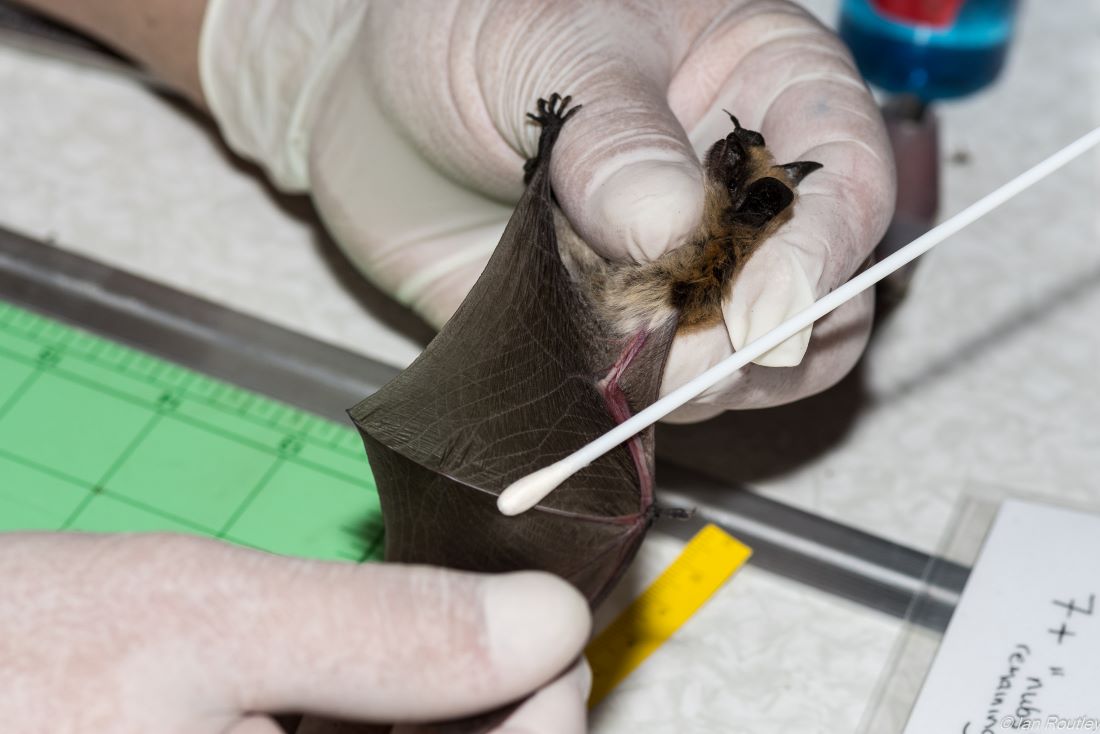
A California Myotis bat from Lillooet BC is wing-swabbed to look for bacteria that naturally prevent growth of Pd to use in the development of the probiotic cocktail. Photo by Ian Routley.

Purnima Govindarajulu, acting head of the B.C. Ministry of Environment and Climate Change Strategy’s Conservation Science Section, is part of an advisory committee supporting the project. “Bats are an important part of a healthy ecosystem,” she says. “White nose syndrome could have serious repercussions in British Columbia because bats eat huge number of insects, and this benefits agricultural crops, forests and people.”

British Columbia is better positioned than many other western regions thanks to BC Community Bat Programs (www.bcbats.ca/) that encourage individuals to identify roost sites and show landowners how to protect these sites or install bat-houses.

“We know white nose is coming so we have nothing to lose,” says Cori. “It does not cost a lot to give a landowner a little bag of clay that they can dust into bat boxes or building roosts. If it looks like it will save bats, we will apply for further research support to develop a widespread approach.”
 

Wed, 24 Jul 2019
Tags: F&W / Wildlife

Community Goshawk Project Gets Funding Boost

Northern Goshawk nest on the Sunshine Coast

On-going efforts to help the threatened Northern Goshawk population on the Sunshine Coast just got a lift— through a $14,700 grant to locate occupied breeding areas of this unique member of the raptor family.

Northern goshawks are found in mature forests with a heavy canopy and minimal undergrowth. Their relatively short wings and long tails make these birds extremely agile hunters in the forest. Pairs will often build multiple nests within a territory using branches and fresh evergreens. The loss and fragmentation of habitats used by Northern Goshawks for nesting and hunting threatens the future of these birds in coastal BC.

The Sunshine Coast Wildlife Project will use the grant to conduct field surveys to search for goshawk breeding areas, and to carry out community engagement to improve awareness and participation in raptor stewardship programs, through such activities as construction and installation of nest boxes for threatened Western Screech-owls.

The grant comes from the Habitat Conservation Trust Foundation and Forest Enhancement Society of BC . “We are so grateful for this funding,” says Wildlife Project Leader, Dr. Michelle Evelyn. “Goshawks have huge home ranges, thousands of hectares in size, so finding the birds and their nests is a bit like looking for a needle in a haystack. But with support from HCTF and FESBC, over the past two years, we have been able to identify three new goshawk breeding territories on the Sunshine Coast.”

The Province of BC is now working with forest companies, the shíshálh Nation, and other stakeholders to establish Wildlife Habitat Areas that will permanently protect these territories.

“Seeing healthy babies in the nests and knowing that these vital areas will be protected for the goshawks, along with the many other wildlife species that share their mature forest habitats, makes us incredibly happy,” says Evelyn.

The Habitat Conservation Trust Foundation recently received additional funding to support conservation projects focused on Northern Goshawk and another threatened coastal bird, the Marbled Murrelet. Earlier this year, the Province of British Columbia made a $500,000 contribution to the Foundation for the conservation of these two species. Individuals or organizations interested in applying for funding are encouraged to contact HCTF for further information.

Conserving Threatened Raptors on the Sunshine Coast is one of 170 BC fish and wildlife projects receiving grants from the Habitat Conservation Trust Foundation this year. For a complete list of grant recipients, visit https://hctf.ca/achievements/project-list/


Photo (click to download larger version of the file)


A project team member surveying for Northern Goshawks.


HCTF Contact:

Shannon West, Manager of Program Development
shannon.west@hctf.ca
250-940-9789


Project Contact:
Michelle Evelyn, Project Leader
Sunshine Coast Wildlife Project
coastwildlife@gmail.com
604-989-1007


Quick Facts:


Thu, 28 Mar 2019
Tags: F&W / Wildlife

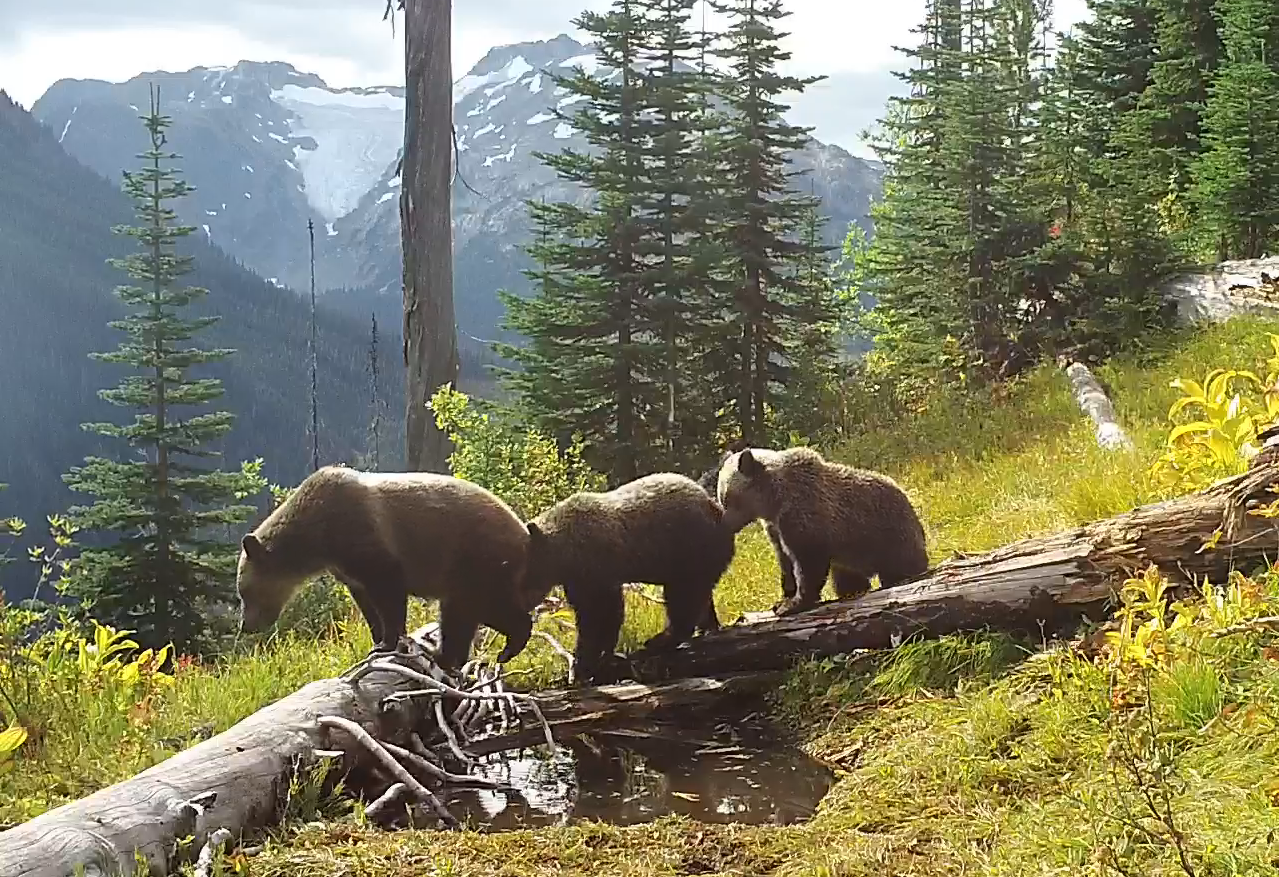
Congratulations on Grizzly Study Publication

SWBC Grizzly Project

Exciting news from project proponent Michelle McLellan Ph.D.

“We have been monitoring grizzly bears in the threatened Stein-Nahatlach population since 2010. This project was funded by HCTF and we’ve recently published the results of this work. Thanks to HCTF for making this possible.”

View publication on “Divergent population trends following the cessation of legal grizzly bear hunting in southwestern British Columbia, Canada” here:

https://www.sciencedirect.com/science/article/abs/pii/S0006320718301538

Thu, 10 Jan 2019

Meet the Neighbours!

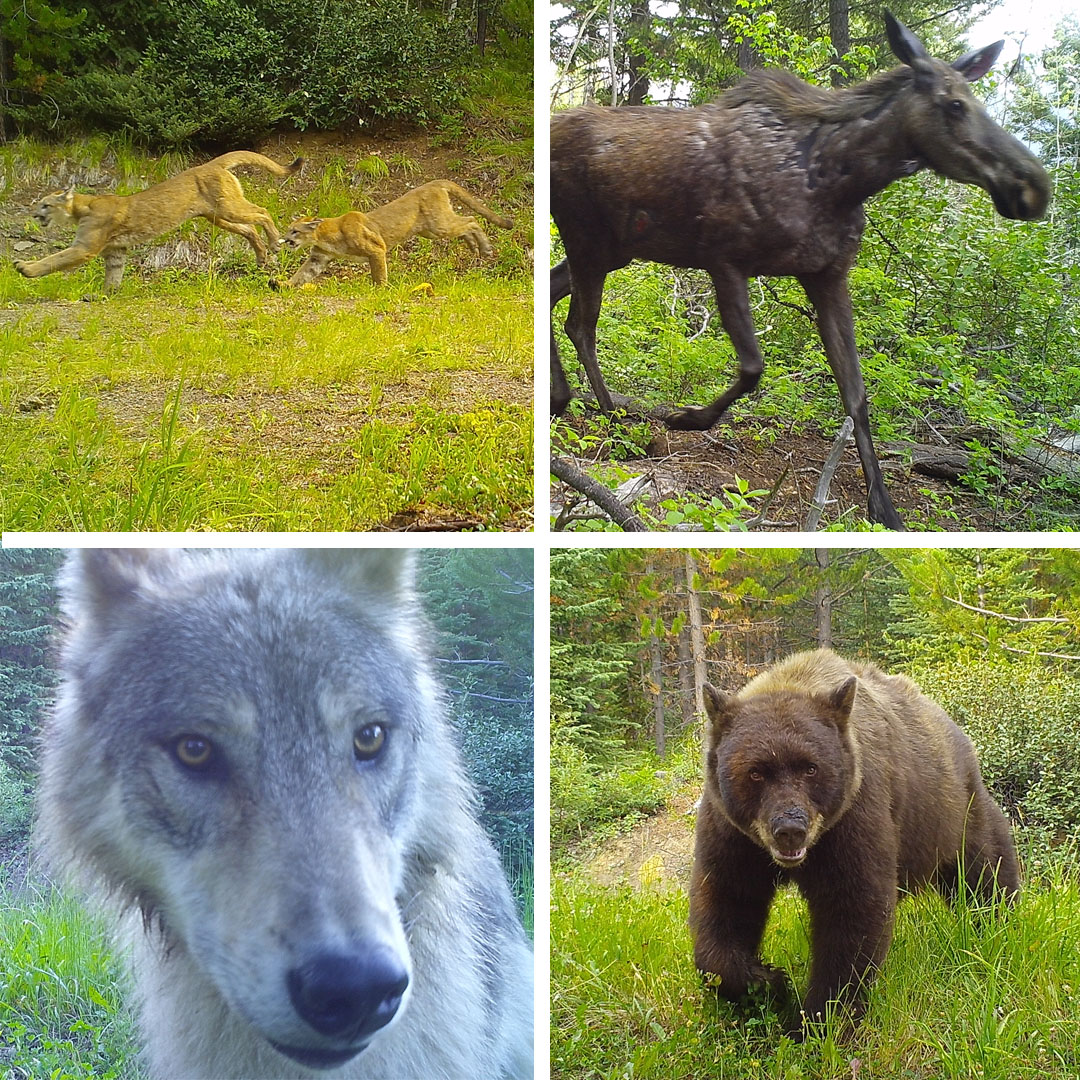
Animal-quartet
photo credit Dr. Naidoo

The South Chilcotin Mountains in south-central British Columbia are well-recognized as a wildlife haven, and contain some of the province’s most iconic wilderness species. However, there is little understanding of how an increasing human footprint in this region impacts the diversity and abundance of species. There is little information available on the key factors that regulate the distribution & abundance of wildlife here, which is a critical knowledge gap as human activity is increasing in large parts of the region, with unknown consequences.

To address these issues, HCTF is funding Dr. Robin Naidoo’s study in the South Chilcotin mountains. So far, camera traps have turned up a wide variety of species including cougars, bears, moose, wolves, coyotes, wolverine, lynx, and many more.

“Although our camera trap grid has been running for less than a year, it has revealed that the abundance and diversity of wildlife that share trails with people in the South Chilcotins is truly remarkable,” says Dr. Naidoo

Thu, 29 Nov 2018

Coquihalla River Rehabilitation Project Update

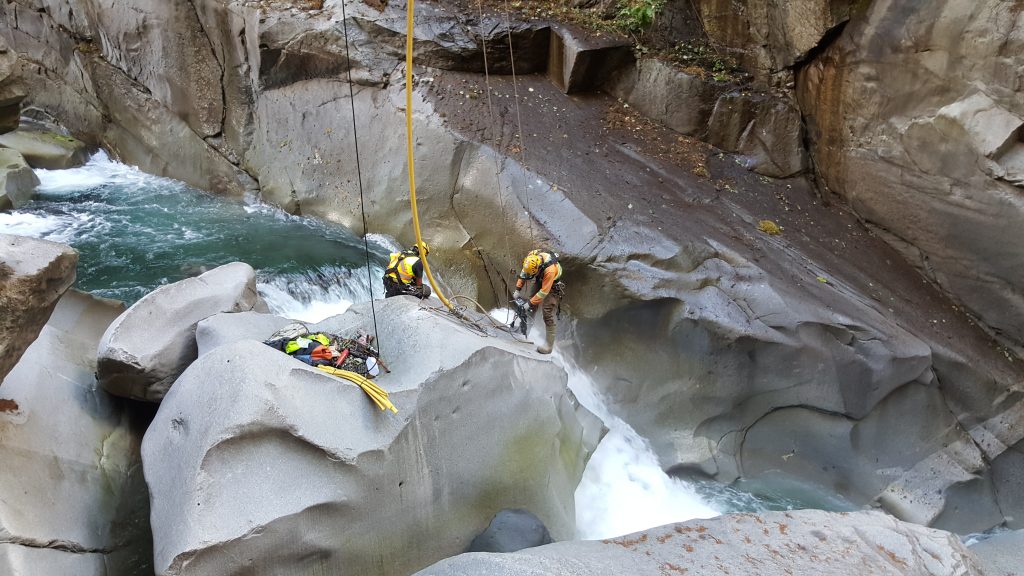
Crew working to break up boulder on Coquihalla River

HCTF is delighted to share an update from one of our more explosive recent projects, the Coquihalla River Summer Steelhead Migration Rehabilitation Project.

In the spring of 2014, an unfortunate combination of erosion, shifting of boulders and the settling of a failed bridge foundation introduced a new obstacle for summer steelhead attempting to access the upper 20 km of the Coquihalla River. The location of Othello Falls, combined with seasonal water levels, have always made this stretch very difficult to pass, but the 2014 events made this barrier almost fully impassable. Loss of access to the upper river threatened the long-term viability of this unique steelhead population. In response, a dedicated group of biologists, engineers, conservationists, and fisheries enthusiasts came together to make a plan.

Northwest Hydraulic Consultants was contracted to oversee modifications to the barrier. In September 2017, the team rappelled down the bridge at Othello Falls, drilled holes in the most problematic boulder, and used low-impact explosives to break the blockage into smaller pieces. Over the winter, high water flows redistributed the rocks, creating a more accessible passage for steelhead.

While it is still too early to assess the full impact of the rehabilitation work, preliminary results are encouraging, according to Mike Willcox, project leader and Fish Biologist with Ministry of Forests, Lands, Natural Resource Operations and Rural Development for the South Coast Natural Resource Region. His team conducted snorkel surveys both up- and down-stream of the barrier in late summer 2018 to determine the percentage of summer steelhead that successfully traversed the blockage. “Our observations indicate the works were at least partly successful in improving access at the barrier,” says Willcox. “As well, anglers were pleased with the fishery upstream of the barrier this season. We will continue to monitor fish movement each year past the barrier to determine whether any further works are required.”

The Coquihalla River supports one of only two natural, coastal summer-run steelhead stocks on the lower Fraser River. This stretch of river provides a rare opportunity for artificial fly-only summer steelhead fishing. From both a conservation and recreation viewpoint, individuals and organizations from across BC are very keen to support this important piece of habitat. HCTF is keen to follow the monitoring updates from the talented and creative folks on the ground and in the water at the Coquihalla River.

This project was supported by the Freshwater Fisheries Society of BC, the Steelhead Society, Kingfisher Rod and Gun Club, the BC Conservation Foundation, BC Parks and the Ministry of Forests, Lands, Natural Resource Operations and Rural Development.


Wed, 21 Nov 2018

The Curious Case of the Haida Gwaii Sooty Grouse

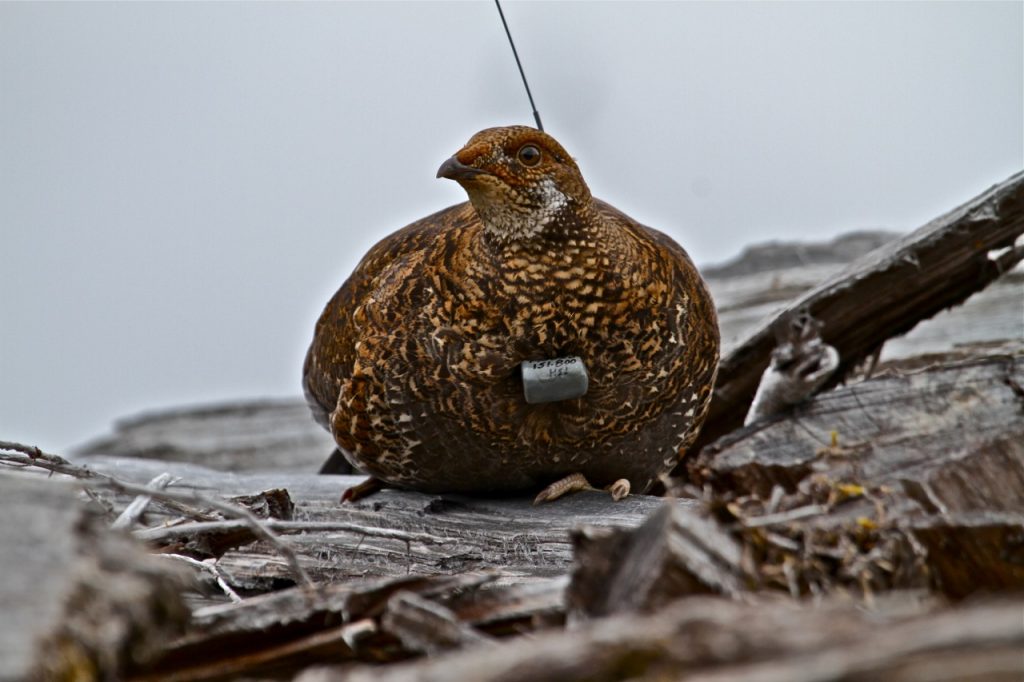
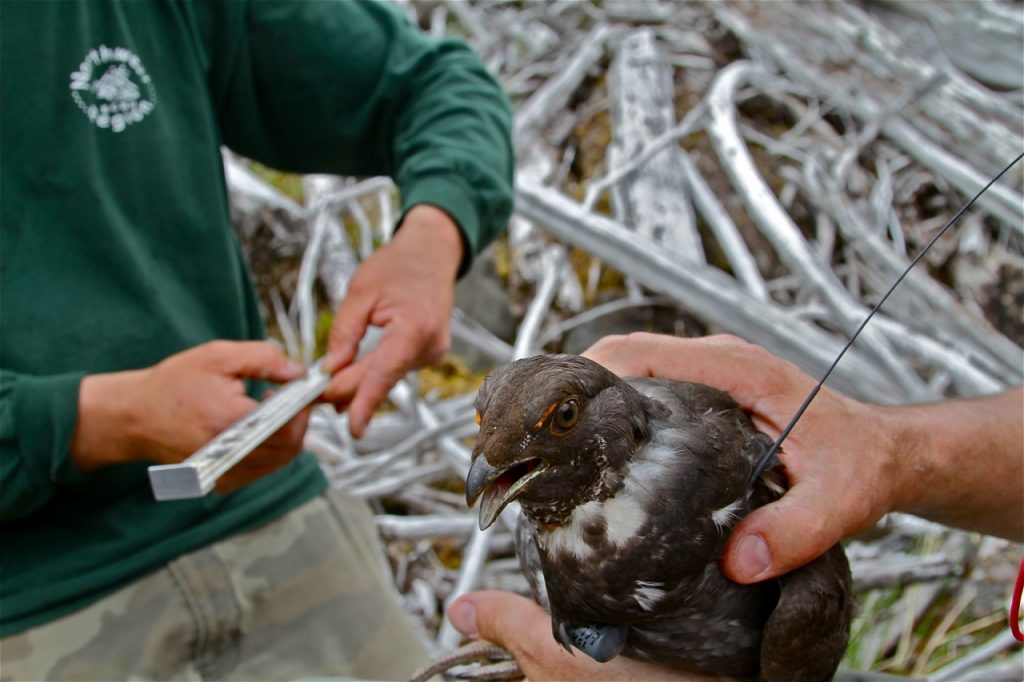
Sooty grouse sporting a radio telemetry collar

Guest post by Berry Wijdeven, Ministry of Forests, Lands and Natural Resource Operations

On a clear day, you can see the British Columbia mainland from the shores of Haida Gwaii. The archipelago is only about 80 km from the mainland coast but weather and waves can make the distance insurmountable. The people of Haida Gwaii have learned to adapt to this relative isolation through patience and creativity, and so has the local flora and fauna.

The adaptations of local wildlife are wide-ranging and sometimes dramatic. Because Haida Gwaii rainforests tend to be dark, local birds, including goshawks, saw-whet owls and hairy woodpeckers have darker plumages compared to their mainland counterparts. It is hypothesized that this adaptation helps to conceal them. Goshawks have also adapted with decreased wingspans to manoeuvre more easily through the narrow flyways below the dense tree canopy. Haida Gwaii bears have developed the largest skulls of any North American Black Bear, likely due to a different suite of available prey items, while smaller critters such as marten and ermine sport skull shapes and sizes substantially different from those of their cousins on the mainland. Local marten, taking advantage of the large niche created by the lack of local mid-sized predators, have grown bigger than their mainland counterparts and may be capable of preying upon larger mammals, such as introduced deer.

The Haida Gwaii subspecies of saw-whet owl, known as the brooksi, is the only native species of owl on-island. This local subspecies has discovered that intertidal zones boast an abundance of food, such as beach hoppers and other invertebrates. Since the owls are not threatened by other night time predators such as the larger owl species found on the BC mainland, they can freely gorge themselves on these intertidal critters. Blue herons have changed their behaviour as well. In response, perhaps, to the vast numbers of island eagles, they have abandoned their colonies and now nest in single nests, well away – sometimes up to 10 km – from the ocean. In fact, while both blue herons and saw-whet owls are typically migratory birds, the local populations have adapted to live in Haida Gwaii year-round.

These unique relationships and interactions make studying wildlife on Haida Gwaii a fascinating undertaking. When the Haida Gwaii Sooty Grouse Research Project started seven years ago, the researchers weren’t looking for the unexpected; after all, grouse behaviour had been studied pretty comprehensively elsewhere. The research team was interested in finding out whether the local grouse population, an important prey item for goshawks, was in decline and if so, why. Was it the habitat changes brought on by forest harvesting? The influence of the large number of introduced deer? Other factors?

To find out what was going on, the team caught more than a hundred and seventy grouse and fitted them with radio collars. This enabled the researchers to track the birds’ movement patterns, determine seasonal habitat usage, and locate grouse nests. When, during the breeding season, a tagged female stopped moving for a few days, it was a good bet she had started nesting. Using radio telemetry, the nest was located and a motion detection camera deployed to hopefully record hatch success.

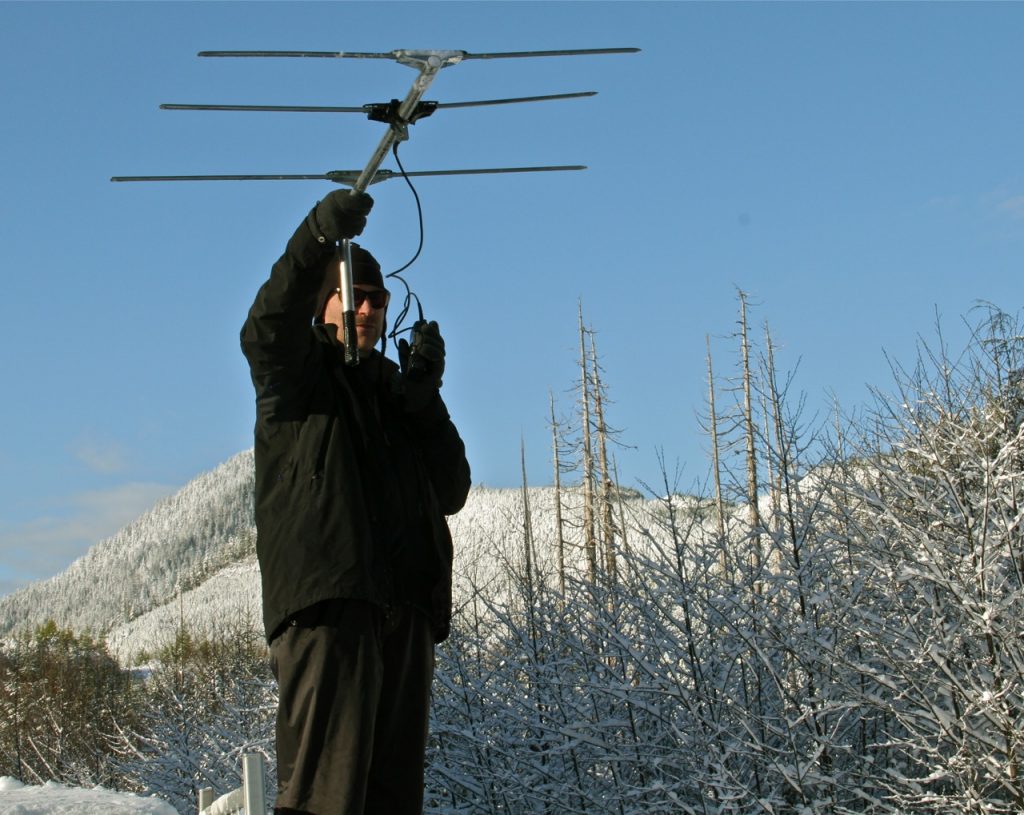
Radio telemetry is, at times, more of an art than a science. While the basics are pretty straightforward – you put a radio transmitter on a critter, release it and then use a receiver to lock onto its unique radio signal to help guide you to its current location – in the real world this guiding is less straight forward. The radio signals don’t travel in straight lines; they bounce off slopes, are re-directed by trees or rocks, are affected by high moisture content in the air and can be nearly silenced when the source signal is located in a depression. For rookie field crews, initial searches involve a lot of unnecessary bushwhacking, bog traversing and fighting off salal attacks, in search of an ever changing, at times seemingly illusive signal. Researchers quickly learn to “read the sign”, including accounting for topographical or vegetation impacts to the signal, checking directions frequently and constantly adjusting their path forward.

Telemetry

When you walk towards a radio signal, you judge your progress by how strongly the signal is received. When the signal gets stronger, the beep gets louder, signalling that you are getting closer. This aural assistance disappears when you get within 20-30 meters of the transmitter. At this point, the signal is as strong as it is going to get and it now becomes a matter of visually locating the grouse wearing the collar. Crews tread carefully at this stage, not just to prevent the grouse from moving off her nest, but also, literally, from not stepping on a grouse.

Sooty grouse belong to the family Tetraoninea which also includes Spruce grouse, Ruffed grouse, Sharp-tailed and Sage grouse as well as Ptarmigan and Prairie chickens. This family has a wide distribution ranging from Iceland and Greenland to Eurasia and North America. While they have adapted to a wide variety of ecosystems, one characteristic that has remained commonplace is their choice of nesting sites. Whether it’s the arctic tundra, coastal rainforest or inland plains: grouse typically nest in shallow depressions on the ground, often beneath cover, with a thin lining of plant material. Not the most secure of locations, but somehow it has been sufficiently successful to maintain the species.

In characteristically Haida Gwaii fashion, local Sooty grouse behave atypically. The research crew discovered that somehow the island grouse must not have gotten that ground-nesting memo. They first observed some grouse nests located on high stumps, which was unexpected and interesting. Soon thereafter, a grouse nest was detected 2.5 meters up in the air on a 45 degree leaning tree. That created some excitement amongst the crew, thinking they might have located the highest known grouse nest in North America.

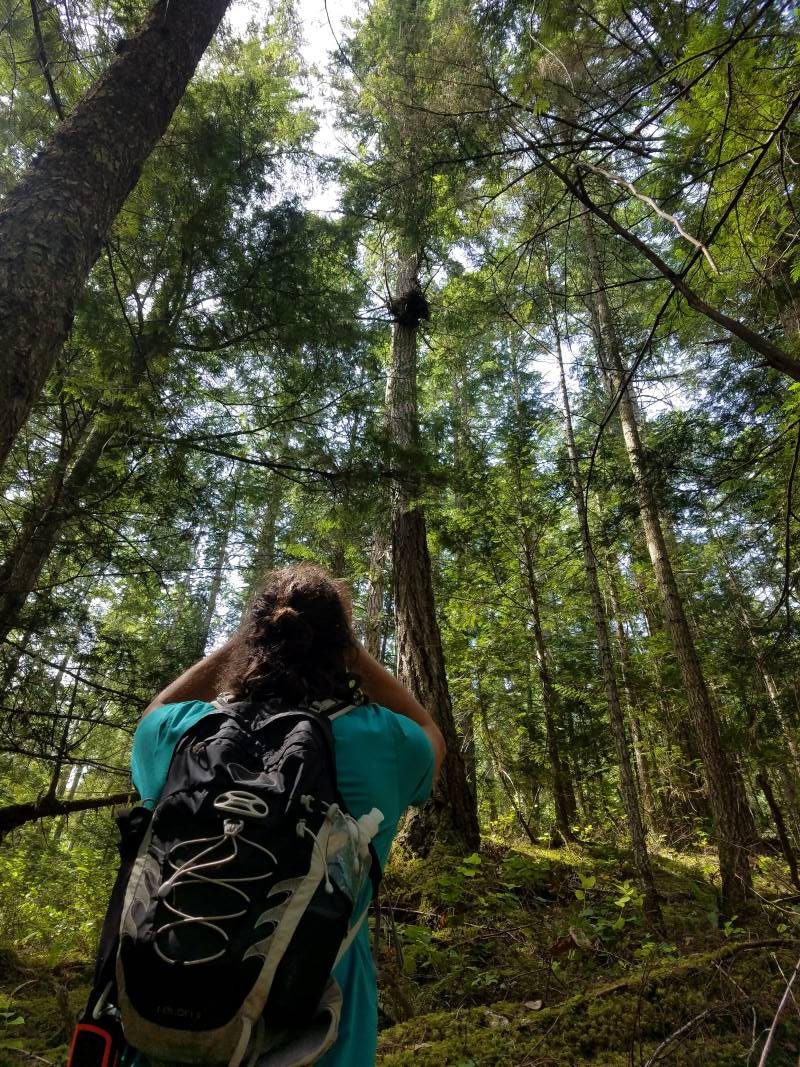
That was only the beginning. By the next field season new nest champions emerged, nestled ever higher in the crooks of trees or on mossy platforms on tree branches. While exciting, trying to find these nests often proved problematic. Locating nests in dense understory was one thing, but looking up into a cluster of trees, hoping to spot a remarkably well camouflaged grouse took time, skill and a healthy dose of luck. Mossy platforms, more often associated with Marbled Murrelet nests, turned out to be popular sites for the non-conformist tree dwelling grouse. Sometimes, after extensive circling, using binoculars and zoom lenses, looking for the right angle to get a glimpse, it would be the tail feathers, sticking up or sticking out which would give the grouse away. Or, surprisingly perhaps, often it was the bird’s eye in the sky, staring intently at the interlopers below.

Recording grouse data

By the end of the study, some 15 grouse tree nests had been located with the highest one hidden away 18 meters up high. Straight up. And they say grouse aren’t good flyers! Mind you, not all Haida Gwaii grouse nested in trees, in fact they nested just about anywhere: on stumps, on logs, on top of root wads, on a cliff, inside hollow trees, inside waste wood piles in a variety of tree species, and on the ground. Every nest search created excitement. The crew would never know what nest location choice that particular grouse had made, or why. Was it to evade predators? Avoid the wet understory? Hopefully, the upcoming data analysis will provide answers. Meanwhile, the research team will remember this particular study fondly. In spite of the aches and pains, the ineffectiveness of their rain gear for the Haida Gwaii weather, the miles and miles of searching and bushwhacking, they gained a new respect for the adaptiveness of the Sooty grouse.

For more information on this project contact:

Frank Doyle at wildlifedynamics@gmail.com or

Louise Waterhouse at Louise.Waterhouse@gov.bc.ca

The Haida Gwaii Sooty Grouse Project was spearheaded by Frank Doyle of Wildlife Dynamics Consulting and Louise Waterhouse, Coast Area Research, Ministry of Forests, Lands, Natural Resource Operations and Rural Development. Other team members included Melissa Todd, Coast Area Research, FLNRORD and Ross Vennesland, Parks Canada. Field technicians included Gerry Morigeau, Kiku Dhanwant, James MacKinnon and Miranda Barnhardt. Special thanks to management and staff at the Haida Gwaii District, FLNRORD without whose enthusiastic participation and support this project would not have succeeded. Thanks also to Mike Schroeder. Funding of the project courtesy of Habitat Conservation Trust Foundation, FLNRORD, Parks Canada, Husby Forest Products and the Upland Bird Society.