HCTF is looking for a Conservation Specialist to join our team. For details, visit our Careers webpage.
Fri, 30 Sep 2016


HCTF is looking for a Conservation Specialist to join our team. For details, visit our Careers webpage.
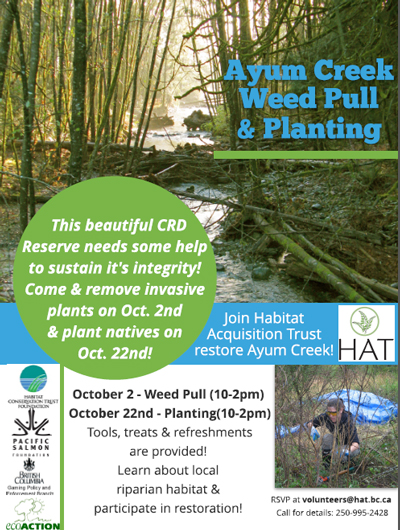 The Habitat Acquisition Trust is organizing two riparian restoration days next month as part of the Good Neighbours Program funded by HCTF.
The events will be held at Ayum Creek in Sooke on Oct 2 and Oct 22nd from 10 – 2 pm.
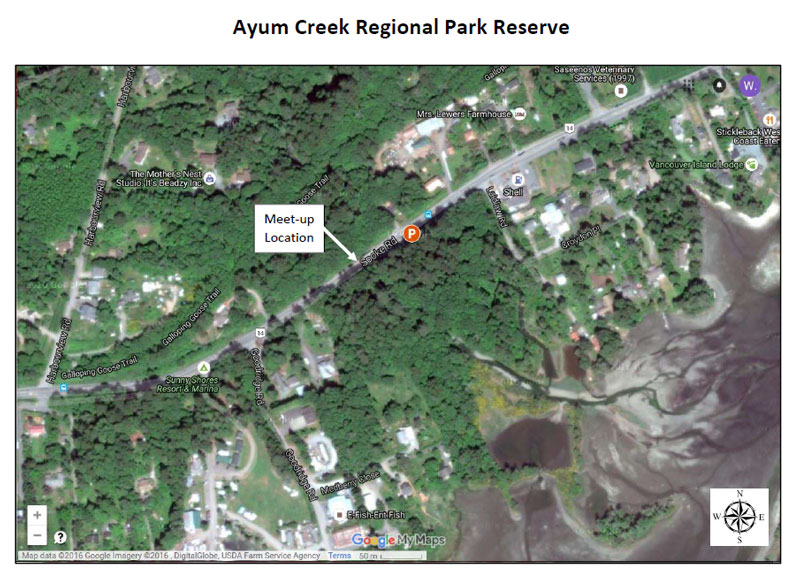
On Oct 2nd, HAT staff and volunteers will be removing invasive species (particularly Scotch Broom) from around the creek. On Oct 22nd they will be replanting native species. Tools, training, and food will be provided. Rides can also be arranged. Ayum Creek is also conveniently located along the #61 Bus route. These events may be an excellent opportunity to see salmon spawning along the creek, and the entire Ayum Estuary area provides for great birding and other wildlife viewing opportunities.
Interested? Please call 250 995 2428 for more details, or RSVP to volunteers@hat.bc.ca
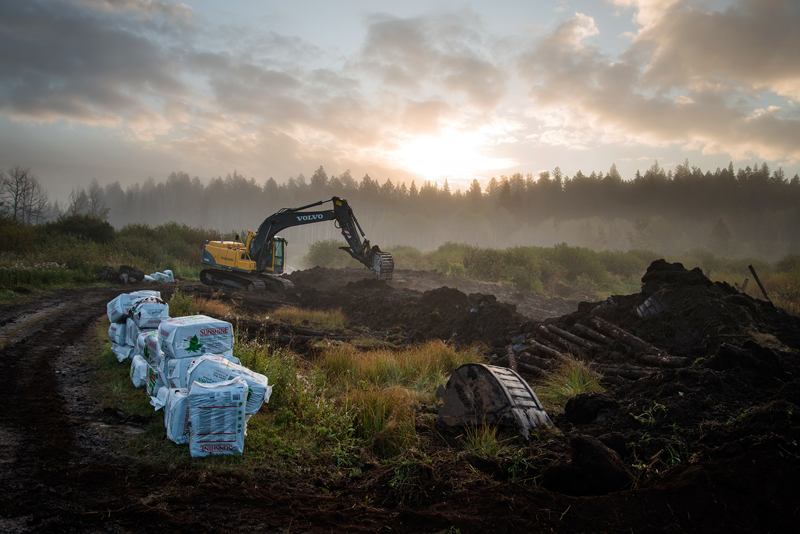
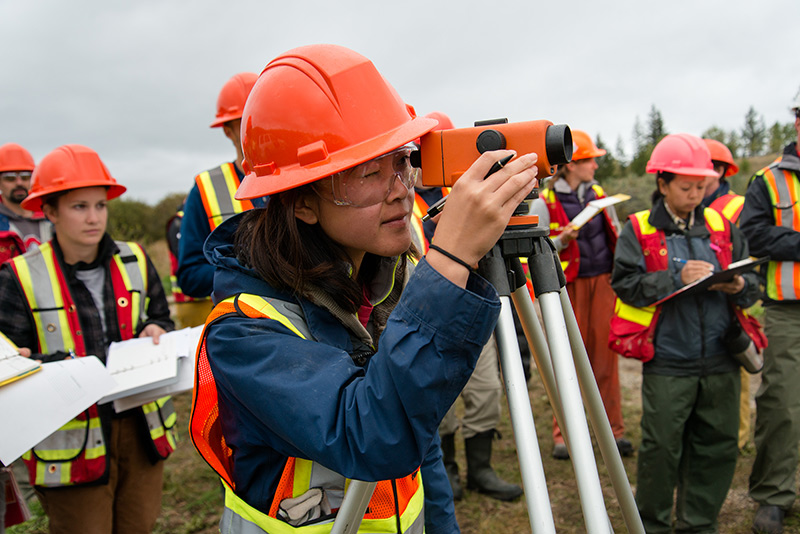
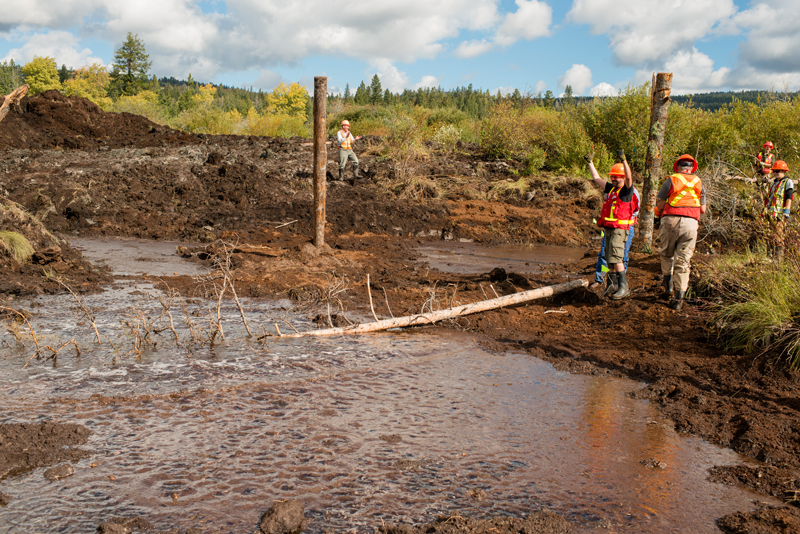
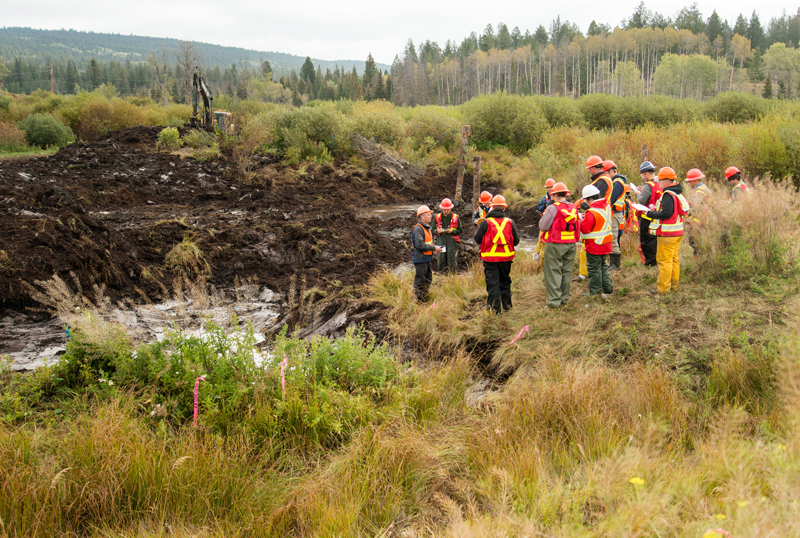
Wetlands provide important benefits for humans, fish and wildlife. Over the past five years, more than one hundred students from the BC Institute of Technology (BCIT) Ecological Restoration Program have worked together with the District of Logan Lake, Ministry of Environment, and wetland expert Tom Biebighauser to restore wetlands at the Meadow Creek Golf Club, upstream of Logan Lake. The restored wetlands act as natural water purifiers and have the potential to help improve the water quality of Logan Lake. They are also providing new habitat for a variety of wildlife. Following another week of hands-on learning about wetland construction, students from BCIT’s Ecological Restoration Program will hold an open house to share what they’ve learned and accomplished with the community.
When: Saturday, Sept 17th, noon to 4 pm
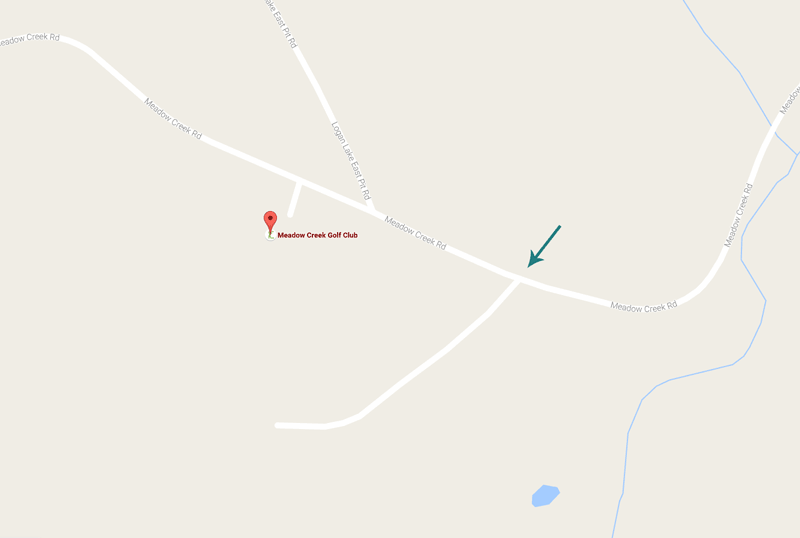
Where: Dumois Creek on the Meadow Creek Golf Course near the maintenance area. Access is via the service road north of the Meadow Creek Golf Course (arrow indicates service road on map below). Please park in the golf course parking lot or along the road and walk in along the service road to the maintenance area.
What: BCIT students from the Ecological Restoration Program will lead a tour of the wetlands they’ve helped create on this property and answer questions about the project. You’ll learn how wetlands improve and store water, influence climate and how they can be restored.
Light refreshments will be available.
The Meadow Creek Golf Course Wetlands Restoration Project was made possible by funding from the Habitat Conservation Trust Foundation, BCIT, the District of Logan Lake, Teck Highland Valley Copper Environment Canada and donations from London Drugs.
_____________________________________________________________________________________
CONTACT INFORMATION
Dr. Ken Ashley
Director of the BCIT Rivers Institute
Phone (604) 432-8270
Email Ken_Ashley@bcit.ca
Dave Harper
Instructor, BCIT Rivers Institute
Email dharper@bcit.ca
Photos (click on image for larger version of the file):
Video:
Drone Footage of Wetland Construction on Youtube
Past Press Coverage of the Project:
Wetlands a Welcome Addition to Logan Lake
October 2014, Merritt Herald
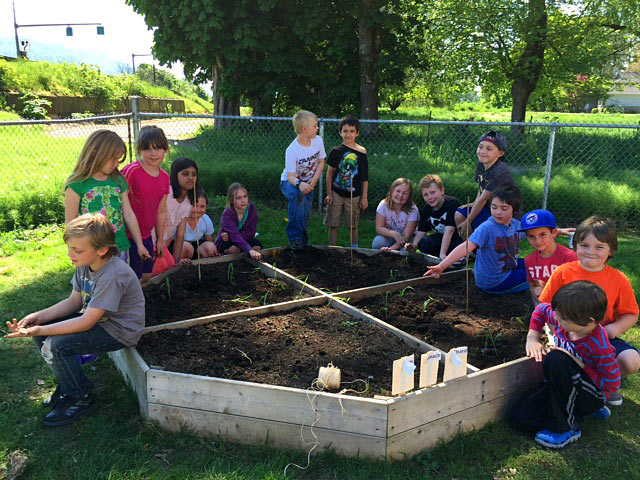
Nestled in the heart of the Fraser Valley lies the small rural community of Dewdney. Three years ago, declining enrollment threatened the future of the community’s only school, but today, Dewdney Elementary has become a shining example of how re-creating outdoor space can strengthen student learning and bring together a community. Led by the vision of their Principal, Mrs. McLeod, and the implementation of the Community Outdoor Recreation and Environmental Education (CORE) program, this small school has been hugely successful in incorporating environmental education, stewardship and restoration into everyday learning.
The school transformed a soggy field of grass into a naturalized area full of opportunities for play, growth and learning. Students participated in the design and construction of various features, including a “mud kitchen” and garden boxes for growing food. They also planted and cared for fruit trees, edible berry bushes and other native plants. A wooden tree-cookie pathway leads the young learners through the landscape, past apple trees and strawberry plantings into a free play area with loose natural materials for making whatever the students can imagine come to life. Not without modern conveniences, the site also boasts rainwater harvesting, biofiltration swales, and a power-generating windmill for a covered shelter appropriately named “the Den”.
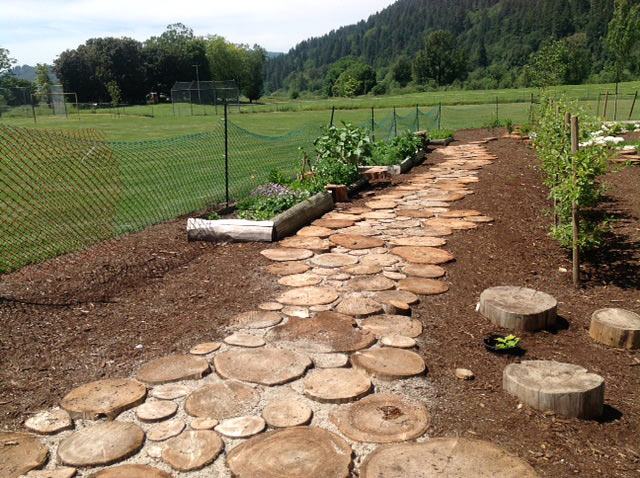
Teachers at Dewdney have used the concepts from HCTF’s Wild Schools and the Get Outdoors resources to augment the student’s use of the learning area during free time, as well as more deeply infusing it into the learning process while doing inquiry based work and while planting and maintaining the planter boxes. Using a GO Grant, classes were able to create and nurture food gardens including a three-sisters planting concept of beans, corn and squash . In the fall, they will harvest, prepare and preserve their garden’s bounty with the help of community partners.
Experiences in the outdoor space integrate curriculum concepts of numeracy, language, science and physical education. Students learn from their successes and also failures; they’ve witnessed some of their gardening work quickly undone by nighttime critters, and gained an understanding of the interactions between plants and wildlife in the process. Seeds that fail to sprout prompt questions as to why, providing an opportunity for inquiry-based learning. These experiences are only the beginning; Dewdney’s efforts to integrate ecology and stewardship into student learning recently won them $25,000 of technology from Staples to help further their environmental and educational programs. These include restoring and expanding a wetland are covered in invasive reed canary plants and the addition of a large greenhouse.
While replicating the success of Dewdney Elementary’s schoolyard transformation may seem daunting to those starting with a blank schoolyard canvas, Dewdney’s administration encourages interested schools to start small and build as you grow. “Our project and any successes that come along with it, are the result of teachers, parents, community members, businesses working together to make a difference in their corner of the world,” says Sue McLeod, the school’s principal. “It is not the size of the project that is important, but the willingness to jump in and get their hands dirty. That is the most fun of all!”
Thanks to WildBC facilitator Lisa Fox for sharing this story with us! For more information on HCTF Education’s projects and programs, visit hctfeducation.ca
UPDATE: Read about how Dewdney Elementary School is making their school yard even greener through the HCTF-funded Wetlands Institute.
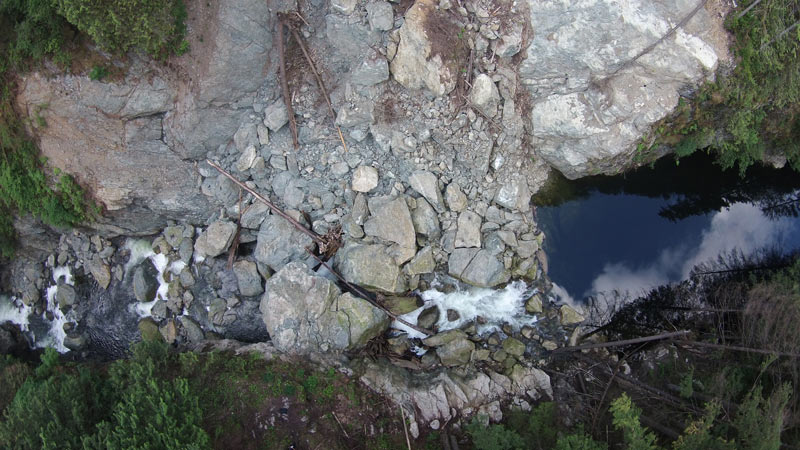
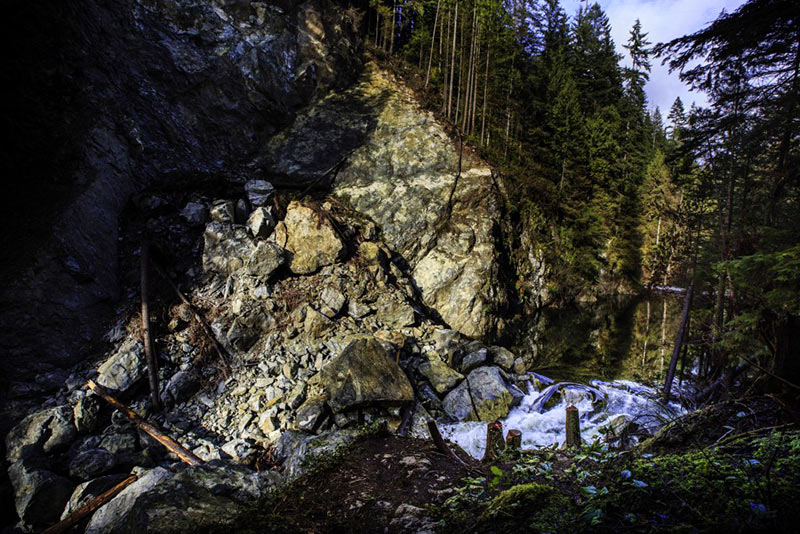
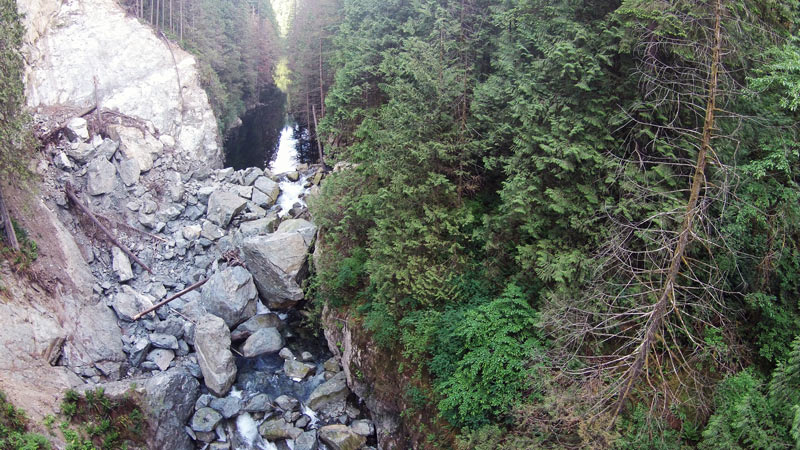
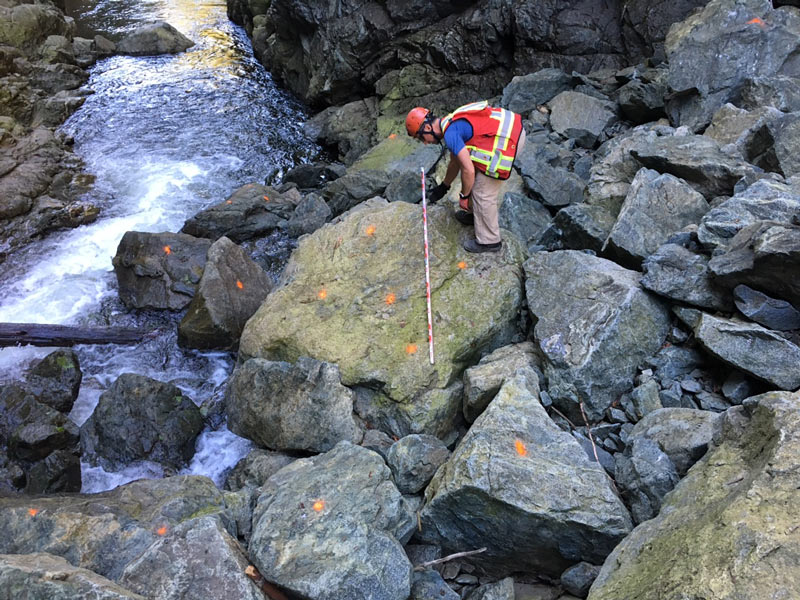
The Seymour Salmonid Society and its partners are pleased to announce that work has begun to restore fish migration around the rockslide debris that has blocked the Seymour River for over 20 months.
On December 7, 2014, an estimated 50 000 cubic meters of rock fell into the lower canyon of the Seymour River following a catastrophic slope failure. The slide debris blocked the river and caused upstream water levels to rise by almost 10 meters. Acoustic and radio tagging studies have confirmed that the blockage has prevented both adult and juvenile salmon from accessing their primary spawning habitats upstream, creating serious concerns about the survival of salmonids on the Seymour. The river is home to unique runs of wild summer and winter steelhead, currently listed by the Province as a conservation concern. Coho, chinook, chum and pink salmon also use the river as spawning and rearing habitat.
Shaun Hollingsworth, President of the Seymour Salmonid Society, emphasized the effects the blockage will have on the river’s fish populations if left unmitigated: “If these fish remain cut off from their spawning habitats, the Seymour’s wild steelhead and coho populations will likely be reduced to mere remnants within five years. The summer-run steelhead may ultimately disappear,” says Hollingsworth. “We must do whatever needs to be done to save these fish.”
Fisheries and Oceans Canada’s Salmonid Enhancement Program, the BC Ministry of Forests, Lands and Natural Resource Operations, Metro Vancouver, the District of North Vancouver, Squamish Nation and Tsleil-Waututh Nation Bands have all agreed in principle to begin re-shaping the slide using scaling crews, low-velocity rock breaking, and river flows as part of a shared vision to “restore migration conditions for all species that existed before the 2014 rockslide, in a safe and sustainable manner.”
Funding for the reshaping has been provided by the Habitat Conservation Trust Foundation, Freshwater Fisheries Society of BC, the Ministry of Forest, Lands and Natural Resource Operations, Tsleil-Waututh Nation, Squamish Nation, the Recreational Conservation Partnership Program, the Department of fisheries and Oceans, both the District and the City of North Vancouver, Coho Society of BC, Steelhead Society of BC, BC Federation of Drift Fishers, and multiple private donations.
The Seymour Salmonid Society is a community based organization consisting of volunteers whose mission is to enhance Seymour River salmon and educate the public about the importance of the river as a resource for drinking water, wildlife, and the forest. For more information, contact Brian Smith, Seymour Salmonid Society Hatchery Manager on 604 288-0511. To join the community volunteers, or donate, please visit www.seymoursalmon.com
Photos (please contact us for larger versions of these images)
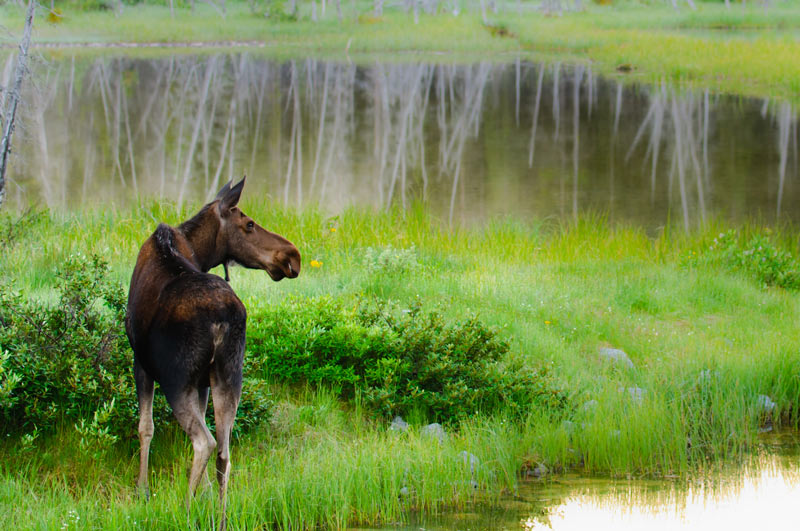
A new interactive tool is allowing British Columbians to help wildlife biologists monitor moose populations and inform conservation efforts.
The B.C. Moose Tracker app, available through iTunes, lets users upload information on the number, sex and location of moose they encounter in the wild directly to an online database. The data will the help the Province monitor moose populations by alerting staff to emerging issues.
The app also includes a digital version of 2016-2018 Hunting and Trapping Regulations Synopsis, a searchable, interactive summary of hunting regulations throughout British Columbia.
The app supports the Province’s ongoing efforts to strengthen its moose management strategy through the modernization of licensing, inventory and research methods. B.C. Moose Tracker was developed in consultation with the B.C. Wildlife Federation and with the financial support of the Habitat Conservation Trust Foundation.
“Hunters hold a tremendous amount of knowledge about what’s happening out on the landscape,”said Ross Peck, Chair of the Habitat Conservation Trust Foundation. “They have long supported – and participated in- important conservation initiatives, and this app provides a new means for them to contribute to the sustainable management of wildlife in B.C.”
To download the new BC Moose Tracker app, click here.
Subscribe to our