Mon, 22 Dec 2014

Happy Holidays from HCTF

As 2014 comes to a close, we would like to thank everyone who helped make BC a better place this year by contributing to conservation. Your licence purchase, conservation project, educational initiative, volunteer contribution or donation has truly made a difference for the province’s freshwater fish, wildlife and habitats. Our best wishes for a happy, healthy holiday season, and we look forward to working with you in 2015!

Please note the HCTF office will be closed December 23rd through 28th and New Year’s Day. Happy Holidays!


Fri, 19 Dec 2014
Tags: Caribou

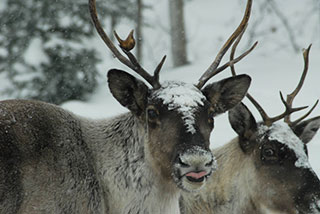
Reindeer or Caribou?

When it comes to wildlife, no other species symbolizes the Holidays more than the reindeer. Their incorporation into Christmas literature dates back to the early 1800s, though the roots of the association likely stretch back much further, to Norse mythology and the Scandinavians’ domestication of reindeer to pull sleds. Whatever the legend’s origins, the eight tiny ungulates depicted pulling Santa’s sleigh bear a remarkable resemblance to the caribou found here in BC. Though there are some generalized morphological differences between reindeer and caribou , they are one and the same species: Rangifer tarandus. In North America, the term “reindeer” is usually applied to domesticated caribou, while in Europe, reindeer is used as the blanket term for any animal belonging to the species.

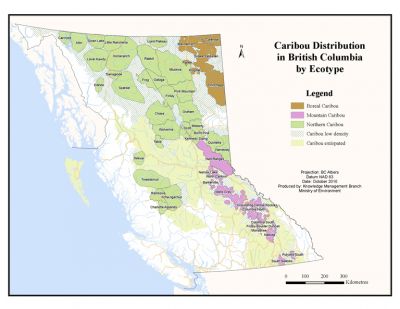
Within Rangifer tarandus exists a number of subspecies. All caribou in BC are classified as belonging to the woodland subspecies ( Rangifer tarandus caribou). There are 52 herds of woodland caribou in the province, which can be further divided into three ecotypes: the Boreal, Northern Mountain and Southern Mountain Caribou. BC caribou mapAn ecotype is a genetically-distinct group of animals within a species that have adapted to a specific set of environmental conditions. This means that, while caribou from the different ecotypes look similar, they actually behave quite differently. For example, Northern and Boreal caribou live in areas where the snow is shallow enough that they can dig for ground lichens with their large, snowshoe-like feet. Southern Mountain caribou rarely dig for lichens in the winter months: they live in places where the snow is so deep, they have to feed on lichens growing on trees, and are thus dependent on old-growth forest habitat.
The following videos commissioned by the 14th North American Caribou Workshop beautifully present the challenges facing each of British Columbia’s caribou ecotypes, and some of the work being done to help ensure these iconic animals remain part of the BC landscape (they even include “caribou cam” footage from video recorders attached to some of the animal’s collars!)


Northern Ecotype (Telkwa Herd)


Boreal Ecotype

Mountain Ecotype (Southern Mountain in Video)


HCTF provided grants for a number of caribou conservation projects this year, including:

Project 4-485: Assessing predation risk from wolves and cougars for caribou in the Purcell Mountains Project 5-230: Habitat use and population monitoring of the Itcha-Ilgachuz caribou herd

Project 6-236: Impacts of Recreation and Wolves on Telkwa Caribou Recovery

Project 7-394: Herd Boundary Refinement for the Chase, Spatsizi, and Frog Caribou Herds

Project 7-424: Defining Nutritional Value of Summer Habitats for Caribou


Reindeer and Caribou Comparison

• Both male and female reindeer and caribou grow antlers (unique amongst the deer family)

• Both reindeer and caribou have large feet that are adapted for walking on the snow, digging through the snow to find food, and swimming.

• Female reindeer have larger antlers than female caribou

• Caribou bulls are larger than reindeer bulls

• Caribou have longer legs and Reindeer are shorter, stouter and more sedentary.

• Reindeer tend to stay with their heard when chased, while caribou scatter

• Reindeer have a flatter nose bridge than Caribou.

For more interesting facts about caribou/reindeer (both biological and cultural), click here.



Mon, 8 Dec 2014

Stressed? Head Outdoors to put some Happy in your Holidays

Making time to get outdoors and connect with nature is a great way to reduce stress during what is often a hectic time of year. Even taking a short break to immerse yourself in a natural setting has been shown to improve mood, and even boost performance on tasks requiring sustained mental focus. It can be as easy as bundling up for a walk through your neighborhood greenspace, but you may also want to check out the following conservation-themed events put on by our partners this holiday season:

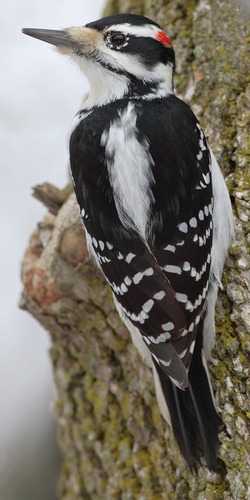
hairy_woodpecker_creativecommons.jpgChristmas Bird Count: The annual Christmas Bird Count kicks off this Sunday. Find a count near you and participate in the longest-running citizen science survey in the world. Started by the Audobon Society on Christmas Day in 1900, this early winter bird census involves thousands of volunteers across the Western Hemisphere counting birds in designated areas over a 24 hour period. The counts are held on specific days between December 14th and January 5th. Anyone can participate (it’s free!) but you have to make arrangements in advance with the person designated as circle compiler. You can get the contact details for the circle compiler in your area here from Bird Studies Canada.
Winter Celebration at Marion Creek: If you’re in the East Kootenays on Sunday, December 14th, join the Nature Conservancy of Canada from 11am- 2pm for a winter celebration at the Marion Creek Benchlands on the west side of Columbia Lake. HCTF contributed to the purchase of this conservation property in 2010, which provides critical winter range for ungulates as well as being home to badgers and an endangered cattail community. The focus of Sunday’s celebration will be on having winter fun, with a bonfire, snowshoeing, cross-country skiing, ice-skating and a free barbecue. A limited number of trees will be made available for people to cut and take home for Christmas: the trees are the remnants of a Christmas Tree farm on the property during the 1970s (please bring your own cutting & transportation tools). The event is free, but guests are asked to RSVP and obtain an event map by emailing canadianrockies@natureconservancy.ca or calling 250-342-5521.

Learn to Ice Fish: The Freshwater Fisheries Society of BC will be offering “Learn to Ice Fish” sessions in the Okanagan, Thompson-Nicola, and East Kootenay regions to families interested in trying ice fishing this winter. The interactive program covers everything you and your family will need to know to go ice fishing on your own. The lessons include safety on ice, fish identification, tackle, ice fishing techniques, proper fish handling, and of course, actual ice fishing time. HCTF provides funding approximately $80,000 annually to FFSBC’s Learn-to-Fish program as a way of encouraging families to connect with nature and learn about BC’s freshwater fish and habitats. Check out FFSBC’s website for information on learn-to-fish dates and times.

Please note : As HCTF is not directly involved in organizing any of the above events, please be sure to contact the organization to confirm dates, times and event details.

Have a conservation-themed event you’d like to share? Contact Us.


Wed, 3 Dec 2014

The Value of Volunteers

In this new video about the Blackburn Lake restoration project, Carrina Maslovat of the Salt Spring Island Conservancy (SSIC) speaks about the incredible contribution that volunteers have made to recreating wetlands on the former golf course property.

“This project, which has been organized by SSIC, would not have happened except for the huge number of volunteers that have helped us, especially with the planting,” says Maslovat. Over the past month, volunteers put approximately 1800 plants in the ground, representing 52 different native species ranging from cattails and sedges to upland shrubs and trees.

“We’re planting a huge range of native shrubs here: some of them will be fantastic for nesting habitat and others have berries on them to provide food for crossbills and towhees,” explains Maslovat. Planted species also included hummingbird favourites such as red-flowering currant and hedge nettles. “This should be a wetland full of bird life,” Maslovat concludes. Native frogs and bats will also benefit from the recreated wetland habitat.


HCTF has supported this project through both our Enhancement & Restoration and PCAF granting programs, the latter of which emphasizes volunteer contributions to conservation activities.


b2ap3_thumbnail_SSIC_Video.JPGClick here to watch another video about the process of unearthing wetlands at Blackburn Lake.


Thu, 20 Nov 2014

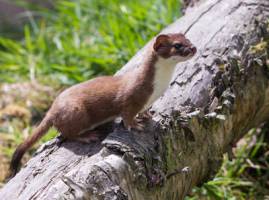
Marvelous Mustelids

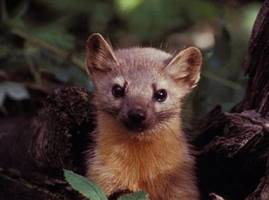
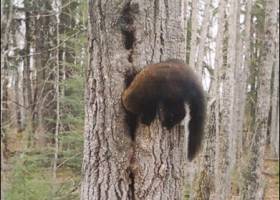
This month, we’re blogging about HCTF projects focused on members of family Mustelidae, a diverse group of carnivores commonly referred to as the weasel family. In British Columbia, members range from the tiny Least Weasel – only slightly bigger than a mouse and found primarily in open grasslands- to the infamous Sea Otter, a marine mustelid that can live its entire life without leaving the water and that weighs up to 100lbs. Like their sizes and preferred habitats, the conservation status of mustelid species also varies greatly. For example, BC’s American Marten and River Otter populations are (as a whole) thought to be secure, but species such as the Fisher, American Badger, and Wolverine are listed as endangered or of special concern. Because of their relatively low reproductive rates and specialized habitat requirements, even currently secure species like the marten require preventative action to ensure they stay that way. HCTF grants are being used both to try to improve conditions for mustelid species in trouble and to keep the more common species common. Read about how Shannon Crowley and his colleagues at the John Prince Research Forest are using the latest in GPS technology to study the effects of salvage logging on American Marten, how Fisher expert Larry Davis is working to preserve the increasingly-rare trees critical to that species’ reproductive success, and how Dr. Thomas Sullivan’s is demonstrating that clearcut waste wood shaped into windrows could help conserve small mammal populations.

b2ap3_thumbnail_Marten_cropped_thumb.jpg b2ap3_thumbnail_Fisher_head_in_cavity_thumb.jpg b2ap3_thumbnail_Short-tailed-weasel-thumb.jpg

Tue, 11 Nov 2014

Reminder: Photo Contest Ends Friday, November 14th

There are only a few days left until entries close for HCTF’s photo contest. We’ve received some wonderful images of British Columbia’s freshwater fish, wildlife and habitats, and we’d love to see even more! The first place photo will win a $300 VISA gift card: see our photo contest page for full contest details, and be sure to send in your photos by 4:30PM on November 14th!