
Wed, 1 Jun 2016
Tags: Education

Schools Grow Connection with Nature

Wild School Kids Learning Outdoors.jpg

The Habitat Conservation Trust Foundation (HCTF) has announced it will provide over $62,000 for 25 BC schools selected to participate in its Wild School program. The 3-year program provides teachers and students of K-8 schools with free resources, training and support for environmental learning, outdoor field experiences and connections to conservation work in their communities.

Three schools within the Cariboo-Chilcotin School District#27 have been accepted into the Wild School program: Marie Sharpe Elementary, Horsefly Elementary and 100 Mile Elementary.

Calvin Dubray, Principal at Marie Sharpe Elementary, says the school is looking forward to beginning the program next fall, especially since it will coincide with the start of their new Nature Kindergarten program.

“Our staff and students are currently engaged in place-based education and we are seeing deeper, richer learning happening,” says Dubray. “We are excited about the additional opportunities and experiences the Wild School program will offer to enhance our outdoor learning initiatives.”

The Wild School program evolved from the successful Science in Action program that began in 2006. Science in Action was a single year program focused on providing K-8 teachers and schools with resources to support hands-on, active learning through science. In 2012, Science in Action began the transition to the Wild School program, a multi-year model that incorporates healthy and sustainable initiatives toward connecting schools to nature.

HCTF Education Manager Kerrie Mortin says the Wild School program evolved from their experiences delivering Science in Action, and is supported by current research about the effectiveness of whole-school program models. “One of the key elements of the Wild School program is professional development. The shift from a one-day workshop model to providing multiple years of professional development opportunities – including workshops, mentoring, networking and support- has been shown to be more effective in helping teachers build capacity and transform their teaching and learning, leading to better outcomes for students.”

Marie Mullen, Principal of Fulford Elementary School in SD#64, says the Wild School program has provided their teachers with the resources, activities and know-how to get their students learning outside. “[HCTF’s] generous support of field trips and eco-mentoring has enhanced our place-based learning initiatives and helped our students connect with- and become stewards of- their local environment.”

Ashley Frketich, a teacher at Ecole Margaret Jenkins School in SD61, agrees that the program was instrumental in making the transition to outdoor learning. “After attending one of the workshops, I realized I could take a lot of little steps to move my classroom outside,” says Frketich. “I was very surprised at how easy it was. As a result, my class has spent a lot more time outdoors than ever before and we are all loving it.”

Over the past nine years, the Wild Schools and Science in Action programs have helped 3500 BC teachers in 267 schools provide hands-on environmental learning experiences to over 72,000 students.


About the Habitat Conservation Trust Foundation (HCTF)

Since 1981, the Habitat Conservation Trust Foundation has provided more than $160 Million in project funding to more than 2,000 conservation, restoration, enhancement, and educational projects across BC.

HCTF believes that investing in education is key to the future of conservation. The Wild School program is just one of HCTF’s Education program areas; they also offer GO Grants to cover transportation and programming costs for getting students learning outdoors and Connect to Conservation, a forum to connect the education community with on-the-ground conservation work.


Click on photos for full-resolution images.


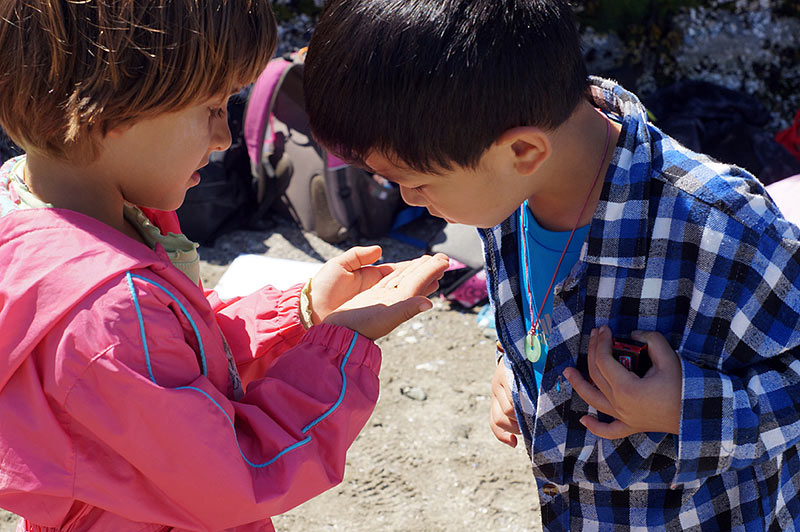
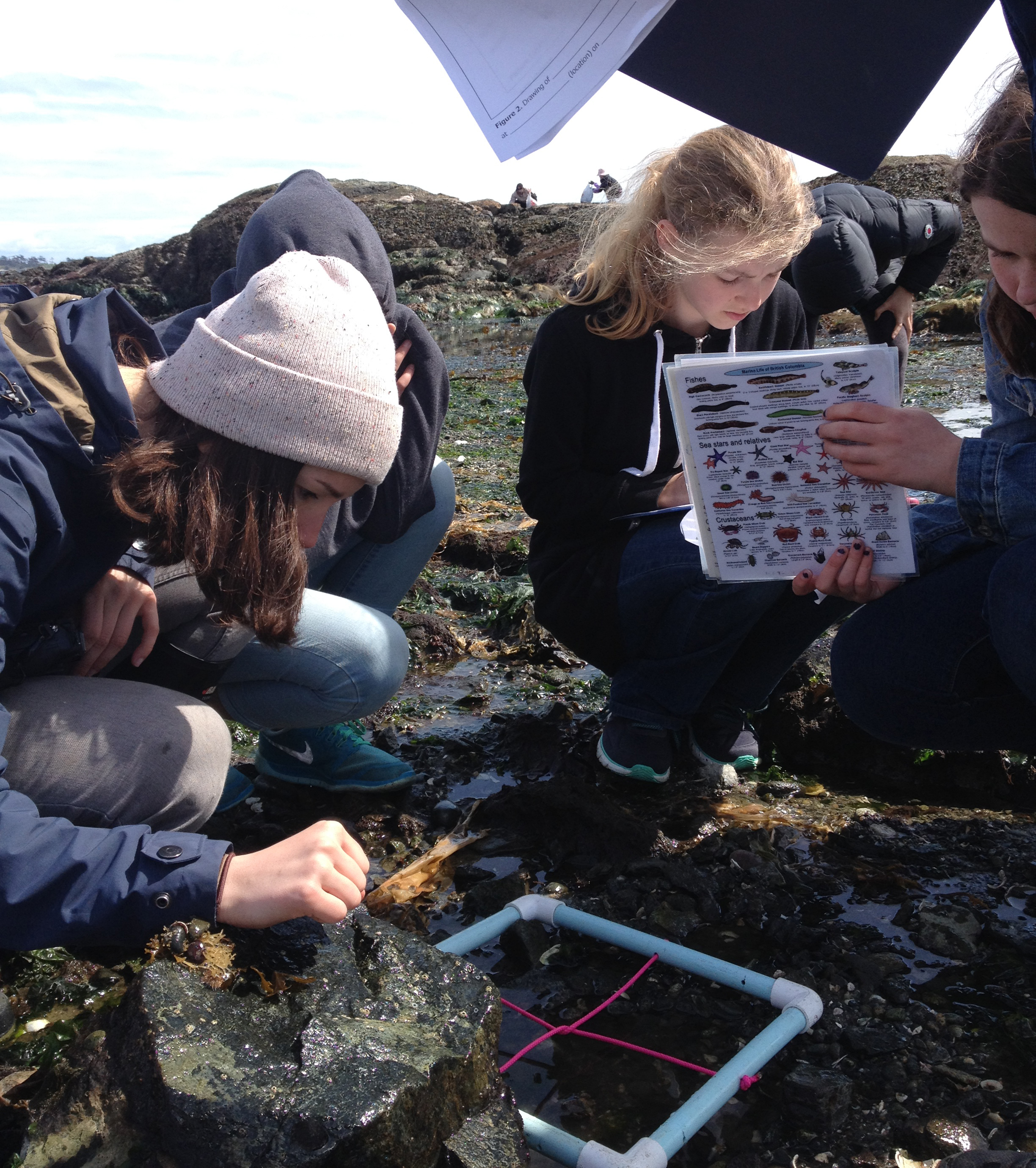
Students from Monteray Middle School learn to identify a variety of intertidal animals on a GO grant funded field trip. Principal Ken Andrews says the school has greatly benefitted from the Wild School program.


For more information contact:


Kerrie Mortin

Manager, HCTF Education

Phone: 250-940-9787

Email: Kerrie.Mortin@hctf.ca

107- 19 Dallas Road

Victoria BC V8V 5A6


Mon, 30 May 2016
Tags: Wildlife

Meet the 2015 Fisher Den Box Kits

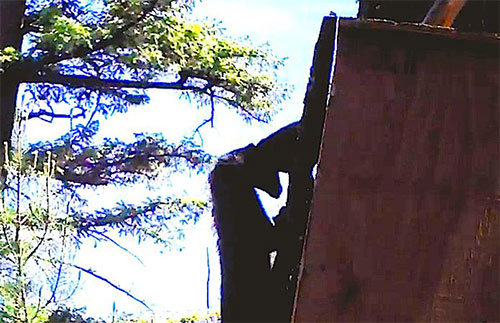
It's a little hard to make out, but in this photo, Inga the fisher is working hard to remove her kit from the artificial denbox. Fisher moms frequently move their kits around, and Inga later returned with her kit and its sibling to the denbox.

We received the following video update on the Fisher Artificial Den Box Study from biologist Larry Davis. Davis and his team are trying to determine if female fishers will use human-constructed den boxes to raise their young, as there are very few of the fisher’s natural denning sites left in some areas of their range. “Fisher require large diameter trees with heart-rot cavities for reproduction,” says Davis. “These trees are rare in managed landscapes.”


2015 was the third year of this HCTF-funded project, and Larry and his team continued monitoring the 56 installed den boxes to see if they were being used by fishers.

“We have been successful in attracting fishers to 50% of the den boxes, with many of the structures used for resting during winter,” reveals Davis. “We identified 45 fisher samples using hair snaggers located at the entrance to the den boxes. Of these, 14 were identified as being unique females, with 8 of them using the structures more than once, and 4 of them detected at 2 different den boxes.”

During the 2015 reproductive season, two fisher females used artificial den boxes to give birth to and raise their young. The video features footage of “Debbie”, who gave birth to one kit in April 2015. Davis explains that fisher moms often move their kits around, and Debbie was no exception: the video shows her leaving the den box with her kit on April 8th and returning the kit to the den box at the end of May. In the Chilcotin, 2 kits were photographed inside a den box on April 8, 2015. A trail cam set up to document the female (“Inga”) and her kits using the den box again in early June, 2015.


Davis has continued monitoring the den boxes in 2016 and reports there are already 3 being used by female fishers. We look forward to receiving an update on how the moms and kits are doing later this year.

Thu, 19 May 2016
Tags: Fisheries

Kids Take Part in Moberly Lake Trout Conservation Efforts

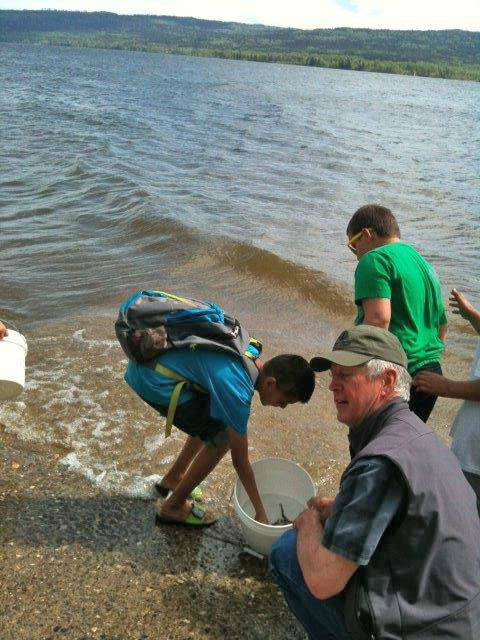
HCTF Board Chair Ross Peck helps out with the lake trout release at Moberly Lake.

At Moberly Lake last Tuesday, fifty elementary students (and HCTF Chair Ross Peck) helped government staff release 8,000 juvenile lake trout as part of an ongoing effort to rebuild a population that has come dangerously close to extinction.

When the Province began the Moberly Lake rehabilitation program back in 2010, there were less than 400 trout in the lake. Their extreme drop in numbers was thought to be caused by a combination of overfishing and competition or predation from other fish species. Historically, Moberly Lake’s lake trout were an important part of the local First Nations fishery and a favourite of local anglers, but the lake has been closed to all trout fishing since 2002, and is closed to all fishing from September 15 to October 31 to protect lake trout during their spawning season.

Last Tuesday’s lake trout release was the third release of the rehabilitation program, for a total of 36,000 released fish. The Ministry is hopeful these releases will aid in re-establishing a stable lake trout population on Moberly Lake. Over the past four years, the Habitat Conservation Trust Foundation has provided funding to the Ministry to evaluate the effectiveness of their lake trout recovery program. As well as continuing to monitor the total number of lake trout in Moberly, staff are also tracking the survival, growth, fitness and reproduction rates of the stocked juvenile lake trout. The information collected will help detect shifts in the Moberly Lake fish community and hopefully identify why survival of juveniles is low, in the hopes that a long-term solution can be found.

Fri, 15 Apr 2016
Tags: Education

BC Kids Granted Opportunities for Outdoor Learning

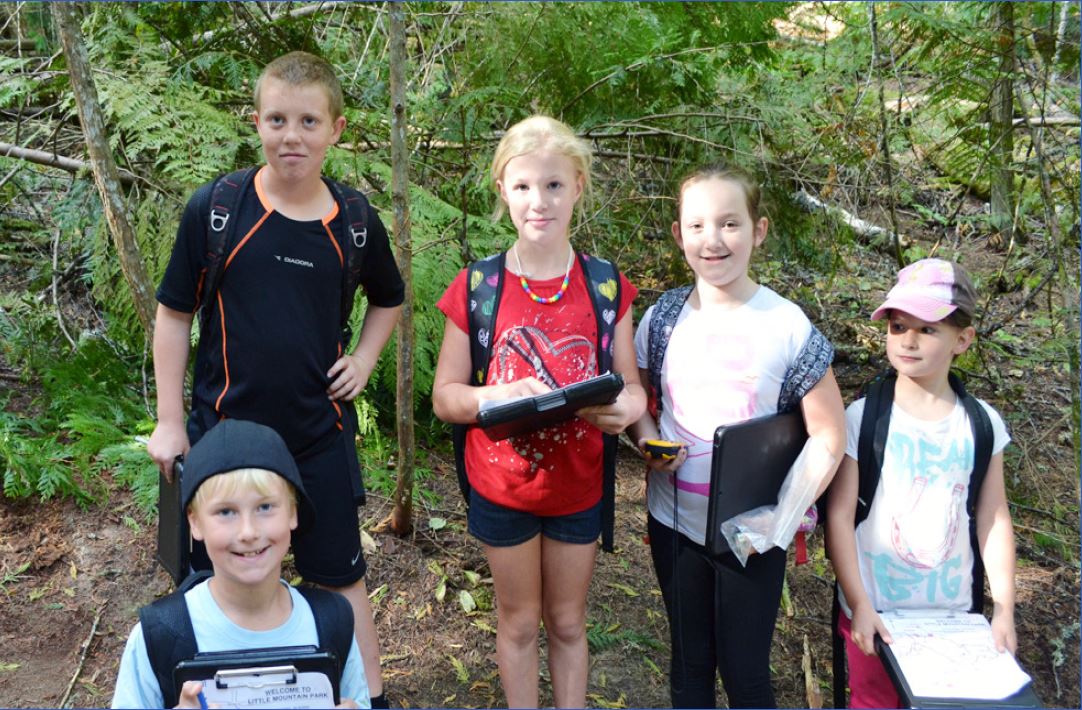
Children from the North Okanagan Shuswap School District learning outdoors with help from an HCTF Education GO Grant.


Victoria –The Habitat Conservation Trust Foundation (HCTF) has announced it will provide over $66,000 for BC schools to get their students out of the classroom and into the outdoors. Their aptly-named GO (Get Outdoor) Grants will be used to pay for bus transportation, project materials and program fees to provide hands-on outdoor learning experiences for more than 4500 students.

The North Okanagan Shuswap School District was one of many school districts across the province who will be benefitting from GO Grants this spring. In total, 5 of the District’s schools plus an additional 10 classes through a district-wide grant will receive just over $7700 for outdoor, environmental education field trips, including some of the following:

  • Armstrong Elementary’ s grade 4 and 5 classes will visit Kingfisher Interpretive Centre to learn about salmon and salmon habitat
  • Salmon Arm West Elementary’ s grade 2/3 and 4/5 classes will be getting out on the Shuswap River to explore life along the river and conduct local indigenous plantings
  • Shuswap Middle School class of grade 6/7 will be going to Norfolk Wild Regional Park to investigate and measure biodiversity in the park
  • Hillcrest Elementary grade 2/3 classes will take a trip Kalamalka Lake Provincial Park to examine plants and animals in the ecosystem

Now in its fourth year, demand for HCTF’s GO Grant program has steadily increased, and requests for grants now exceed the amount of funding available. HCTF received over 150 applications in its February intake, 68 of which were approved. HCTF Education Manager Kerrie Mortin hopes the amount of funding available can be increased in future years.

“Costs such as bussing, program or leader fees, and outdoor field equipment are huge barriers for many classes here in BC,” says Mortin. “GO Grants are relatively small amounts of money that can make a huge difference to whether or not a class can experience outdoor learning. HCTF believes this is one of our most important investments for our future, and so do educators:”

Teachers who have used the grants to take their classrooms on outdoor learning field experiences report that this type of learning has huge benefits.

“Fieldtrips are a fantastic learning experience for children,” says Nuala Powers, a kindergarten teacher at Sacred Heart School in Prince George. “There’s only so much you can show them or read about in the classroom. But when they go out in the environment and really experience it, it’s fantastic for them.”

Kim Fulton, a retired teacher and administrator, agrees. “Through these grants, children learn about the diverse ecosystems in BC,” says Fulton. “They develop a stewardship ethic to look after these systems and all the critters and plants in them for future generations.”

Since the program’s inception in 2012, GO Grants have allowed more than 25,500 BC students to get outdoors for a total investment of $333,067. The average cost per student is $13.

About the Habitat Conservation Trust Foundation (HCTF)

Since 1981, the Habitat Conservation Trust Foundation has provided more than $160 Million in project funding to more than 2,000 conservation, restoration, enhancement, and educational projects across BC. HCTF believes that the key to the future of conservation is investing in education. GO Grants is just one of HCTF’s Education program areas which also includes WildBC, a long-running and successful program that has been providing and supporting educators with environmental education programs and resources for over 25 years.

For more information, contact:

Kerrie Mortin 250-940-9787

Manager, Education Programs

Habitat Conservation Trust Foundation

www.hctfeducation.ca/education-grants

Tue, 15 Dec 2015

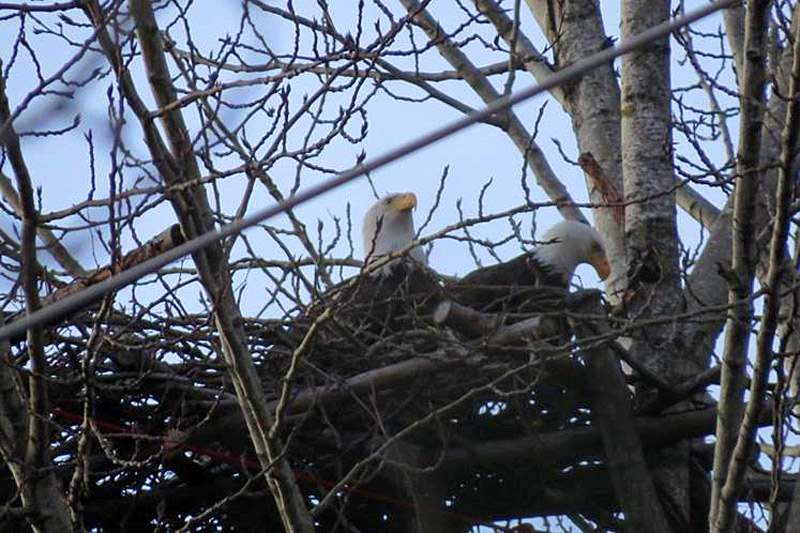
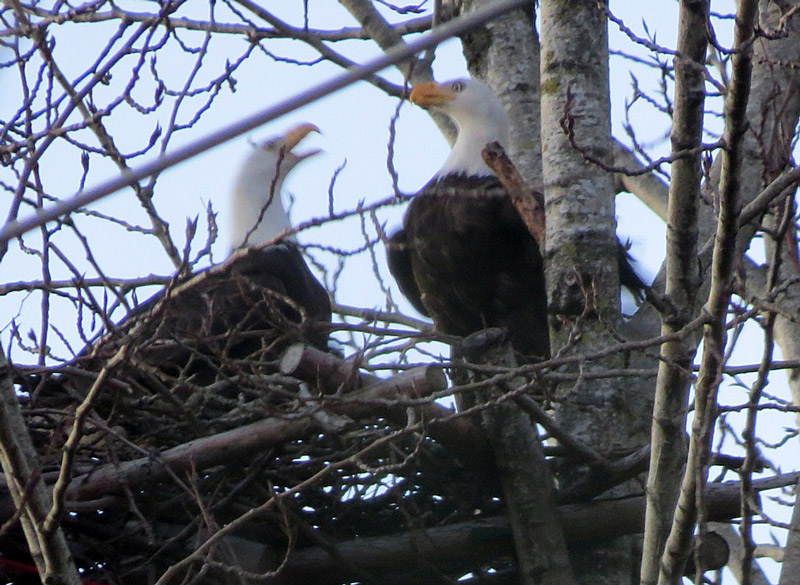
New Nesting Platform Eagle-Approved

Photo by Fiona Wright

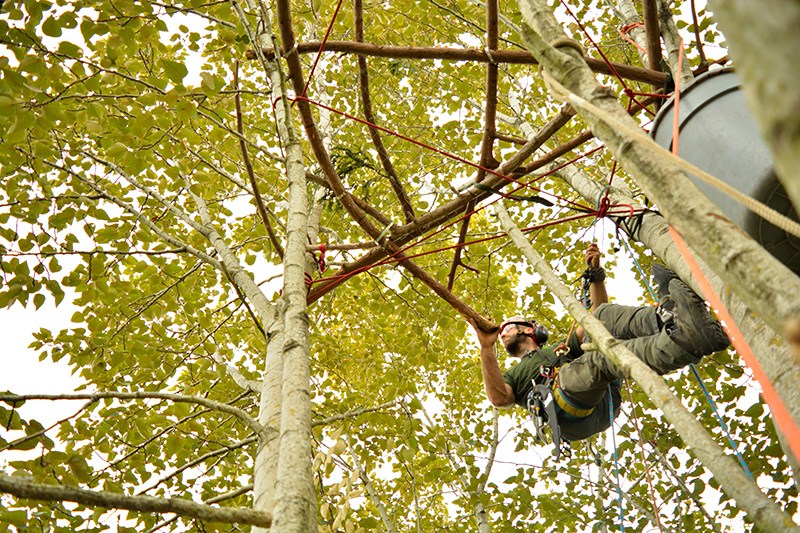
Residents of Vancouver’s North Shore have some new feathery neighbours. A pair of bald eagles has moved into a nesting platform built last summer at MacKay Creek estuary, which was recently restored as part of HCTF’s Burrard Inlet Restoration Pilot Program. Eric Anderson of the BC Institute of Technology led the project to construct a platform at the head of the estuary, adjacent to the Spirit Trail. The host tree was selected by biologist David Hancock, whose extensive experience with eagle nest construction was critical to identifying a cottonwood of suitable size, shape, and location. To get the tree eagle-ready, arborists carefully pruned some of the non-dominant stems to improve accessibility. Next, a cedar frame was attached using special lines designed to allow the tree to move and grow unharmed.

The frame is put in place - Photo by Ryan Senechal

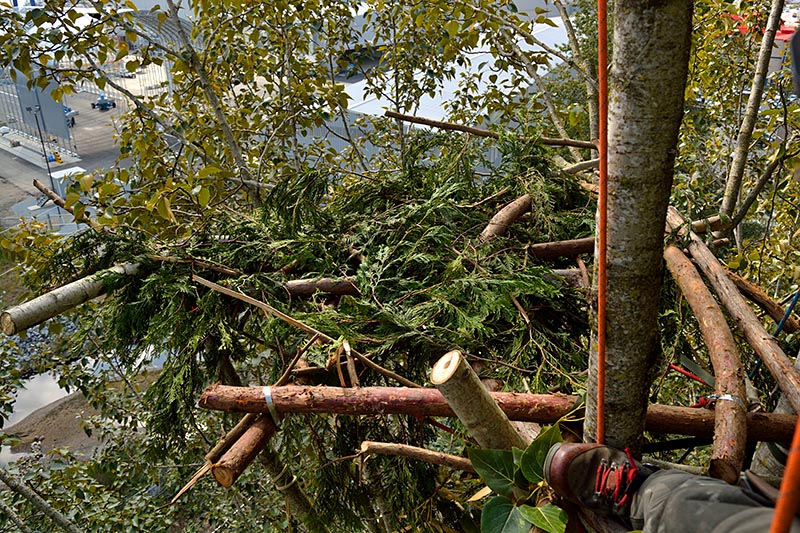
Finally, the frame was lined with cedar boughs to make it a little more inviting for any prospective tenants.

Cedar branches are added to make the nest more inviting - photo by Ryan Senechal

It appears to have worked!

Photo by Fiona Wright

HCTF provided a grant both for the construction of the platform as well as complementary studies by four BCIT students? of eagle ecology that will inform future nest construction projects. The grant was made possible through an endowment HCTF received from the Ministry of Transportation as part of a compensation strategy for a bald eagle nest tree removed for the 2010 Highway 91 Interchange project. ?

Mon, 30 Nov 2015
Tags: Wildlife

Return of the Roosevelts

Elk charge out of the truck at the release site near Chehalis, BC. This translocation was part of the Coastal Mainland Roosevelt Elk Recovery and Management Project. Photo: Dan Kriss


Elk Translocation Program on Vancouver Island Aims to Restore Roosevelt Elk to Their Former Range

BC’s magnificent wildlife has long formed part of our province’s identity. Take the provincial Coat of Arms: while other Western provinces have chosen to include the likes of lions and unicorns into their designs, a pair of iconic ungulates make up BC’s provincial emblem. On the right, a bighorn ram represents the wildlife of the mainland. On the left, a rather wild-looking Roosevelt elk symbolizes Vancouver Island.

BC_coat_of_arms_web.jpg

The Roosevelt is a fitting representative for the Island: it remains a stronghold for this species whose range was severely reduced following the arrival of the Europeans in the mid-19th century. Though Roosevelts remain on BC’s list of species of concern, populations in some areas of the Island are thriving, to the point where conflicts are arising between humans and herds.

On the Island’s east coast, near the village of Sayward, the Salmon River watershed is ideal habitat for elk. The moist, rich soils of the river’s floodplain produce optimal forage for Roosevelts, both in the form of native plant species and agricultural crops. This vegetational bounty has allowed elk numbers to increase to the point where herds have become a nuisance for local residents. Crop predation and highway collisions are of primary concern, and elk have also been known to browse nearby forestry plantations. Having a local overabundance of a highly-valued species of concern presents an interesting challenge – and opportunity. Rather than focussing their efforts on culling the herd, wildlife managers have chosen to spread the wealth, so to speak, by moving some of Sayward’s surplus elk to wilderness areas where Roosevelts once roamed.

Wildlife biologist Billy Wilton works for the B.C. Government, helping develop and implement the Roosevelt Elk management plan. The plan aims to increase the elks’ numbers in ranges where ecological conditions are suitable. He also spent four years working with the Government’s senior Roosevelt elk specialist, Darryl Reynolds on the Lower Mainland Roosevelt elk recovery project. Through ongoing financial support from organizations such as the Habitat Conservation Trust Foundation, this project has achieved a significant increase in the number of elk on the South Coast. Of the 25 wilderness areas identified as candidates for Roosevelt reintroduction in 2000, 19 have been successfully repopulated. By transporting elk from nuisance herds on the Sunshine Coast to these prime habitat areas, the lower mainland Roosevelt population has grown from an estimated 315 animals in 2000 to approximately 1600 individuals in 2015, an increase of more than 500%. These impressive results have inspired Wilton and his colleagues to continue elk translocations on the Island.

“I’ve been really fortunate to work with Darryl and learn from his experiences,” says Wilton. “We work really hard to minimize the stress on the animals, and we’ve fine-tuned the process to protect both the elk and people involved.”

Wilton says the first step is to identify a suitable herd of “nuisance” elk, composed primarily of pregnant cows in order to boost the reproductive potential of the herd. Then, the team set up a portable chain-link corral in an area known to be frequented by the target herd so that they become comfortable with its presence. Once winter sets in, the trap will be baited with a tempting combination of alfalfa, grain, and molasses, along with some minerals to keep the animals healthy.

HCTF Board and staff visit the elk trap that will be used to capture one of the Sayward herds.

“We wait until the elks’ natural food sources start to dry up before trying to entice them with bait,” says Wilton. “Waiting until winter also helps ensure the bears are asleep, as we like to avoid accidently feeding any large carnivores.”

Last year, Wilton and his colleagues trapped and transferred twenty-four nuisance elk from the Sayward area to the Mahatta River population unit west of Port Alice. The project went off without a hitch, and Wilton and his team are eager to repeat the translocation process. Plant communities in the release locations are similar to those in the Salmon River area, but the habitat is not as suitable, making it highly unlikely that the transplanted herd will increase to the levels seen in Sayward. The goal is to establish a sustainable population that will both benefit the ecology of the area and allow for some opportunities for harvest.

“Reintroducing elk to their historic range helps restore biodiversity,” says Wilton. “They’re a piece of the puzzle that went missing. Roosevelts are large, generalist grazers, so taking them out of the system impacts plant composition and has implications for a whole range of species.”

In addition to their influences on habitat, Roosevelts are an important prey species for wolves, cougars, and even black bear. They are also highly valued by hunters and First Nations. Each year, the province receives around 16,000 applications for just 250 Limited Entry Hunt Authorizations for Roosevelt Elk on Vancouver Island, and First Nations harvest around the same number annually. Both groups are eager to see populations return to historical levels, and are willing to assist in making it happen.

“Last year, we talked with the Quatsino First Nation [whose territory the elk will be released in], and they expressed an interest in helping us with the project,” says Wilton. “We also had a really dedicated group of guys from the Sayward Fish & Game Association working with us on the Mahatta River translocation last winter. They were out there every day, baiting the trap, monitoring the cameras, maintaining the equipment – we really couldn’t do this project without the help of the volunteers.”

Darryl_elk_picture_Sechelt_web.jpgA remote camera captures an image of a bull looking rather relaxed inside a temporary elk trap near Sechelt, BC. Biologists set up and bait the corrals well before the planned capture date to get the target herd comfortable with its presence.

While there are no guarantees that elk translocations will result in increased hunting opportunities, the results from the Lower Mainland project are certainly encouraging. Project leader Darryl Reynolds estimates that nine out of ten translocations from that project have resulted in new hunting opportunities, usually within five years of the release.

“The Limited Entry Hunting opportunities we have on the South Coast today can be directly attributed to the success of the Elk Recovery program,” says Reynolds. “Without it, there wouldn’t be any hunt.”

Elk charge out of the truck at the release site near Chehalis, BC. This translocation was part of the Coastal Mainland Roosevelt Elk Recovery and Management Project. Photo: Dan Kriss

Wilton agrees that five years is a reasonable time frame when forecasting potential new harvest opportunities. “Putting 20-25 elk in an area really makes a big difference in terms of the recovery of that population. Their numbers tend to increase quite quickly. We’ll be working with First Nations and stakeholders to evaluate if and when the population can sustain a harvest: we certainly don’t open it up just because it’s been five years, but that’s been our experience in many other areas.”

To keep tabs on how the population is doing, the project team will be conducting helicopter surveys in the spring of each year, as well as using strategically-placed GPS and radio collars.

“Elk differ from most other North American ungulates in that they are social herd animals,” says Wilton. “Matriarchal herds have a lead cow and a couple of other elders that hold knowledge about how to find food, water, and what to watch out for on the landscape. These are the cows we’ll be trying to collar.”

The GPS collars send regular emails to the biologists with information about their locations and habitat use. They also send out a mortality signal if the animal stops moving for 8 hours, hopefully giving the project team a chance to investigate the cause of death before scavengers move in.

“Understanding mortality is important for our management of these herds, and previously it was very difficult to get this information in real time,” says Wilton. “The collars also help us reduce survey helicopter costs by pinpointing the herd’s location.”

Only time will tell if Wilton’s elk relocation project is successful in establishing herds robust enough to provide additional harvest opportunities on Vancouver Island. Regardless, working to restore the iconic Roosevelt to its former range is laudable from an ecological perspective, and an initiative the hunters of British Columbia can be proud to support through surcharges on their licence purchase.