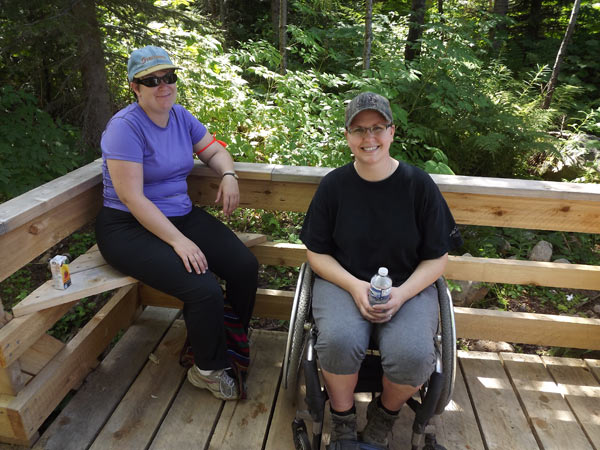
PCAF Project Leader Honoured with Trail Dedication Ceremony
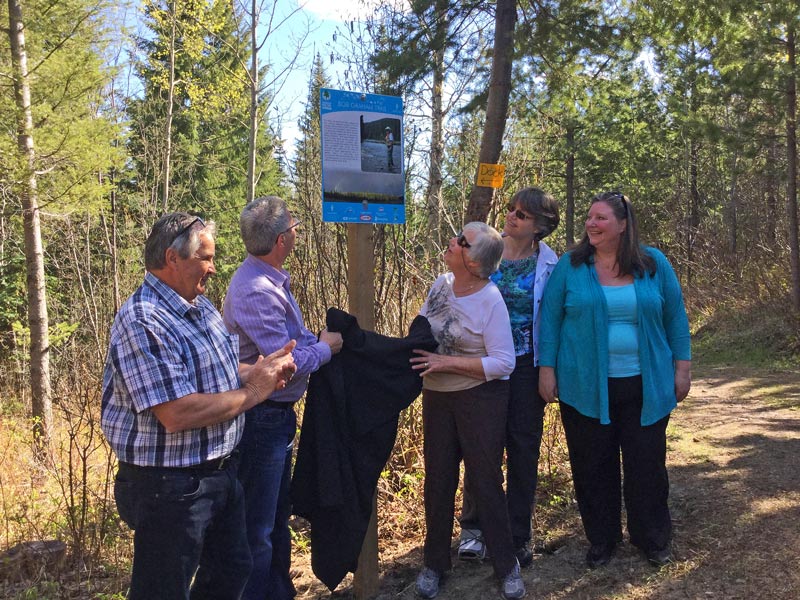
Unveiling of the trail dedication sign.
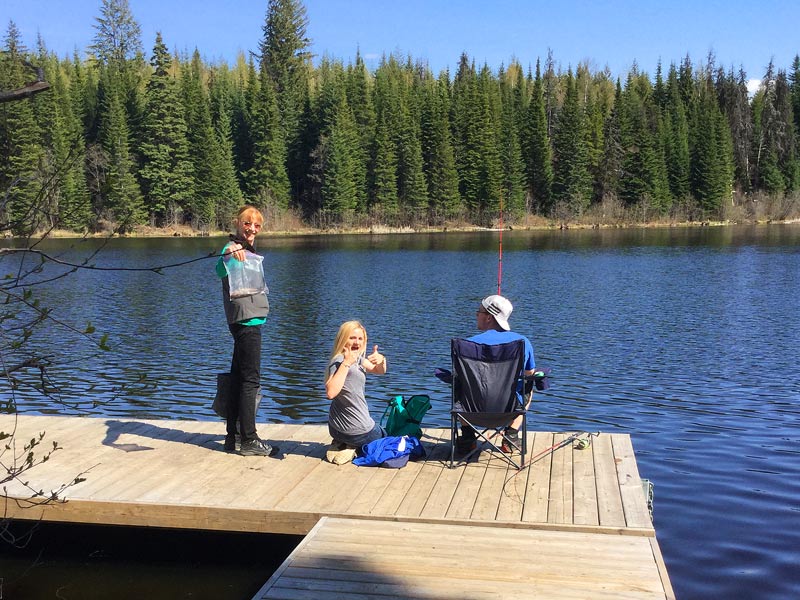
On May 8th, Prince George officials and community members gathered together with family & friends of the late Bob Graham to celebrate the naming of a new trail in his honour. The Bob Graham Trail is situated within Prince George’s Forests of the World park. The trail provides access to the fishing dock on Shane Lake, installed in 2012 as part of a PCAF project led by Mr. Graham and the Polar Coachman Fly Fishers Club. Bob envisioned a “city fishing place” where local residents could experience and enjoy angling as much as he did. In addition to receiving a grant from HCTF, Bob also secured funding from the City of Prince George, Polar Coachmen Flyfishers, Freshwater Fisheries Society of BC, Integris, Canfor, and Sinclar Group, and helped coordinate the many volunteer hours that made the dock a reality. HCTF Board members Dr. Winifred Kessler and Don Wilkins attended the dedication ceremony, and shared the following photos:
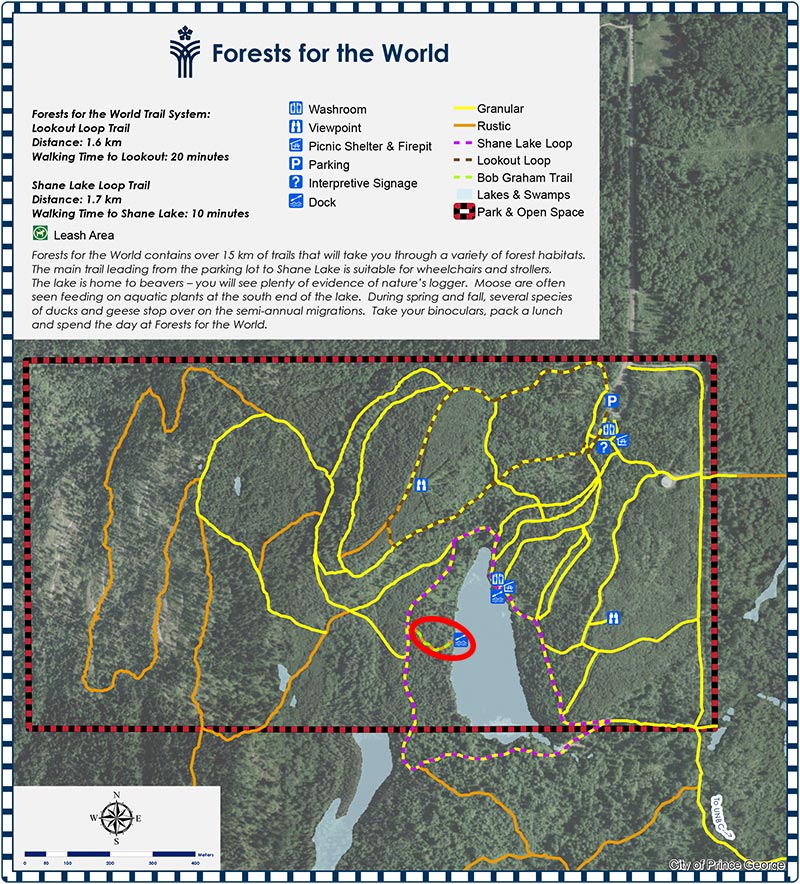
If you’re interested in trying out fishing at the Shane Lake Dock, it’s circled on the map below (map courtesy of the City of Prince George: click on image to enlarge). The dock is about a 15 minute walk from the parking lot. Shane Lake is stocked with rainbow trout by the Freshwater Fisheries Society of BC: you can access the latest stocking reports here. And don’t forget to purchase a fishing licence if you’re 16 or over: as well as allowing you to participate in a great outdoor activity, your licence fees pay for stocking programs, fish conservation and angling infrastructure projects like this one.
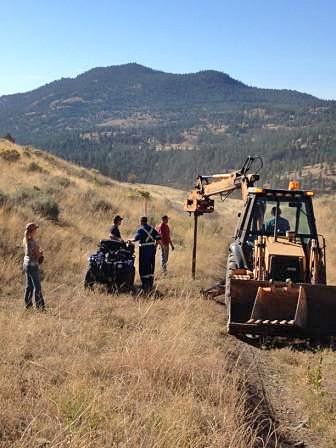
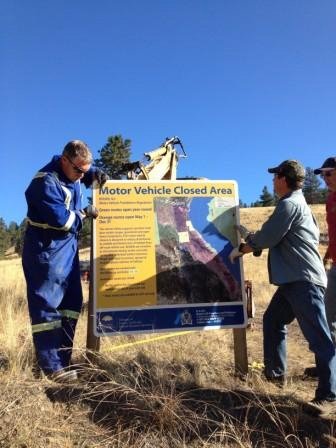
This past week, volunteers from the Summerland Sportsmen’s Association worked alongside the Provincial Conservation Officer Service and the South Okanagan Similkameen Conservation Program in Garnet Valley between Summerland and Peachland, posting new motorized vehicle regulations and restrictions signs as well as marking and deactivating illegal trails.
Garnet Valley has some of the Okanagan’s most valuable wildlife habitat, with south-facing slopes ideal for winter and early spring habitat for mule deer. The valley is a beautifully diverse landscape – with sensitive wetlands, grasslands, rugged terrain and open forests. It’s a link for wildlife to move and connect to other important natural areas away from the busy Hwy 97 corridor.
With the support of HCTF in the 1980’s, the Province of BC recognized the importance of the Garnet area and purchased a number of private parcels to augment crown land holdings. A significant increase in motorized vehicle damage and illegal trail building over the years has markedly degraded the habitat and resulted in disturbance to mule deer on their winter range.
In early 2014, the Province of BC established new Motor Vehicle Prohibition Regulations under the Wildlife Act for Garnet Valley to protect the values. The new regulations for Garnet Valley designate open legal routes and closed illegal routes to protect wildlife and allow habitat to recover. Leading up to the closure, BC Conservation Officers and Forestry Compliance and Enforcement Officers had been providing education and information about the coming changes to the motorized recreation community – now it was time for full implementation.
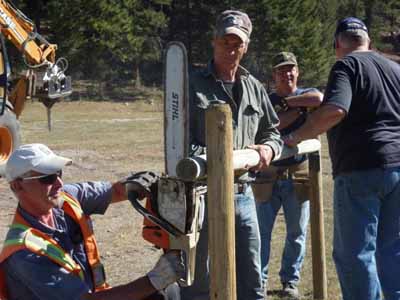
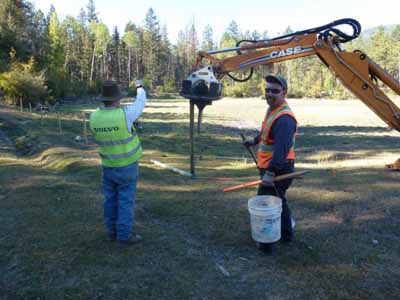
The partnerships forged during a successful PCAF project in 2012 came together once again with the Summerland Sportsmen’s Association, South Okanagan Similkameen Conservation Program and the BC Conservation Officer Service working side by side to assist in the protection of Garnet Valley wildlife habitat. With funding provided by the HCTF Public Conservation Assistance Fund 2014 and in-kind matched by the partners, vehicle closure project was completed during the last week of September. Volunteers and government staff systematically marked the open and seasonally open routes, while marking and deactivating the illegal routes over a number of blue bird fall days. A flat tire on the backhoe was the only hitch in an otherwise seamless project supervised by Sargent Jim Beck of the BC Conservation Officer Service.
“The success of our last PCAF project has inspired all of us, the sportsmen’s club, the conservation partnership and the provincial government to keep working together for habitat recovery in the Garnet”, said Bryn White, SOSCP Program Manager. In 2012, HCTF’s PCAF program supported an application from the groups to fence one of the last wetlands in the valley called Ritchie Lake that had been significantly degraded by mud-bogging off road vehicles and cattle. In one year after the wildlife-friendly fence was built, the dry rutted area was unrecognizable. In its place was a beautiful and lush wetland complete with reeds, dragonflies and ducks. This year, the group took some time to sit and have lunch at Ritchie Lake to enjoy the view. It wasn’t long before talk of another damaged wetland area seen in the north end of Garnet Valley came up that would benefit from excluding cattle and mud-bogging off road vehicles. McLachlan Lake looks very similar to Ritchie Lake – pre-fence. It is holding water for the first time in a number of years, and would be a perfect joint project given its location between the Summerland and Peachland Sportsmen’s Club. Stay tuned to hear how they tackle this one.
What was first thought to be a liability has turned into a biological treasure in Peachland, where one of the largest known maternity colonies of Yuma bats in B.C. has been welcomed—instead of being destroyed.
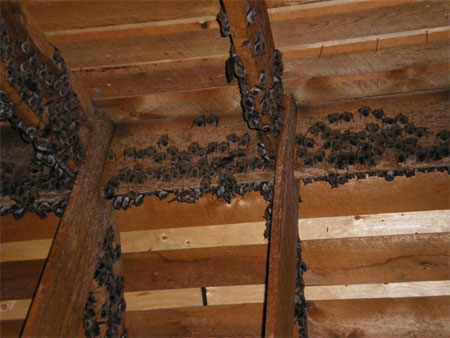
Located in the attic of a 108-year-old building which was originally the community’s primary school, the bat roost, where as many as 2,000 bats give birth to their pups and raise those young each spring, is now home also to the community’s Chamber of Commerce, tourism centre and the Boys and Girls Club. Those humans share the main floor of the lakefront building, which has undergone extensive renovations, while the maternity colony of bats roost upstairs during the day, swooping one-by-one through the dormers each evening to forage for insects.
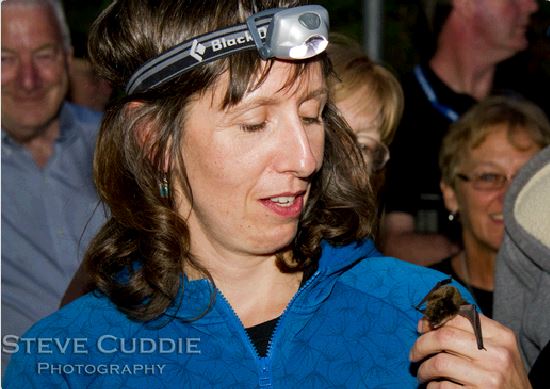
Biologist Tanya Luszcz says it’s estimated that this number of bats can consume half to one-and-a-half tonnes of insects in a summer, including many species that are human and agriculture pests. They contribute immensely to the community’s insect control efforts, but are often taken for granted.
The tiny mammals have likely made the attic their maternity roost for decades, but the size of the colony came to light when the community began discussing whether to tear down the building or re-use it—at considerable expense in restoration work. At the time, local resident Darlene Hartford worked for the Chamber of Commerce, which realized the old schoolhouse should be preserved not only for its historic value, but also to protect the bats’ roosting place.
“The first thought was how to get rid of the bats, but then we realized we had a treasure; an opportunity to clear up some of the myths about bats. We realized conservation of the bat colony was not a liability. People love to watch them fly out of the dormers at dusk to hunt over the lake,” she explained.
In 2011, the project to create a first-class demonstration site for bat conservation in human habitats was approved for funding by the Habitat Conservation Trust Foundation’s Public Conservation Assistance Fund, which provides small grants to organizations and individuals with a conservation project in need of some financial help. “The community bought right into it,” recalled Hartford.
Since then, she has been instrumental in organizing educational programs for young and old, Peachland residents and visitors alike. The programs are centred around the intriguing life of bats, and include videos, live cameras in the roost and events where a biologist talks about their habits.
Today, Hartford volunteers for the bat project, conducting Bat Chats all summer for the public and networking with other chambers and at events to raise awareness of the project. As well, she conducts school tours, for which there is a charge to try and recoup some of the expenses involved in monitoring the colony and maintaining the roost.
Despite her wide-ranging knowledge about bats now, Hartford notes, “I didn’t know anything about bats when we began, although I was always environmentally aware.”
The first bats begin returning to the roost in late March and early April each year, bearing live young that are about the size of a thumbnail, in June. When their young are tiny, the adults go out at night to feed, leaving all the pups in one spot in the attic where a ‘babysitter’ may be left behind to tend to them. The mothers leave to feed for three or four hours before returning to nurse their young, explains Hartford.
“Amazingly, the mother bat is able to find her own pup from among hundreds of others,” noted Luszcz. Three to six weeks later, the pups are able to fly and can forage for insects alongside their mothers, she explained.
Along with public education and a draw to Peachland for visitors, the bat project has led to scientific research into different facets of bat behaviour, from over-wintering habits and acoustic studies to population monitoring. “We know very little about where our bats go in winter, so it is important to determine this information to help in their conservation.
“In general, roost sites are thought to be more limited for bats than food, so the Peachland schoolhouse is a very valuable resource for bats. That said, food availability may be increasingly compromised in our managed landscape.”
Tue, 3 Dec 2013
Good, Clean Dirt
PCAF_976_bobcat.jpg
UVic student Nathalie Vogel submitted the following narrative about PCAF Project 976, the Restoration of Robin Lane. HCTF contributed over $5000 to this project, which involved more than twenty volunteers removing invasives and restoring native plants to a former Garry Oak site in Saanich, BC. Thank you, Nathalie, for sharing your story.
What do you get when you combine sunshine, fresh lemongrass tea, Salal, Oregon grape, some restoration veterans and the smell of earth in your nostrils? A thoroughly enjoyable afternoon spent at Robin Lane, sharing in ecological restoration, and bodily rejuvenation. Fellow classmate and restoration rookie Jenna and I had the pleasure of sharing an afternoon with two ladies who know this business like the dirt under their nails. Sylvia Samborski and Louise Goulet have been working with plants for decades – both through their careers as naturalists and biologist/teachers and now through their hobbies of gardening, restoration and the continued desire to learn. The fortune was truly ours that afternoon as the women passed along words of wisdom and knowledge about plants and life – the line sometimes blurring between the two.
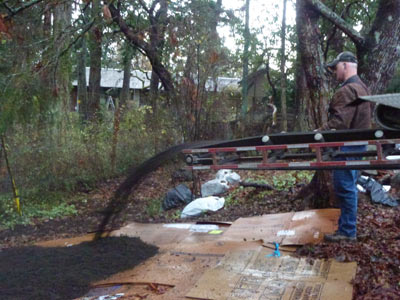
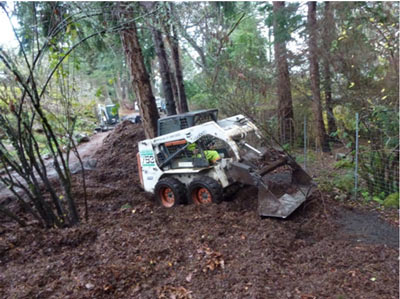
Robin Lane, our Eden of escape on that brisk January afternoon, is a piece of public land located in Saanich on Vancouver Island. Sylvia and her husband Ron took it upon themselves to restore some love and biodiversity into this piece of abandoned land and return it to the flourishing Garry Oak ecosystem that it once was. The process started with hours of devotion by Sylvia, Ron and their enthusiastic group of friends to remove all invasive species – which made up most of the vegetative cover in the area. The next step in the process was to rebuild the nutrients and minerals within the soil with chopped leaves from the city’s annual street leaf pickup program, spreading the leaf mulch with a small bobcat. Plant roots need soil not only to anchor themselves, but also to obtain nutrients, water and oxygen. Taking into account the historical status of this area as a Garry Oak ecosystem, consideration of ideal soil types for this particular habitat was necessary. Robin Lane is the perfect example of what was once a deep soil Garry Oak site – formerly rich with a variety of shrubs, trees, flowers and grasses. Sadly, these sites have all but disappeared as the rich hearty soil was ideal for agriculture and future urban development. It is only through the tireless work of devoted groups of people – like Sylvia and Ron- that these areas can be potentially restored to their former status and function.
During our afternoon at Robin Lane we engaged in our fair share of soil SOS as we added a concoction of weird and wonderful substances to each plant that we planted. The area had already been prepped over the last couple of months – a process involving layers of cardboard sheet mulch, Garry Oak and Bigleaf Maple leaf mulch, topped with sandy soil to increase permeability and drainage so that the plants don’t drown when it rains. Because the roots of the plants wouldn’t be enclosed by sandy soil (the layer of mulch underneath was so thick) we started by digging holes for plants and filling them partially with sandy top soil. Then we added a mixture of compost, bonemeal and more topsoil–all the ingredients necessary for your juiced up plant protein shake. Each of these ingredients plays a special role in increasing the nutrient content of the soil and ensuring the continued success of the ecosystem. The bonemeal aids in ensuring enhanced root growth. The native plants that we got to work with that afternoon included Salal, Red flowering current, Evergreen Huckleberry, Red-osier dogwood, Sword fern, Oregon grape (tall and dull) and Indian plum.
Following the guidance of restorationist, and garden designer extraordinaire, Louise, we placed the plants in a “natural” but still aesthetically pleasing manner throughout the area. Future picnic sites were taken into account as we made room for small clearings and deftly placed boulders, a small pathway lined by stones meandering through the lane. Not used to the patience of planting, I at times found it hard to picture the haven these tiny shrubs would one day create. Sylvia and Louise made that visualization easier however, as they animatedly discussed the different species, the various placement options and their excitement of sharing this site with as many people as possible in both the near and distant future. Amid digging, Sylvia recounted how her mother used to explain the difference between being dirty, and just being covered in “good clean dirt”. They shared with us stories of their past planting endeavours, their growing families and words of wisdom from the “workforce”. Louise kept us in fits of laughter as she recounted her experiences as the only woman working in her biological consulting group in northern Canada, and the spunk that it took to keep her there.
The afternoon finished with a steaming pot of homemade lemongrass tea accompanied by mandarin oranges and baking courtesy of Sylvia’s grandchildren. Sylvia welcomed us into her home and shared all her favourite field guides, recommending Pojar and Mackinnon’s “Plants of the Pacific Northwest Coast” as her and Louise’s top pick.
All in all I would say the afternoon did as much to restore my soul as it did to restore Robin Lane. The enjoyment of spending time outside with your hands and feet in the earth, swapping stories and shovelfuls of soil is therapeutic in a way that cannot be explained. For me the restoration of the Garry Oak ecosystem itself was simply an added bonus. I would recommend a restoration volunteer excursion to anyone and everyone who will listen. Connecting with the community, meeting inspiring individuals, learning about native plants, giving back to the earth, the list of benefits goes on and on. But in the end what really got me, was getting all that good clean dirt ingrained in my nail beds.
Mon, 30 Sep 2013
Ritchie Lake Wetland Restoration: From Bad to Rad!
PCAF 971 mudbogging antlers saddle
The following story was provided by the South Okanagan-Similkameen Conservation Program, detailing the amazing transformation of a damaged bog into a key piece of wildlife habitat. The Summerland Sportsmen’s Association received an HCTF PCAF grant to fence and restore the Ritchie Lake wetland, one of the last intact wetlands in the Garnet Valley. Through partnerships with Province, local conservation organizations and the incredible efforts of a dedicated group of volunteers, they have certainly provided a helping hand for wildlife in BC.
In the 1980’s the Province of BC had the foresight to purchase a number of properties in Garnet Valley just north of Summerland to augment existing crown lands and conserve some of the highest quality ungulate winter range some wildlife biologists had ever seen. The area, known as “Antler’s Saddle” is low elevation and highly suitable winter and early spring ranges for mule deer. The valley and hillside also supports sensitive grasslands, wetlands and open forest ecosystems – habitat for other wildlife species, some of which are federally listed as “at risk”.
The area is managed by the Province of BC through the Ministry of Forests, Lands and Natural Resource Operations and what a challenge it is to manage. At the heart of these conservation lands there used to be a healthy, vibrant wetland – complete with bulrushes, ducks and a source of drinking water for wildlife – a rare commodity in the dry South Okanagan landscape.
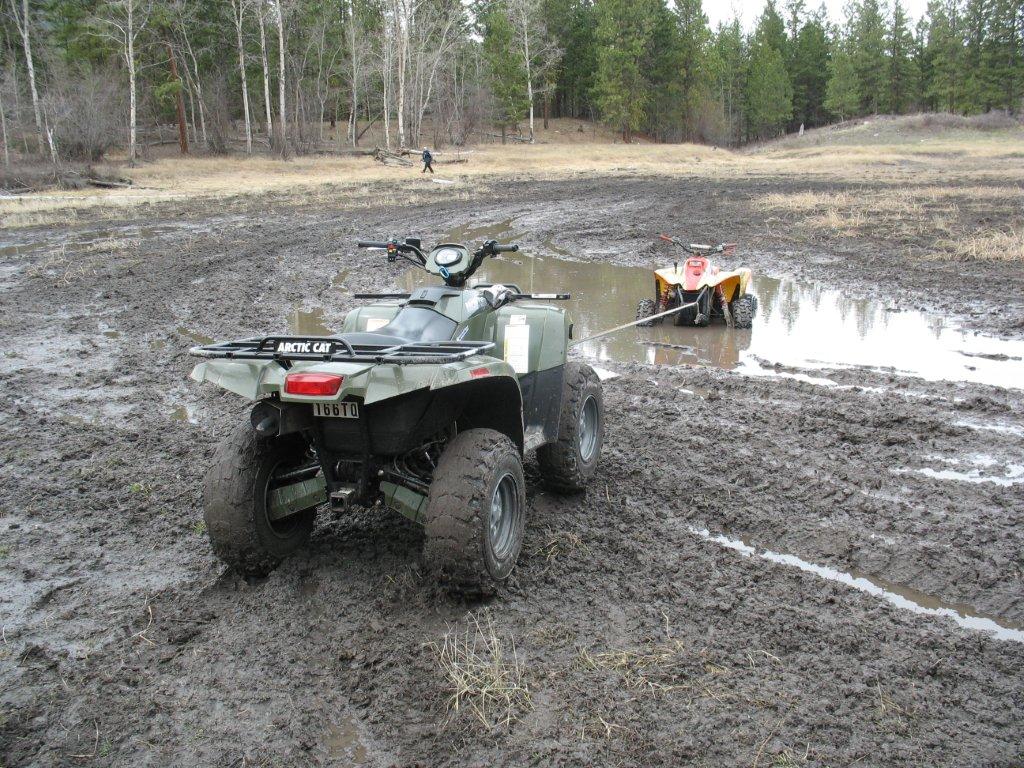
The Antler’s Saddle area is also important historically as it is part of the two-hundred year old Fur Brigade Trail that followed an ancient Aboriginal trail. Unfortunately, within the last ten or so years Ritchie Lake became a popular hangout for a small, but impactful group of off-road vehicle drivers who illegally drove in and out of the wet area repeatedly – grinding up the vegetation and sub-soils. It is hard to overstate the impact that “mudbogging” can have on a sensitive spot like Ritchie Lake. The vehicle destruction, combined with cattle accessing the wetland for water, a few dry years, and maybe even disruption to water flows from a gas pipeline and road development – Ritchie Lake was in a sad state.
As one of the only potential wetlands of its kind left in Garnet Valley, and armed with a couple people who had memory of seeing it in is former glory – a group set together to “bring it back”. A partnership quickly hatched between the SOSCP Program Manager, Summerland Sportsmen’s Association, the local rancher, the BC Conservation Officer Service and the land manager – Ministry of Forest, Lands and Natural Resource Operations (MFLNRO). Provincial range staff provided support and in-kind contribution of materials. An application was made to the Habitat Conservation Trust Foundation (HCTF) – funded by hunter and angler licensing dollars and the original source of the purchase dollars for the properties back in the 80”s. Soon the group had cash, materials and enough volunteer elbow grease to complete the project. It took about four days to complete the project –and about 10 volunteers in total.
In September of 2012, a wildlife –friendly range fence was completed around the former wetland perimeter complete with a gate to remove the odd cow or calf that may get in. A number of boulders were carefully placed in the low areas and an interpretive sign written and posted to provide background on the wildlife values, the sensitivity of the ecosystem, funders who contributed and the hard working volunteers that put their time into the project.
Continued monitoring of the fence and the wetland itself is underway through a number of mechanisms. In addition, the Province is also implementing an Access Management Strategy for Garnet Valley to protect wildlife habitat through identifying approved routes and closing illegal and secondary trails to motor vehicle traffic at critical times of the year.
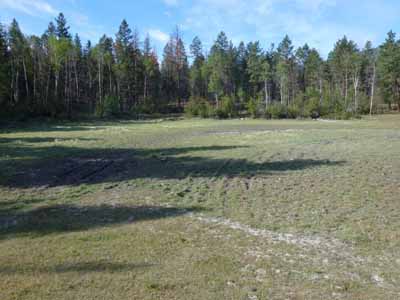
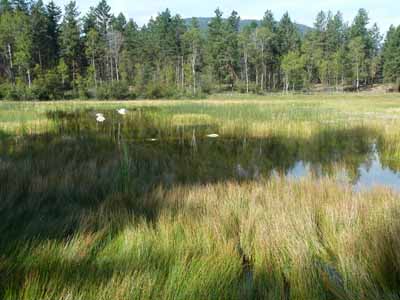
One year after the project the results are no less than stunning. Granted, it was a wet year, but the pictures speak for themselves. Yes, those are sedges….and ducks. Congratulations to everyone involved!
PCAF Project Makes Ancient Forest Accessible to All
Universal_Boardwalk_Opening_Sign.jpg
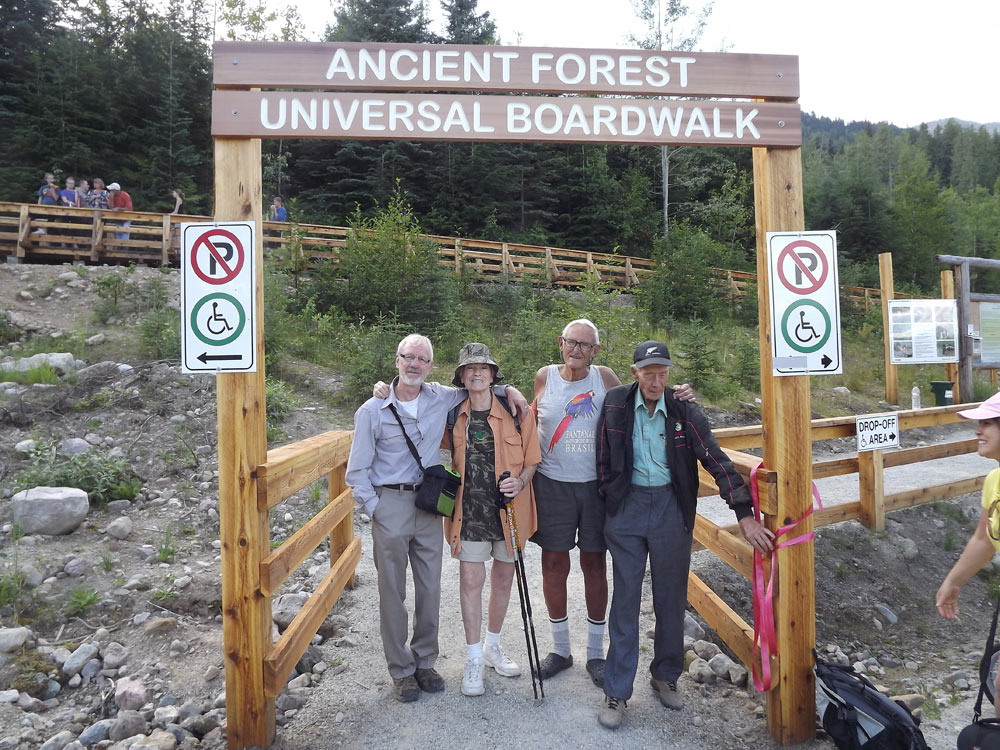
Earlier this month, hundreds of people turned out for the Grand Opening of the Universal Boardwalk, near Dome Creek, BC. The newly-constructed boardwalk allows people of all ages and abilities to experience hiking through a unique inland temperate rainforest.
The Ancient Forest is one of only a few surviving stands of old-growth cedar forest in the Upper Fraser River and Robson Valley, and is home to a rich abundance of native flora and fauna. There are more tree species within the inland rain forests than anywhere else in BC, and these include some impressive specimens: a number of the Ancient Forest’s giant cedars are over 1000 years old and nearly 16 feet in diameter. More than 200 different kinds of lichen have been found here, some of which researchers believe may be newly-discovered species. And the forest and surrounding area provides habitat for a suite of iconic BC carnivores, including grizzly bears, lynx, wolves, wolverines, and cougars.
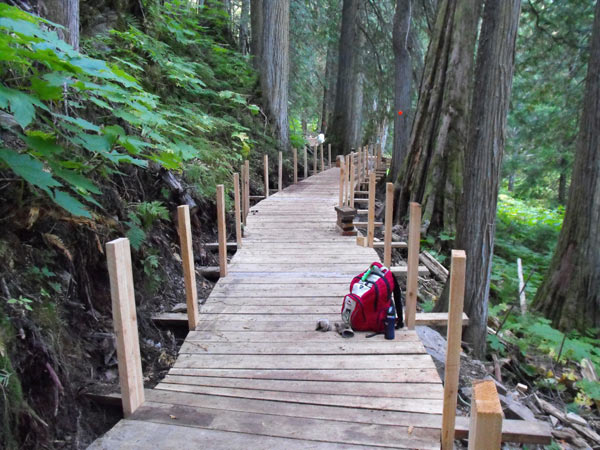
Before the boardwalk was constructed, the rough terrain of the Ancient Forest Trail made it extremely difficult for people with physical limitations to experience this spectacular ecosystem first-hand. Now, the boardwalk provides full access for visitors requiring wheelchairs or other mobility devices.
The completed boardwalk is the result of over three years of hard work by nearly 200 volunteers, who came together to turn the idea of a fully accessible trail through the forest into a realty. The project was funded through contributions from multiple partner organizations, including $10,000 in PCAF grants from HCTF.
Through the many people and partners working towards its completion, the Universal Boardwalk project has helped to increase awareness of this special ecosystem, and has culminated in the creation of a recreational and educational resource that will inspire conservationists from all walks of life. Congratulations to project leader Nowell Senior and the many dedicated volunteers on a job well done!
You can watch a video of the official boardwalk opening here>>


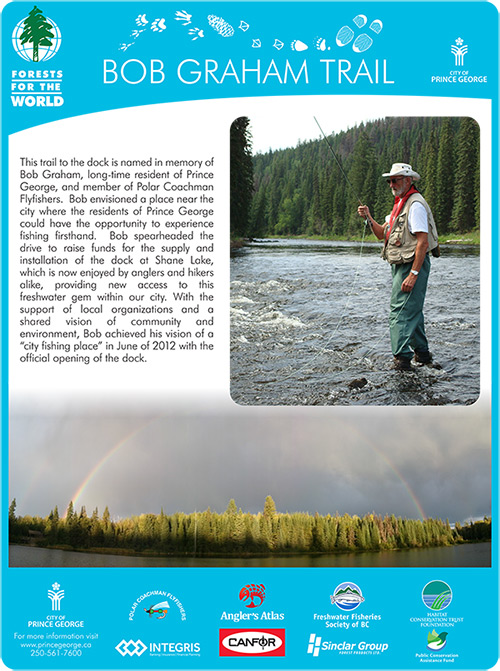 On May 8th, Prince George officials and community members gathered together with family & friends of the late Bob Graham to celebrate the naming of a new trail in his honour. The Bob Graham Trail is situated within Prince George’s Forests of the World park. The trail provides access to the fishing dock on Shane Lake, installed in 2012 as part of a PCAF project led by Mr. Graham and the Polar Coachman Fly Fishers Club. Bob envisioned a “city fishing place” where local residents could experience and enjoy angling as much as he did. In addition to receiving a grant from HCTF, Bob also secured funding from the City of Prince George, Polar Coachmen Flyfishers, Freshwater Fisheries Society of BC, Integris, Canfor, and Sinclar Group, and helped coordinate the many volunteer hours that made the dock a reality. HCTF Board members Dr. Winifred Kessler and Don Wilkins attended the dedication ceremony, and shared the following photos: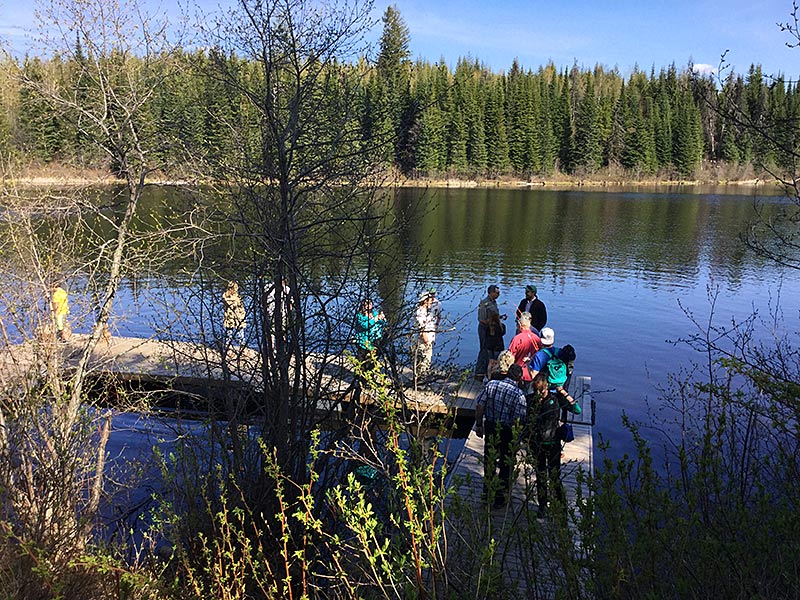
 “The success of our last PCAF project has inspired all of us, the sportsmen’s club, the conservation partnership and the provincial government to keep working together for habitat recovery in the Garnet”, said Bryn White, SOSCP Program Manager. In 2012, HCTF’s PCAF program supported an application from the groups to fence one of the last wetlands in the valley called Ritchie Lake that had been significantly degraded by mud-bogging off road vehicles and cattle. In one year after the wildlife-friendly fence was built, the dry rutted area was unrecognizable. In its place was a beautiful and lush wetland complete with reeds, dragonflies and ducks. This year, the group took some time to sit and have lunch at Ritchie Lake to enjoy the view. It wasn’t long before talk of another damaged wetland area seen in the north end of Garnet Valley came up that would benefit from excluding cattle and mud-bogging off road vehicles. McLachlan Lake looks very similar to Ritchie Lake – pre-fence. It is holding water for the first time in a number of years, and would be a perfect joint project given its location between the Summerland and Peachland Sportsmen’s Club. Stay tuned to hear how they tackle this one.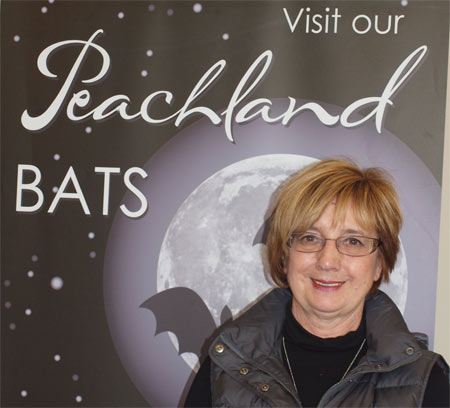
 What do you get when you combine sunshine, fresh lemongrass tea, Salal, Oregon grape, some restoration veterans and the smell of earth in your nostrils? A thoroughly enjoyable afternoon spent at Robin Lane, sharing in ecological restoration, and bodily rejuvenation. Fellow classmate and restoration rookie Jenna and I had the pleasure of sharing an afternoon with two ladies who know this business like the dirt under their nails. Sylvia Samborski and Louise Goulet have been working with plants for decades – both through their careers as naturalists and biologist/teachers and now through their hobbies of gardening, restoration and the continued desire to learn. The fortune was truly ours that afternoon as the women passed along words of wisdom and knowledge about plants and life – the line sometimes blurring between the two.