Mon, 24 Apr 2023

$8 Million in Funding Approved for Conservation Projects Across B.C.

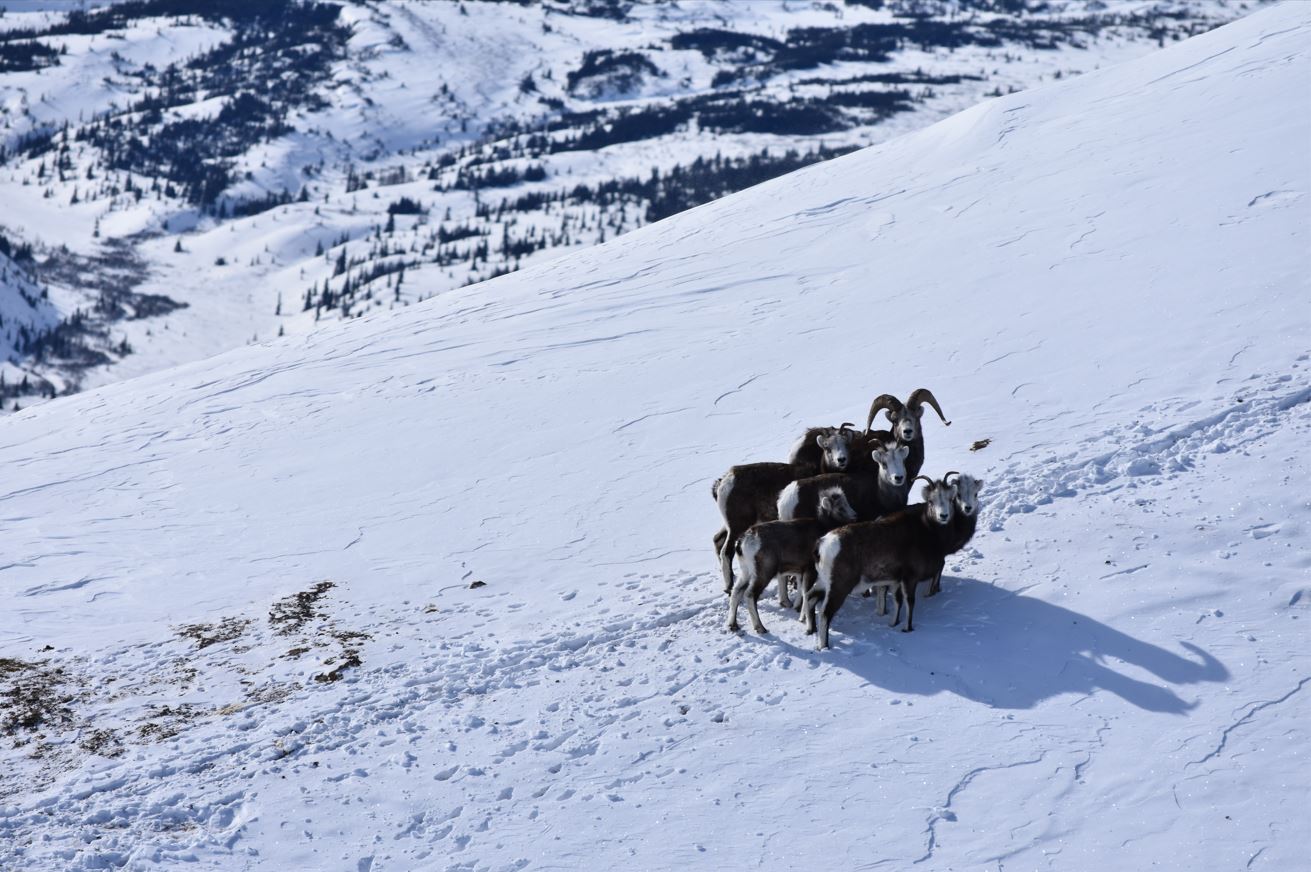
A group of Stone's sheep observed during an annual recruitment survey - Alicia Woods, Ridgeline Wildlife Enhancement

The Habitat Conservation Trust Foundation today announced over $8 million that will fund 167 fish and wildlife conservation projects across B.C.

2023-24 HCTF Project List

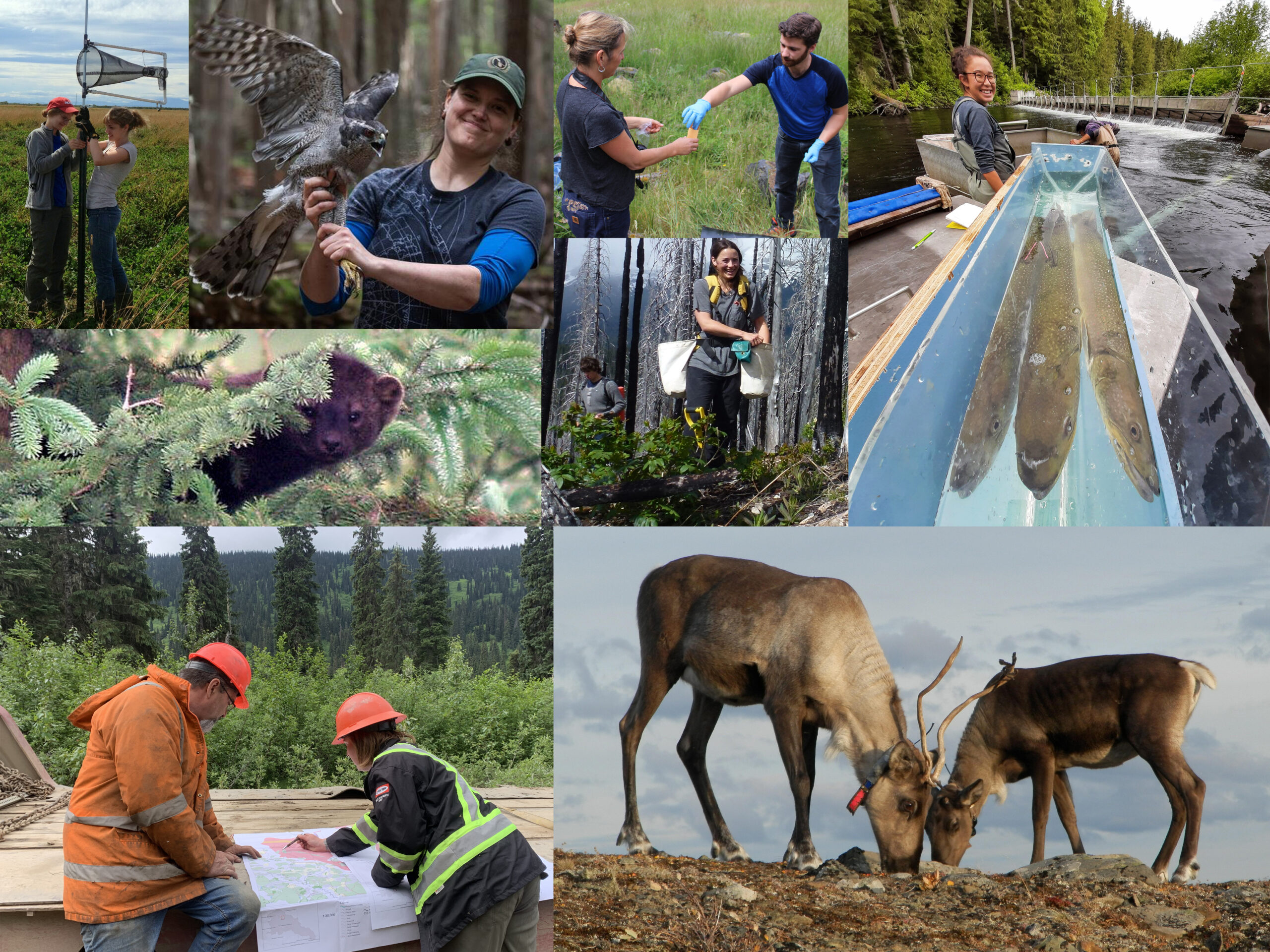
For over 40 years, the Habitat Conservation Trust Foundation (HCTF) has provided grants to a large network of recipients who undertake conservation projects each year. With support from HCTF, a wide range of nonprofit organizations, First Nations and Indigenous communities, Provincial ministries, and community groups implement projects that protect B.C.’s wildlife, freshwater fish, and their habitats. Since 1981, the HCTF has funded over 3,550 projects representing an investment of over $215 million for conservation in B.C.

CEO Dan Buffett is pleased with the diversity of projects as “each project undergoes a multi-step technical review process to direct funding to the best projects for fish, wildlife and their habitats.”
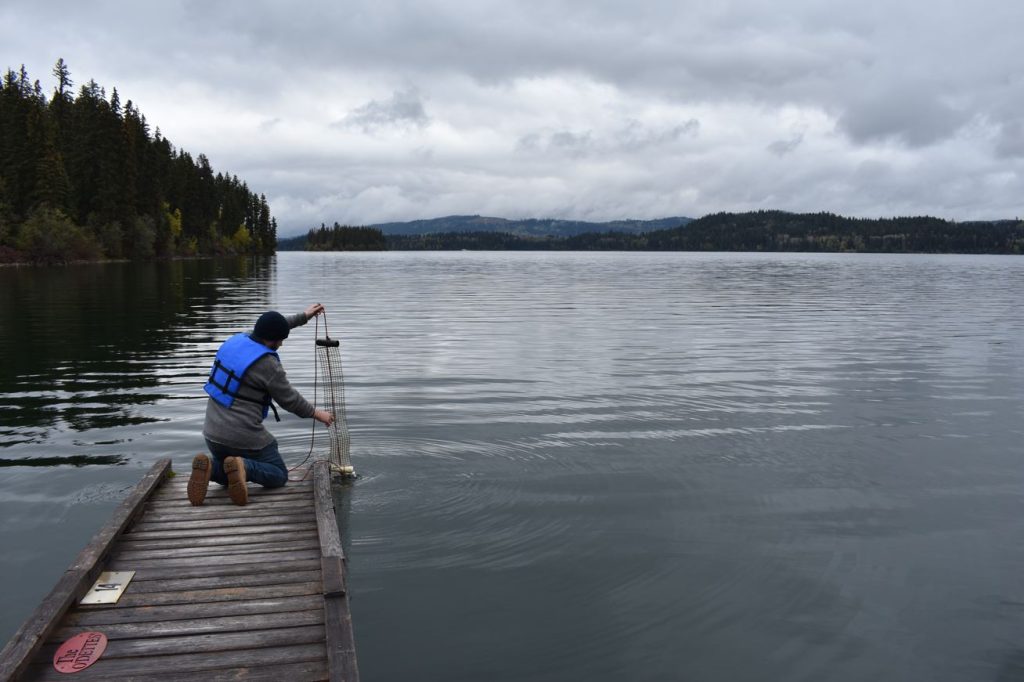
Project 5-310: Invasive Mussel Monitoring for the Cariboo Regional District

A significant source of funding for projects is the conservation surcharge paid by B.C.’s anglers, hunters, trappers, and guide outfitters when they purchase their respective licenses. HCTF also receives substantial funding from partner organizations like the Forest Enhancement Society of B.C. (FESBC), provincial government contributions, court awards, and endowments.

FESBC’s Executive Director Steve Kozuki is “thrilled to partner with the trusted and respected Habitat Conservation Trust Foundation to improve wildlife habitat. With their first-in-class management of funds and projects by talented and professional staff, we know that we are maximizing benefits for wildlife in British Columbia.”

This year’s approved projects include:

  • $254,809 for functional and ecological restoration of approximately 16 km of linear corridors in the Clearwater Valley, led by the Nîkanêse Wah tzee Stewardship Society.
  • $146,747 to enhance 200 km2 of moose habitat in Nazko First Nation territory including rehabilitation of 100 km of forest resource roads.
  • $130,794 to determine the migration behaviour and habitat use of juvenile white sturgeon in the Pitt River watershed of the Lower Fraser River to develop habitat protections and restoration prescriptions.
  • $92,938 for the restoration of a former sawmill site in the heart of the salmonid migratory corridor of the Puntledge and Tsolum Rivers watersheds in the Comox Valley; this will restore the forested tidal wetland and reconnect the site to the floodplain of the Courtenay River, benefiting salmon, trout, and many other wildlife species.
  • $95,940 for the enhancement of critical habitat for mule deer, white-tailed deer, and Rocky Mountain elk between Raymond and Red Canyon Creeks in the Galton Range. Efforts will focus on slashing treatments and invasive plant management.
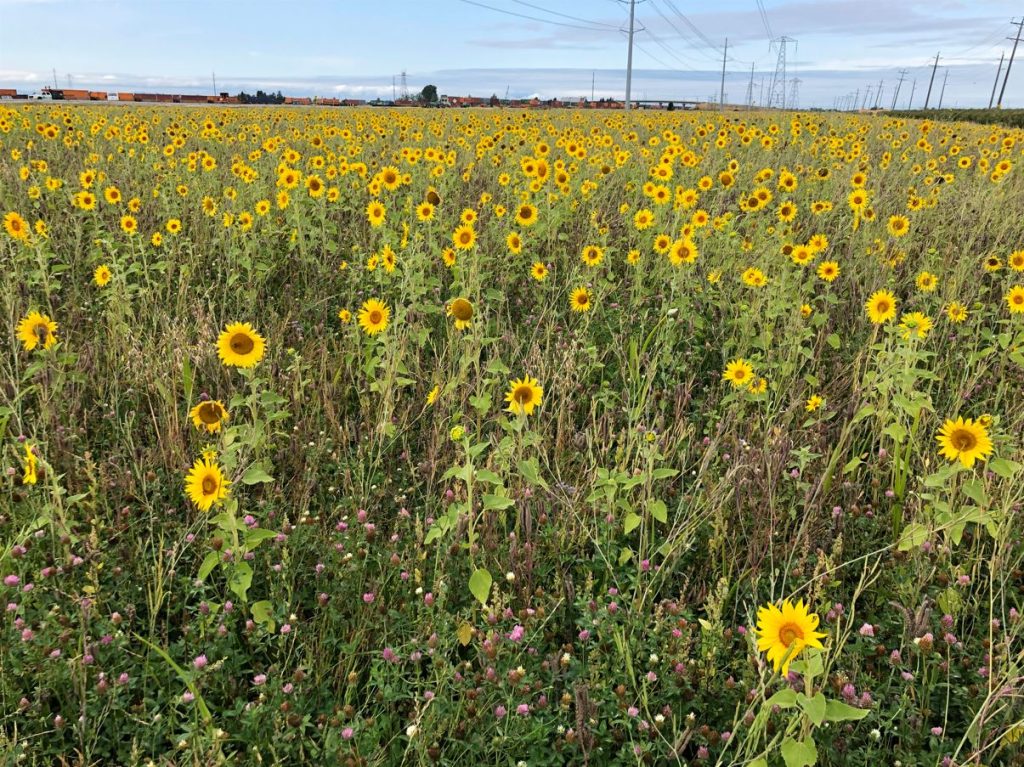
Project 2-349: Enhancing Upland Farmland for Wildlife in the Fraser River Delta

The B.C. Wildlife Federation also received funding this year: “Funding from HCTF will help the B.C. Wildlife Federation to train a new generation of habitat stewards through our Wetlands Institute,” said Neil Fletcher, BCWF Director of Conservation Stewardship. “With the support of HCTF, we offer a seven-day boot camp to qualified British Columbians who are pursuing projects in their communities. The grant for the Water, Water, Everywhere project will enable the BCWF to strategically place wetlands designed to mimic beaver dams with ability to restore and enhance wildlife habitat and riparian areas all over B.C.,” Fletcher added. “Installing beaver dam analogues with local partners will allow us to share our skills and expand our network of conservation stewards.”

To see the complete list of HCTF funded projects or explore the conservation work being done near you, view the 2023-24 Approved Project List.
Wed, 21 Sep 2022

Now Accepting Conservation Grant Proposals for 2023-2024

Habitat Conservation Trust Foundation is now accepting applications for Enhancement/Restoration & Stewardship (ERS) grants, and Caribou Habitat Restoration Fund (CHRF) grants. Applications must be submitted through HCTF’s online application system by 4:30pm on November 4th, 2022 (PST).

HCTF is not accepting New Stewardship proposals in Fall 2022 (Continuing and New Phase proposals will still be accepted). Our Stewardship grant is undergoing an update to better integrate with other HCTF grant programs. This will improve clarity and criteria for proponents as well as streamline the application process.

Please visit our FAQ page to find useful tips for the online Survey Apply system. Our updated 2023-24 ERS and CHRF Guidance documents are also available on the website.

Before beginning your application on the Survey Apply system, we strongly recommend that you complete your application on the Word worksheets posted on our website. Once completed you can copy-and-paste your answers into the online form. The worksheets also provide a useful overview of the questions and information requirements. Please note that HCTF cannot accept applications submitted by email.

Each year, Habitat Conservation Trust Foundation provides approximately $6 million dollars in Enhancement and Restoration grants to help fund projects that support the conservation of British Columbia’s native freshwater fish, wildlife, and their habitats. Since the inception of our work in 1981, the Foundation and its predecessors have invested over $189 million in more than 2980 projects across BC.

HCTF continues to partner with the Forest Enhancement Society of BC (FESBC) to meet shared conservation objectives through co-investments in conservation projects administered through HCTF. The CHRF program is made possible by contributions from both the BC Ministry of Land Water and Resource Stewardship and Environment and Climate Change Canada.

For questions related to Enhancement/Restoration and Stewardship grants, please contact Lisa Wielinga at Lisa.Wielinga@hctf.ca or 250-940-9781.

For questions related to CHRF, please contact Sophia Cuthbert at Sophia.Cuthbert@hctf.ca or 250-940-9789.

Tue, 20 Aug 2019
Tags: F&W / Wildlife

Seeking ways to protect western bats from deadly white-nose syndrome

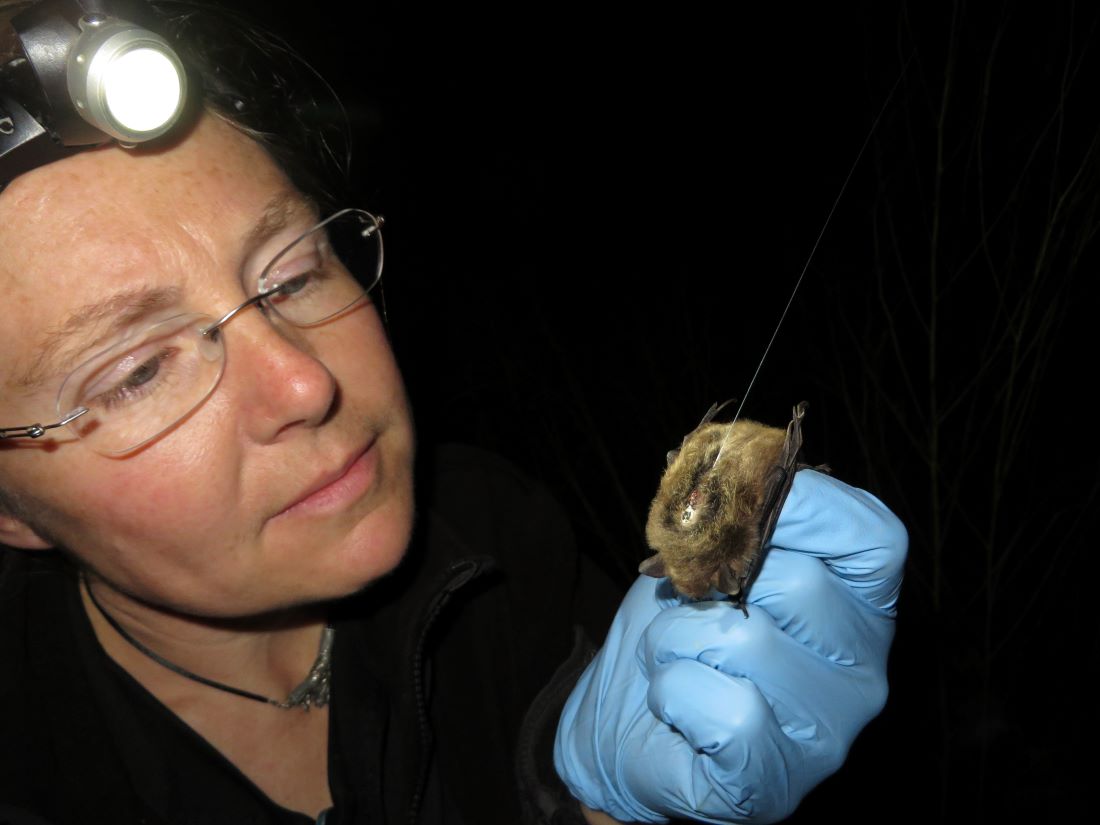
Cori Lausen glues a transmitter onto a bat in fall which will help locate roosts as well as provide valuable information about hibernation behaviours and physiology, needed to understand how white-nose syndrome may impact bats in BC.

The first time Cori Lausen held a big brown bat in her hands, it was love at first sight. “She was so tiny, she fit in my hand. And the band showed that she was older than I was.”

The more Cori learned about bats, the more she realized how unique they are – and when she asked questions about them there were often no answers. “There are so many things we just don’t know about them.”

So she took a leave of absence as a high school teacher in 1999, earned a Masters’ degree on bat ecology at the University of Calgary and a PhD in bat population genetics.

Today as associate conservation scientist with Wildlife Conservation Society Canada, Cori is looking for ways to protect western bat populations from deadly white-nose syndrome (WNS). This includes cutting-edge research supported by Habitat Conservation Trust Foundation (HCTF) to develop and apply a probiotic cocktail that can help bats survive the disease. HCTF has contributed nearly one fifth of the $583,000 budget for the two-year project.

WNS originated in Europe and is caused by the fungus Pseudogymnoascus destructans. It first appeared in North America in New York State in 2006, and has since killed millions of bats. “Many of us shed tears when we first heard of it,” Cori says. “We did not understand it, but knew its devastation was going to spread like wildfire.”

The disease started in the east and gradually moved south and north. Its spread west was slower because of migration patterns, until 2016 when it made a giant leap into Washington State. “The jump was a big shock,” says Cori. She expects the infected bat hitched a long-distance ride on a transport truck going to the port in Seattle, highlighting the importance of checking trailers, campers, and trucks for stowaway bats.

WNS causes a white fungal growth across a bat’s muzzle and wings, and has a death rate of up to 100 per cent. It disrupts winter hibernation, rousing the bats so they use up the valuable fat reserves they need to survive until spring.

There’s an added challenge in western North America because there are no large bat hibernacula like in the east. Instead, bats overwinter in smaller numbers in rock crevices, trees, caves and mines, and even in some buildings.

Cori was already interested in what bats in western Canada do in winter when WNS appeared in Washington State, and thanks to help from many BC naturalists, had detected eight of the 14 species that overwinter in British Columbia. “When the fungus first showed up, we realized that understanding where bats are is now more than curiosity – it is absolutely urgent.”


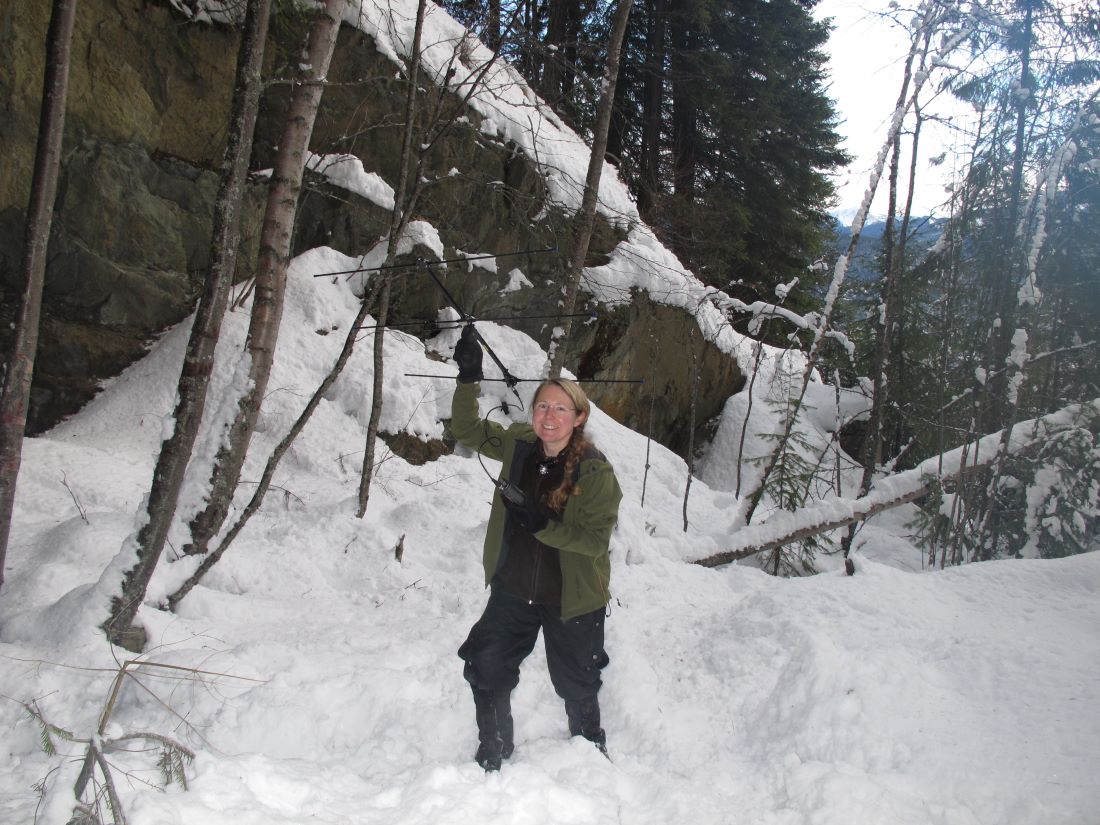
Cori Lausen tracks bats in winter in the West Kootenay region. Telemetry is used to locate hibernacula, as well as provide valuable information about hibernation behaviours and physiology, needed to understand how white-nose syndrome may impact bats in BC.

Cori Lausen tracks bats in winter in the West Kootenay region. Telemetry is used to locate hibernacula, as well as provide valuable information about hibernation behaviours and physiology, needed to understand how white-nose syndrome may impact bats in BC.

But with few locations and few bats, these winter hibernacula are unlikely to yield a solution to the WNS problem. “We need a ‘made in the west’ approach to fight off the fungus, and set them up to come back in the spring alive,” Cori says. “We decided to target our vulnerable building-roosting bats as we know where thousands of them roost in the summer.”

Through the HCTF project, the researchers developed a probiotic using bacteria sourced from local healthy bats. They first tested it on captive bats at the British Columbia Wildlife Park in Kamloops in 2018.

This spring, they developed an application method, and will test it in the Vancouver region where WNS will probably appear first in British Columbia. At roost entrances, they will dust powdered clay infused with the probiotic, so it sticks to the bats and they get a small dose every time they come and go.

“We are the first to propose treating bats in summer, introducing probiotic gradually so it does not overwhelm their immune system,” Cori says. “We will take wing swab samples from the bats now, and repeat in spring to see if the probiotic is still there and still viable.”

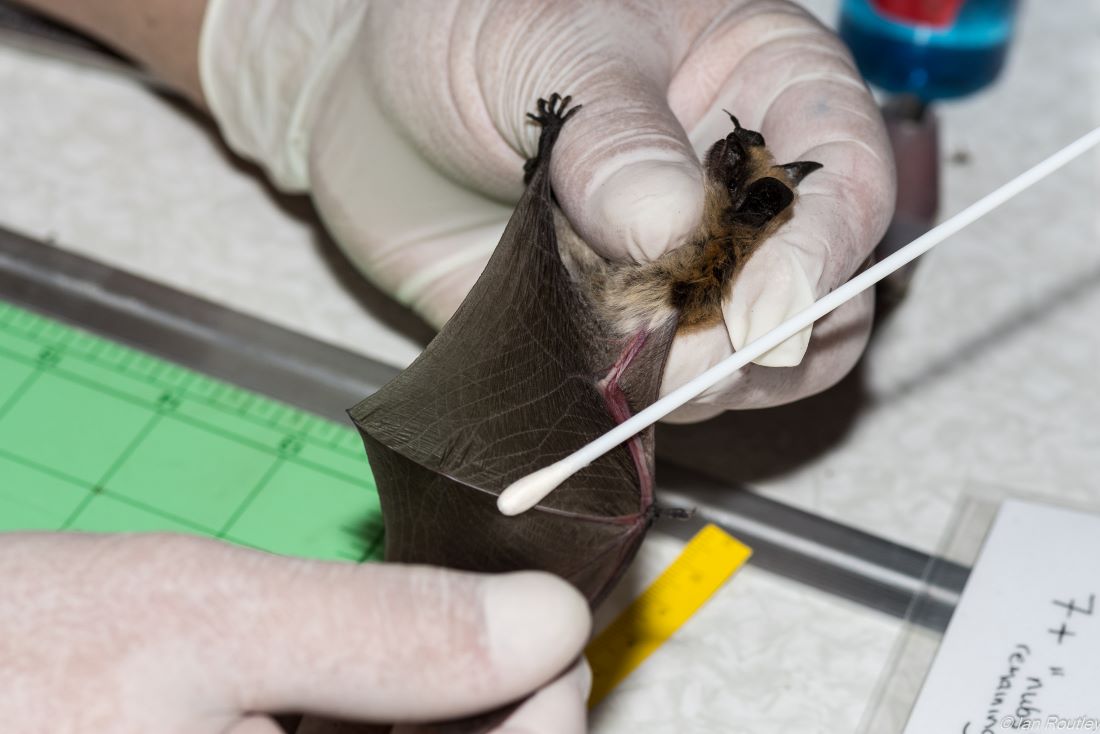
A California Myotis bat from Lillooet BC is wing-swabbed to look for bacteria that naturally prevent growth of Pd to use in the development of the probiotic cocktail. Photo by Ian Routley.

Purnima Govindarajulu, acting head of the B.C. Ministry of Environment and Climate Change Strategy’s Conservation Science Section, is part of an advisory committee supporting the project. “Bats are an important part of a healthy ecosystem,” she says. “White nose syndrome could have serious repercussions in British Columbia because bats eat huge number of insects, and this benefits agricultural crops, forests and people.”

British Columbia is better positioned than many other western regions thanks to BC Community Bat Programs (www.bcbats.ca/) that encourage individuals to identify roost sites and show landowners how to protect these sites or install bat-houses.

“We know white nose is coming so we have nothing to lose,” says Cori. “It does not cost a lot to give a landowner a little bag of clay that they can dust into bat boxes or building roosts. If it looks like it will save bats, we will apply for further research support to develop a widespread approach.”


Wed, 24 Jul 2019
Tags: F&W / Wildlife

Community Goshawk Project Gets Funding Boost

Northern Goshawk nest on the Sunshine Coast

On-going efforts to help the threatened Northern Goshawk population on the Sunshine Coast just got a lift— through a $14,700 grant to locate occupied breeding areas of this unique member of the raptor family.

Northern goshawks are found in mature forests with a heavy canopy and minimal undergrowth. Their relatively short wings and long tails make these birds extremely agile hunters in the forest. Pairs will often build multiple nests within a territory using branches and fresh evergreens. The loss and fragmentation of habitats used by Northern Goshawks for nesting and hunting threatens the future of these birds in coastal BC.

The Sunshine Coast Wildlife Project will use the grant to conduct field surveys to search for goshawk breeding areas, and to carry out community engagement to improve awareness and participation in raptor stewardship programs, through such activities as construction and installation of nest boxes for threatened Western Screech-owls.

The grant comes from the Habitat Conservation Trust Foundation and Forest Enhancement Society of BC . “We are so grateful for this funding,” says Wildlife Project Leader, Dr. Michelle Evelyn. “Goshawks have huge home ranges, thousands of hectares in size, so finding the birds and their nests is a bit like looking for a needle in a haystack. But with support from HCTF and FESBC, over the past two years, we have been able to identify three new goshawk breeding territories on the Sunshine Coast.”

The Province of BC is now working with forest companies, the shíshálh Nation, and other stakeholders to establish Wildlife Habitat Areas that will permanently protect these territories.

“Seeing healthy babies in the nests and knowing that these vital areas will be protected for the goshawks, along with the many other wildlife species that share their mature forest habitats, makes us incredibly happy,” says Evelyn.

The Habitat Conservation Trust Foundation recently received additional funding to support conservation projects focused on Northern Goshawk and another threatened coastal bird, the Marbled Murrelet. Earlier this year, the Province of British Columbia made a $500,000 contribution to the Foundation for the conservation of these two species. Individuals or organizations interested in applying for funding are encouraged to contact HCTF for further information.

Conserving Threatened Raptors on the Sunshine Coast is one of 170 BC fish and wildlife projects receiving grants from the Habitat Conservation Trust Foundation this year. For a complete list of grant recipients, visit https://hctf.ca/achievements/project-list/


Photo (click to download larger version of the file)


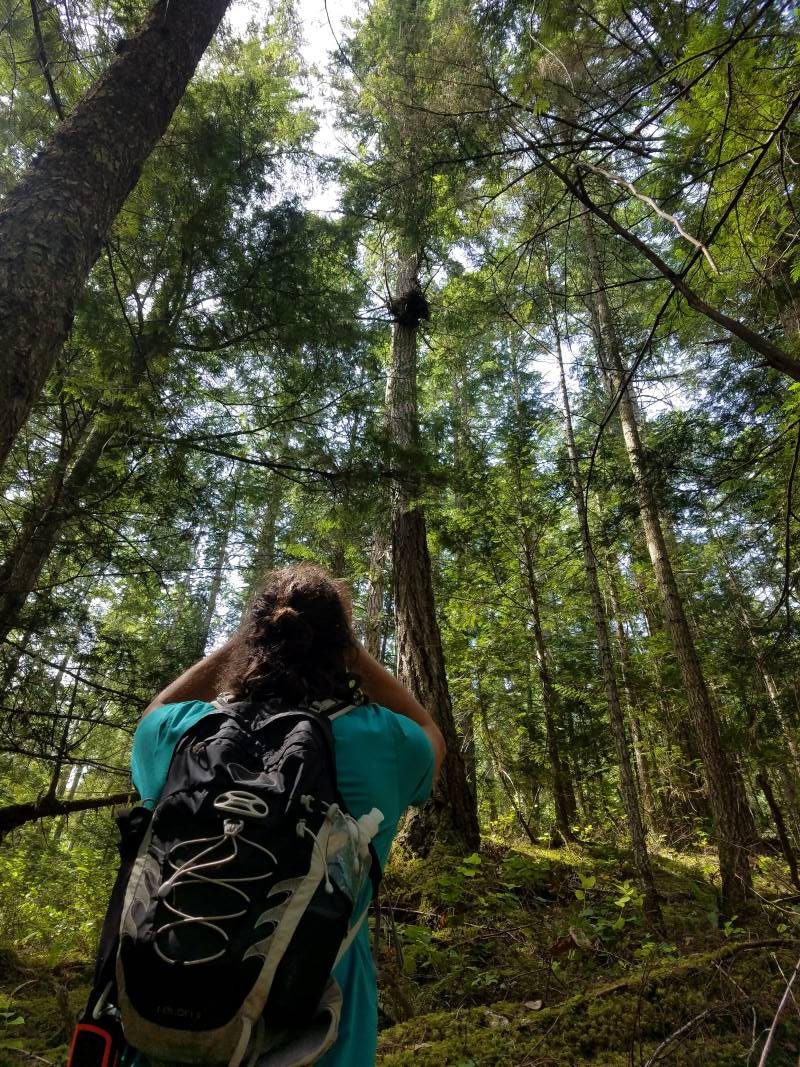
A project team member surveying for Northern Goshawks.


HCTF Contact:

Shannon West, Manager of Program Development
shannon.west@hctf.ca
250-940-9789


Project Contact:
Michelle Evelyn, Project Leader
Sunshine Coast Wildlife Project
coastwildlife@gmail.com
604-989-1007


Quick Facts:


Thu, 28 Mar 2019
Tags: F&W / Wildlife

Congratulations on Grizzly Study Publication

SWBC Grizzly Project

Exciting news from project proponent Michelle McLellan Ph.D.

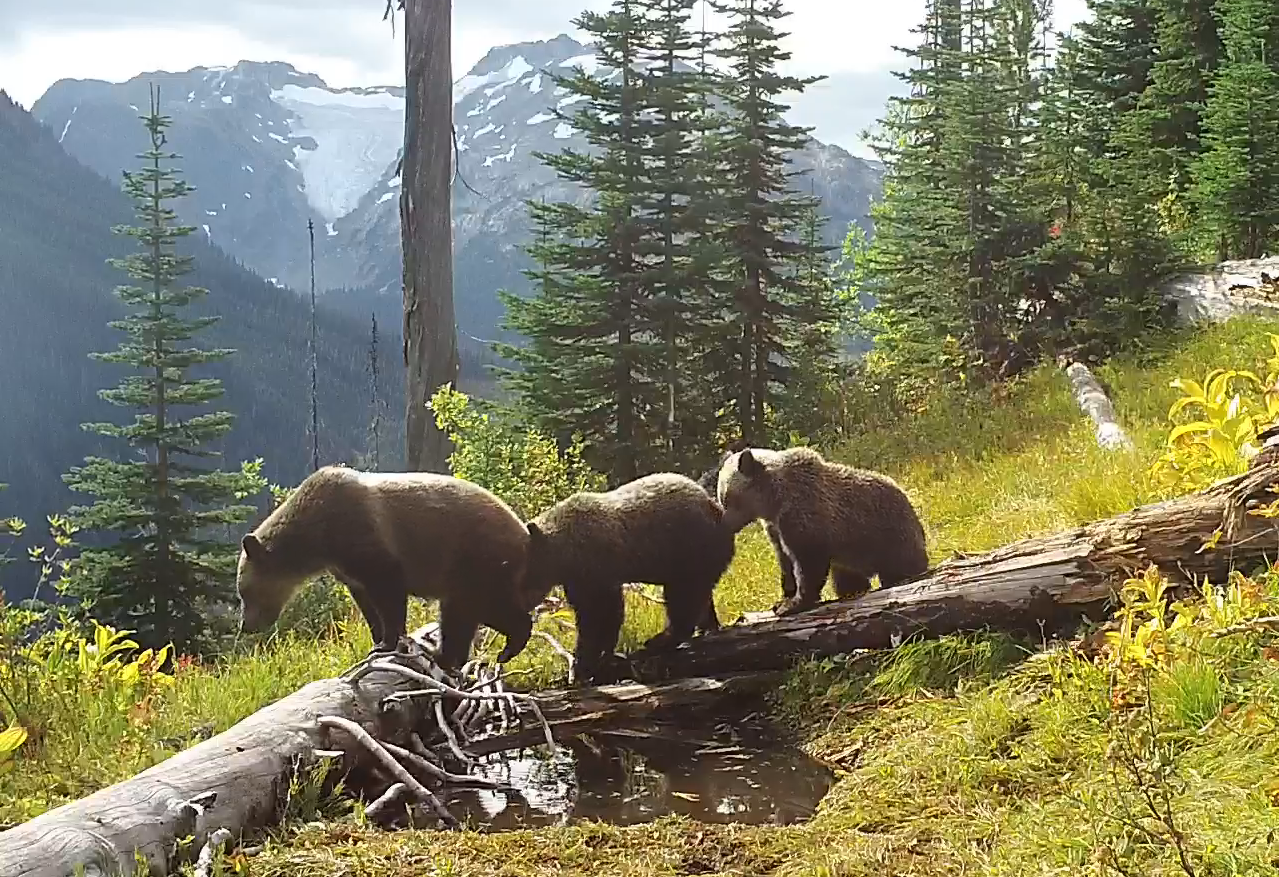
“We have been monitoring grizzly bears in the threatened Stein-Nahatlach population since 2010. This project was funded by HCTF and we’ve recently published the results of this work. Thanks to HCTF for making this possible.”

View publication on “Divergent population trends following the cessation of legal grizzly bear hunting in southwestern British Columbia, Canada” here:

https://www.sciencedirect.com/science/article/abs/pii/S0006320718301538

Wed, 20 Feb 2019
Tags: F&W / Wildlife

CWD: Challenging, Worrying and Deadly – by Brian Harris

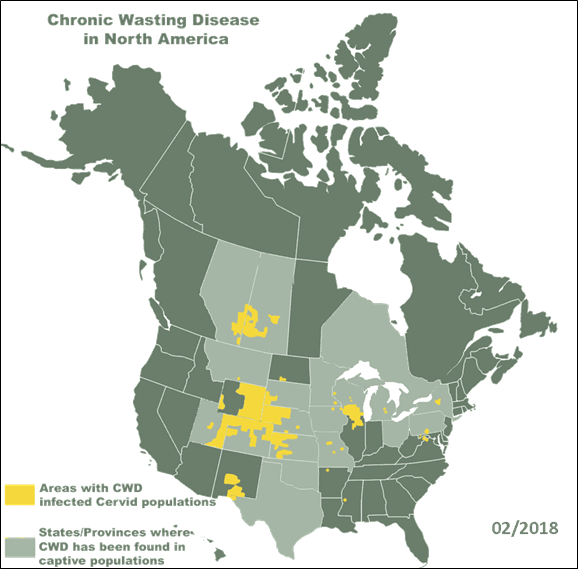
CWD-map

It could be the plot for a science fiction horror movie. A disease that reduces the brain to Swiss cheese, spreads insidiously, is always fatal, and is caused by something that is difficult to kill because it is not actually alive. Yikes! This is Chronic Wasting Disease (CWD). It is a disease of cervids (animals in the deer family), and in Canada in the wild, it has been identified most commonly in mule deer, but also in white-tailed deer, elk and moose. Recently CWD has been reported in wild reindeer in Scandinavia, so our caribou populations are also potentially at risk.

CWD is one of a group of diseases called Transmissible Spongiform Encephalopathy that affect the brain and nervous system of many animals including humans, cattle and sheep. The disease agent is most likely an abnormal form of protein called a prion (the acronym for proteinaceous infectious particle only). Why a protein becomes a prion is not known. Proteins are normal organic molecules of healthy cells in all living creatures. However, in an animal with CWD, contact with prions causes normal proteins to change shape, then go rogue and become deadly. These altered proteins so resemble normal ones that they are not destroyed by the animal’s immune system. In certain areas of the brain, the accumulation of these abnormal proteins kills cells, so that that part of the brain looks “spongy”. As the disease progresses, body functions associated with those areas of the brain begin to fail. An affected animal gradually loses weight, becomes listless, may salivate heavily and urinate frequently. The animal eventually wastes away (hence the disease name) and dies. However, the prions in excreted body fluids and feces (and some body parts once the animal dies) may persist in the soil and be taken up by growing plants. This is a unique feature of CWD. Then, healthy animals that eat such vegetation can become infected. Even transporting feed or hay grown on land where CWD has been present can spread the disease.

CWD is well established on game farms and in wild deer in much of central USA. In Canada, so far the disease is reported only in Alberta and Saskatchewan in farmed and wild deer and elk, but in 2018, CWD was recognized on a red deer farm in Quebec. The CWD Alliance website is a good source for more information.

Monitoring for CWD in BC began in 2001 and fortunately no samples have tested positive. This is partially attributable to Provincial regulations that prohibit the farming of native cervids or importing live cervids. Recent additional regulations prohibit the importing CWD risky body parts of deer harvested outside the Province, and possessing scents derived from cervids. However, there is no room for complaisance. The Alberta CWD Program has mapped the disease expanding slowly but relentlessly westward, especially following the valleys of the South Saskatchewan, Battle and Bow Rivers. In 2017, CWD cases were reported very near to both Calgary and Edmonton. In addition, recent cases in Montana mean that BC is becoming surrounded by a growing risk of CWD.

From CWD Alliance

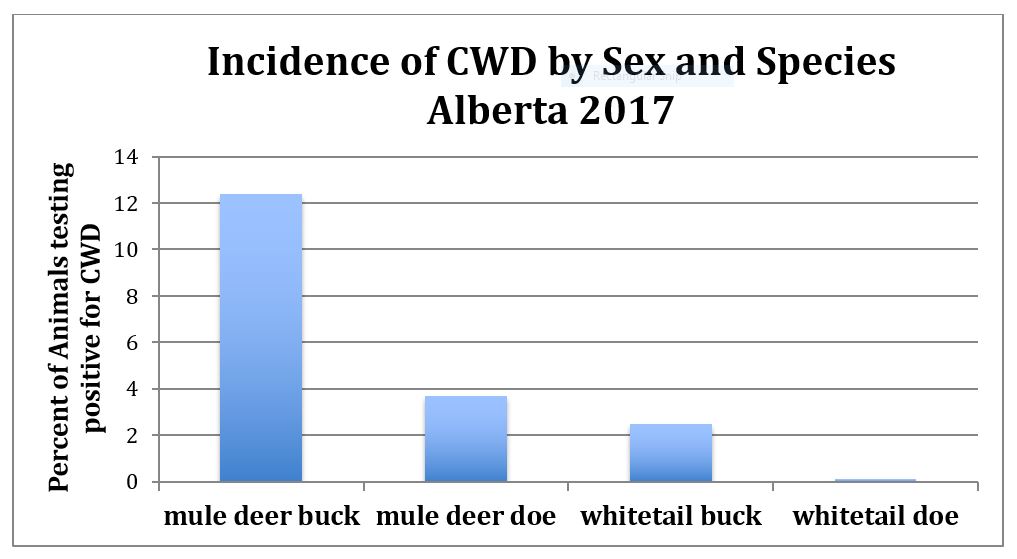
Some of BC’s most cherished game animals are at risk, but the disease does not affect all animals equally. In Alberta, it is mule deer that are most susceptible, while in other jurisdictions it is white-tailed deer or elk. In 2017, the Alberta Government tested for CWD in 6,340 wild deer and elk. The disease was detected in 8.2% of mule deer, 1.8% of white-tailed deer and 0.4% of elk samples (so far the only recorded incidence in Alberta moose is a single positive in 2012). Males are more likely to be infected than females. Since 2005, CWD has been detected in 796 Alberta mule deer, 119 white-tailed deer, two elk and one moose. To obtain these samples, the Alberta Government CWD Surveillance Program “relies heavily on participation by hunters, guides and landowners”.

In BC, the increasing proximity of the disease to the Province’s eastern border and the low number of samples from the Peace Region (7B) has increased the urgency for improved monitoring. In 2018, the Habitat Conservation Trust Foundation (HCTF) and partners contributed funding to improve CWD surveillance in the Peace. Most of the HCTF funding comes from the surcharge on hunting, fishing, trapping and guide outfitting licences sold in BC. This money is used to fund conservation projects benefitting wildlife and fish populations, beyond the basic management by governments.

BC’s Wildlife Veterinarian, Dr. Helen Schwantje, said, “The Peace is considered the Region at highest risk of natural expansion of CWD from Alberta into British Columbia and hunters have a key role in helping to avoid this disease from entering our Province”.

An objective of the HCTF-funded project is to increase by 10 times the number of samples from Peace Region from less than 30 to at least 300 annually. To test for CWD, the whole head of the suspect animal is required. One of the best ways to gather such samples is to involve hunters.

“Hunters are probably the group that should be the most concerned about the spread of CWD ”, says CWD Project coordinator Brian Paterson, “And coincidentally, they are the group that can help the most with early detection efforts by submitting the heads of harvested animals to our program.” Paterson continues, “As outreach coordinator, it is my role to spread information, increase awareness, and let hunters know how important the submission of a single head is in the fight against CWD.”

In 2018, Paterson delivered information on CWD to hunters in the Peace Region through contact with sportsmen’s groups, outdoor sports equipment stores, trappers, meat cutters as well as interviews on CBC and via social media sites like Facebook.

In the first year, Paterson says the response to the project has been really good, but he wants to continue the outreach and recruitment, so that “Submission of heads becomes part of the hunt. If you know that your buddies are submitting heads, you are more likely to do the same. The program can’t be truly effective without hunter participation”.

Awareness and cooperation are key, but with a sample as large as a whole head, getting to a collection site (such as dedicated freezers) must also be convenient. The locations of collection sites and a summary of the results of CWD testing will be posted on the BC Wildlife Health CWD website (www.gov.bc.ca/chronicwastingdisease.ca). If any samples test positive, the hunter will be contacted directly and confidentially.

To date, there is no treatment for affected wild animals and no vaccine, so prevention is key. The risk to BC’s game animals is real and the consequences potentially dire, but hopefully the science fiction plot of CWD does not play out in this Province. Our best defence is vigilance, and cooperation between wildlife agencies, First Nation and local governments, stakeholders and the communities most likely to be affected.

Hunters Note. Although CWD is not known to affect humans, the meat should not be eaten. Suspect animals or carcasses should be reported to the BC Wildlife Health Program (250 751-3219 or the RAPP line 1-877-952-8277). When processing a suspect animal, hunters should take care to avoid direct contact with the animal’s body fluids and especially the brain, backbone or internal organs. Avoid sawing through any bones by separating the carcass at the joints. Leave the high-risk body parts behind.